


Stop Talking for Creators. Start Talking With Them.
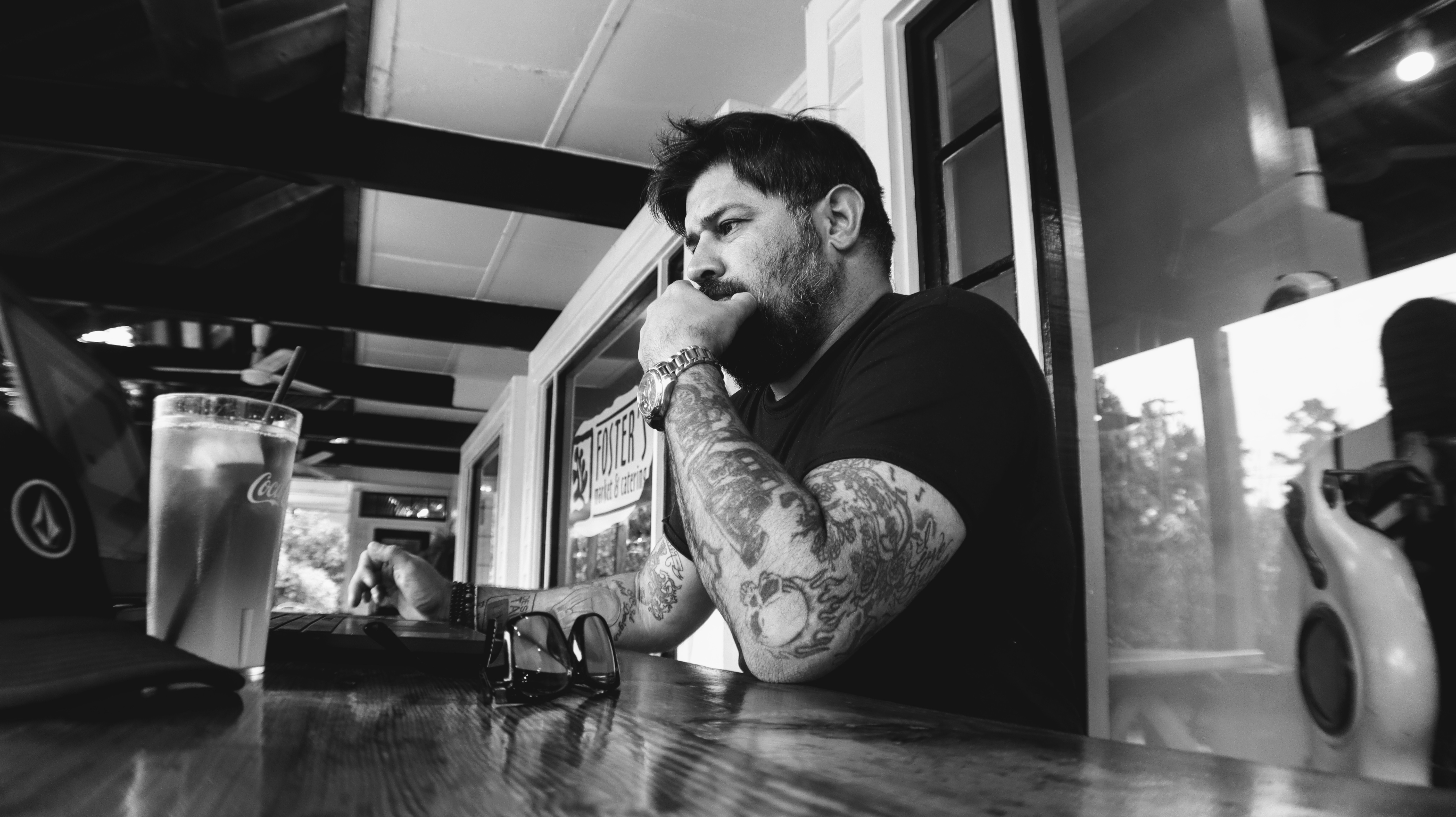
The people building the platforms, writing the policies, speaking on the stages and defining the future of the creator economy are having some of its most important conversations in rooms where the people most affected aren't present.
There is something fundamentally backward about the way we talk about the creator economy. We have thought leaders discussing the future of creators, technology founders building products for creators, consultants developing frameworks for creators, conference organizers assembling panels about creators and policymakers considering regulations that could dramatically affect creators. Yet many of those conversations happen somewhere other than where the people actually doing the work spend their time.
They're happening on LinkedIn. They're happening in industry publications, conference halls, boardrooms, podcasts, private Slack groups, venture-capital meetings and government hearings. There is nothing inherently wrong with any of those rooms, but there is something wrong when we begin mistaking a room full of people who work around creators for the creators themselves.
Meanwhile, the people whose livelihoods could actually be affected by those decisions are working. They're filming, editing, answering subscribers, negotiating collaborations, dealing with chargebacks, figuring out taxes, building audiences, worrying about account suspensions and trying to understand the latest platform-policy change. They're trying to eke out a living in an industry that an entirely different group of people is increasingly responsible for defining.
That's the disconnect I built Sxgram.com to help close.

The Creator Economy Has a Representation Problem
A LinkedIn post recently caught my attention because it discussed perpetual usage rights—the contractual provisions that can allow brands to continue using a creator's content and likeness long after the original campaign ends. The post itself raised a legitimate issue, and it isn't an isolated debate. A September 2026 Net Influencer roundtable asked 33 creator-economy professionals whether perpetual usage rights could ever constitute a fair deal, describing perpetuity as one of the most consequential and contested provisions in creator marketing contracts.
Forbes covered the same issue in 2025, calling perpetual usage rights "one of the most polarizing clauses in modern brand-creator contracts." The tension isn't difficult to understand: brands want flexibility from assets they have paid to produce, while creators increasingly recognize that their image, voice and association with a company retain commercial value long after the original post disappears from their feed.
It's an important conversation, but reading it made me interested in a different question: Where is the conversation happening? In this case, it was LinkedIn, where the people most likely to participate are marketers, consultants, executives, agency owners, attorneys, founders and other creator-economy professionals. Those perspectives matter, but they're not the entirety of the creator economy.
Where is the creator trying to make $4,000 this month? Where is the woman whose face and likeness aren't an abstract intellectual-property question but the product around which she has built her livelihood? Where are the independent adult creators and sex workers who have spent years navigating the exact questions of identity, content ownership, platform dependency, personal branding and digital commerce that the broader creator economy is now debating?
There Is an Entire Economy Underneath the "Creator Economy"
Adult creators are especially revealing because they have lived at the sharp end of platform dependency for years. Recent academic research on digital sex work found that changes in platform governance and moderation have disrupted audience engagement and eroded some creators' trust, requiring workers to continually negotiate and work around platform constraints to accomplish their professional goals.
Reporting from Berlin's SXFestival Expo in 2026 found creators describing disappearing Instagram accounts, educational BDSM content being flagged as explicit and the practice of maintaining backup accounts in anticipation of suspension. The reporting also surfaced an important complication for anyone who thinks the answer is simply "build another platform": even people experiencing censorship may hesitate to move because their audiences, professional networks and economic infrastructure remain concentrated on established networks.
That matters to what we're building at Sxgram. The problem isn't merely that adult creators need another place to upload pictures. They need infrastructure in which creators, businesses, technologists, journalists, educators, medical professionals and the people attempting to shape the industry's future can actually interact with one another.
We can build technology for creators. We can host conferences about creators, create businesses that profit from creators, publish research on creators and advocate for laws that affect creators. But if the creators themselves aren't meaningfully represented in those conversations, we're still talking about a community rather than talking with one.
"Nothing About Us Without Us" Isn't a New Idea
There is actually a long history behind this principle. Sex-worker-led organizations have explicitly used the phrase "Nothing About Us Without Us" to argue that people affected by policy should participate in developing it, and recent research involving young sex workers similarly recommends shared leadership and meaningful participation in policymaking, programs and services.
That principle shouldn't be controversial. Expertise from researchers, attorneys, technologists and policymakers matters, but lived experience is also expertise. The strongest conversations happen when those forms of knowledge collide rather than when one group assumes it can adequately represent the other.
This is particularly important because there is now an entire professional economy surrounding creators. There are consultants, coaches, SaaS companies, agencies, conferences, newsletters, venture-backed platforms, researchers and professional "creator economy" personalities whose own businesses and personal brands benefit from being authorities on the creator economy. That doesn't invalidate their ideas, but it does mean we should be conscious of whose incentives, experiences and voices are represented when an industry decides what creators supposedly need.
The Stakes Get Higher When Thought Leadership Becomes Policy
This becomes much more consequential when a LinkedIn conversation moves beyond business advice and toward regulation. Age assurance and identification requirements provide a useful example because governments around the world are actively wrestling with them. The OECD reported that age-assurance requirements are being adopted rapidly, particularly around social media and pornography, while creating an increasingly complicated international patchwork of rules.
There are legitimate objectives behind many of these policies, particularly protecting minors from age-restricted material. In the United Kingdom, for example, Ofcom says the Online Safety Act requires services publishing pornographic content to use highly effective age assurance before users can access that content.
But "verify people's ages" sounds much simpler than implementation actually is. Canada's privacy regulator warns that poorly designed age-assurance systems can create risks involving data breaches, profiling and disproportionate collection of personal information, and recommends minimizing collection, deleting verification information once an age signal is generated and preventing secondary uses of that data.
The Electronic Frontier Foundation takes a substantially more critical position, arguing that current age-verification approaches involve unavoidable tradeoffs involving privacy, security and accuracy. Other regulators have concluded that age assurance can be implemented while protecting privacy; Australia's eSafety Commissioner, for example, notes that government ID does not have to be the sole method of establishing age. The important point is that even among people who share the objective of protecting minors, how verification is implemented remains a consequential and contested question.
So before someone begins advocating for requirements that could affect millions of people, I want more questions asked. Who collects the information? Who stores it? What happens after verification? What happens if the provider is breached? What does compliance cost an independent creator compared with a billion-dollar platform, and what unintended effects could the requirement create?
Then there is the question I think the creator economy doesn't ask nearly enough:
"Have you asked the people whose businesses will actually be affected?"
Thought Leadership Has Its Own Incentives
I recently saw a well-intentioned thought leader advocating identification-related requirements, and my first reaction wasn't necessarily that the proposal was wrong. It was that I wanted to know who had participated in developing the position. Had adult creators been asked? Had sex workers been asked? Had small independent operators been invited to challenge the assumptions before those ideas were promoted publicly?
I also think we're allowed to ask what incentives exist around thought leadership itself. A person may sincerely believe in a policy while also operating a consulting business, selling coaching, building a personal brand, seeking speaking opportunities or positioning themselves as an authority on the issue. Those interests don't automatically make an argument invalid, but transparency and direct participation from affected communities make the resulting conversation stronger.
That's why I don't want this article interpreted as "thought leaders are bad." I am one. I publish articles, speak on stages, build companies and have opinions about the future of this industry. The standard I'm arguing for has to apply to me too: if I'm building something for a community, I should be willing to build it in conversation with that community.
That's Why Articles Was One of the First Things I Put Into Sxgram
When people hear "Sxgram," they understandably think social network. They think Posts, Stories, Reels, profiles and followers, and those things are absolutely part of it. But one of the first features I deliberately built was something far less obvious: Articles.
Long-form publishing wasn't an afterthought. I didn't want Sxgram to become one room where adult creators socialized while all of the supposedly "serious" conversations about their businesses continued somewhere else. I wanted the people building the technology, studying the industry, advocating for policy, operating platforms and shaping the narrative in the same room as the people doing the work.
I also wanted publishing to be accessible from the device creators actually have in their hands. LinkedIn's own current documentation says its article-publishing feature isn't available through the LinkedIn mobile app; members must use its desktop publishing experience.
I thought that was backwards. Your ideas don't become more intelligent because you sat behind a desktop computer to type them. So Sxgram Articles was designed to let the creator, physician, sex worker, founder, researcher, therapist or educator participate in long-form thought leadership without first leaving the community and entering what we've arbitrarily decided is the "professional internet."
Bring the Thought Leaders to the Workers
This is probably the simplest way I can explain what I believe:
"I think it's bullshit that the people who are deciding content creators' future are having those conversations in other rooms and platforms, far away from the creators whose lives are impacted the most." — Joseph Haecker, Founder of Sxgram
I'm not suggesting everyone leave LinkedIn. I'm not arguing that conferences should disappear or that researchers, lawyers and founders shouldn't have opinions about this industry. I'm saying proximity matters, particularly when the decisions being discussed could materially affect somebody else's livelihood.
If you're building for a community, spend time in the community. If you're researching a community, listen to the community. If you're making money serving a community, participate in the community, and if you're advocating for regulations affecting that community, the people living with the consequences deserve more than being discussed in the third person.
So Here's My Invitation
Since launching Sxgram, I've been inviting thought leaders and technology founders to participate, and so far that has proven much harder than attracting people from the community itself. That tells me something important. Building another audience of creators is one challenge; convincing the people who already have established platforms elsewhere to come sit with those creators may be the more consequential one.
I want the people behind OnlyFans, Fanvue and Fansly in the conversation. I want people building creator technology like Manychat participating alongside the creators using that technology, and I want people from mainstream platforms such as LinkedIn and Instagram listening to people whose businesses are affected by their rules. I want lawyers, researchers, payment companies, agencies, SexTech founders, women's-health professionals, conference organizers and policymakers there too.
Not because everyone will agree. Precisely because they won't. The objective shouldn't be building another echo chamber where creators tell one another what they already believe; it should be creating a place where the people building the infrastructure and the people living with its consequences can challenge each other directly.
Creators need brands, and brands need creators. Platforms need users, developers need feedback, researchers need real-world experience, journalists need sources, policymakers need affected stakeholders, and thought leaders need people willing to tell them when an elegant theory doesn't survive contact with reality.
The opportunity isn't to build another room exclusively for one side of the creator economy.
It's to finally put everyone who depends on one another in the same room.
That's what I want Sxgram to become. Not the place creators come after somebody else has already decided what happens to them, but a place where some of those conversations can happen before products are built, policies are advocated and decisions are made.
Because creators don't need more people speaking on their behalf.
They need to be part of the conversation.
Stop talking for creators. Start talking with them.
— Joseph Haecker
Founder, Sxgram.com
Social Media for Adults.


Comments