


Back
Articles

@OnlyFansInsiderMagazine

Octavia Red Returns to Brazzers, but Her Career Is Becoming Bigger Than Any Single Release
By Ryder Vale, Staff Writer, Only Fans Insider Magazine
October 27, 2026 - At some point, another major studio release stops being the biggest news in a performer's career. Not because the work is any less significant, but because the larger story becomes the professional reputation they've established through years of consistent performances, collaborations, and industry recognition. For Octavia Red, whose career now spans more than 300 reported scenes and an expanding collection of awards, that distinction is becoming increasingly difficult to ignore.
The award-winning performer is featured in Brazzers' latest production, Never Have I Ever, alongside Abigaiil Morris and Van Wylde. According to an October 26 announcement, the scene uses a familiar party game as the foundation for a fictional story involving romantic secrets, jealousy, and an unexpected encounter between the three performers. It's another high-profile studio collaboration for Red, whose professional résumé already includes work with many of the adult industry's most established production companies.
But while the release offers fans another opportunity to see her work, it also provides a useful moment to examine what happens when a creator develops enough professional momentum that individual projects become part of a much larger career.
From Industry Newcomer to Established Performer
Before entering adult entertainment, Red followed a career path that looked considerably different from the one she occupies today. Her background includes college, retail management, work as a cannabis dispensary employee, and boudoir modeling before an industry agent approached her about performing. What followed was a professional transition that eventually placed her in productions for studios including Vixen, Deeper, Hustler, Penthouse, Brazzers, Adult Time, and several others.
That variety is significant because adult entertainment, like other areas of the entertainment business, depends heavily on relationships, professional reliability, and the ability to work across different creative environments. Establishing a career with one studio is an accomplishment, but developing a résumé across numerous production companies can create additional opportunities and reduce dependence on any single professional relationship. Red's continued appearances in major productions suggest that her career has developed well beyond the visibility associated with an early breakout moment.
Her latest Brazzers collaboration also places her alongside two other recognizable industry performers, demonstrating how established studios continue to bring together talent with distinct audiences and professional identities. These collaborations can introduce performers to viewers who primarily follow their costars, while adding another production credit to an already substantial body of work.
The Awards Are Becoming Part of the Story
Red's publicity materials describe an especially active period of industry recognition. In 2025, she earned an AVN Award connected to her work in an Elegant Angel production, following earlier recognition as a Hustler Honey in May 2022. Her representatives report that 2026 has brought additional honors, including recognition from the XMAs, AVN Awards, Doppi Senso Night Awards, NightMoves Awards, and ASN Awards.
Awards don't provide a complete measurement of a performer's commercial success, but they can influence how an individual is perceived within a competitive entertainment industry. Recognition from multiple organizations can strengthen professional credibility, support future promotional opportunities, and help distinguish a performer whose résumé might otherwise be evaluated primarily through individual releases. For Red, the accumulation of awards adds another dimension to a career already characterized by substantial production activity.
The more interesting development is how these accomplishments reinforce one another. Studio work creates opportunities for recognition, recognition can increase professional visibility, and that visibility may introduce new collaborations and audiences. None of those outcomes is guaranteed, but together they illustrate how an established performer can develop career momentum beyond the immediate release cycle.
The Career Beyond the Camera
Outside studio production, Red maintains a direct relationship with fans through social media and subscription content. Her representatives report more than 130 million views and 58,000 subscribers on her Pornhub profile, figures that illustrate the scale of her digital presence but should be understood as publicity-reported metrics rather than independently audited audience data. Her interests in travel, art, fashion, and gaming also give followers opportunities to connect with aspects of her personality beyond her professional performances.
That combination of studio visibility and independent audience development is increasingly relevant to adult performers. Studio appearances can introduce talent to established audiences, while personal channels allow creators to maintain relationships with fans between releases. For Red, the opportunity is to use the recognition earned through major productions to support a professional identity that continues developing beyond any individual project.
Her recent work also suggests an expanding range of creative opportunities. In September, Elegant Angel released Octavia Loves Girls, a showcase directed by Claudia Ross, while other 2026 projects have included dramatic productions and collaborations across several studios. Earlier this month, Red received the 2026 NightMoves Award for Best Actress, providing further evidence that her professional recognition now extends into acting as well as performance.
Another Release, Another Chapter
Never Have I Ever may be the latest addition to Red's filmography, but it arrives during a period when her broader professional accomplishments are increasingly significant. Her 2026 XMA recognition as Girl/Girl Performer of the Year, two AVN wins, and NightMoves acting award demonstrate the range of industry recognition she has received.
For performers building long-term careers, the challenge isn't simply securing the next booking. It's developing the experience, professional relationships, audience loyalty, and creative opportunities that make future bookings possible. Red's career provides an example of how those elements can develop together, even as individual releases continue to generate headlines.
The latest Brazzers production gives audiences another reason to watch Octavia Red. Her growing body of work gives the industry a reason to keep paying attention.
---
Octavia Red can be followed on X at @Octaviaxred and Instagram at @X.redclouds. Her latest Brazzers release, Never Have I Ever, is available to eligible adult viewers through Brazzers.
10/27/26, 12:32 AM
0
Notice

@OnlyFansInsiderMagazine
The Creator Economy Has a Platform Problem. And It's Time We Talked About It.
From the Editor's Desk
Joseph Haecker
Editor-in-Chief of Only Fans Insider Magazine
_____
The Illusion of Independence
I've spent much of the past year and a half having conversations with people who are building businesses in one of the most misunderstood industries in the world. I've spoken with adult content creators, models, agencies, technology founders, payment providers, marketers, entrepreneurs, and people who never imagined they would find themselves participating in the adult creator economy.
Some have built remarkable businesses. Others are just getting started. Some are making more money than they ever thought possible, while others are struggling to figure out how to turn their growing audiences into sustainable careers.
And after all those conversations, one thing has become increasingly clear to me.
The adult creator economy doesn't have a creativity problem. It doesn't have a talent problem. And I don't believe its biggest challenge is monetization.
It has an infrastructure problem.
We've built an industry where people can earn a living from their creativity, personality, expertise, and relationships. Yet the same people who are building these businesses often have remarkably little control over how potential customers discover them, how they communicate with their audiences, or whether the platforms they rely upon will allow them to continue operating tomorrow.
The more successful the creator economy becomes, the more obvious this contradiction gets.
And in October 2026, I think we're reaching a point where the industry needs to have a much more serious conversation about what comes next.
The Year I Learned What Platform Dependency Really Means
When I launched Only Fans Insider Magazine in May 2025, my objective was fairly straightforward. I wanted to create an independent publication that recognized the people and businesses behind the adult creator economy.
I wasn't interested in creating another directory of adult performers or a publication that reduced its subjects to their physical appearances. I wanted to tell stories about entrepreneurship, personal branding, technology, culture, relationships, professional development, and the people building businesses in an industry that traditional media often misunderstands.
What surprised me wasn't the interest from creators. It was how quickly the challenges of marketing an adult-industry publication became apparent.
I wasn't publishing explicit content. I was publishing interviews, business stories, industry commentary, and editorial coverage. Yet simply operating a publication associated with the adult creator economy was enough to create friction across mainstream social platforms.
Over time, I encountered restrictions involving Instagram, Facebook, and other social channels. There were problems with messaging, content distribution, account access, and the ability to promote stories that would have been entirely ordinary had they been published by a magazine covering almost any other industry.
Then came my own experience with Meta.
While I was in Guadalajara, Mexico, I found myself dealing with the consequences of losing access to a platform account that had become part of my professional communications and distribution infrastructure. The experience was especially revealing because it wasn't just about whether I could post something on Instagram. It was about the extent to which a private platform could interrupt the way I communicated, promoted my work, and maintained professional relationships.
My Instagram access was eventually restored. But that didn't erase the lesson.
The problem isn't simply that a platform might remove your account. The problem is that your business may be organized around the assumption that it won't.
I had spent years advising entrepreneurs about customer-centric marketing, owned media, and the importance of building relationships that weren't entirely dependent on advertising platforms.
Now I was experiencing the problem from the inside.
And I couldn't ignore the irony.
I had created a magazine to give creators more control over their professional narratives, only to discover that the magazine itself faced many of the same distribution obstacles as the creators it covered.
That experience didn't make me believe social platforms were unnecessary. It made me realize how dangerous it was to treat them as permanent infrastructure.
The Industry Built a Business Model. But Who Built the Marketing Department?
One of the most interesting things about the adult creator economy is how sophisticated its monetization infrastructure has become.
Platforms such as OnlyFans, Fansly, and Fanvue have helped establish business models through which creators can sell access, build subscriber relationships, and generate recurring revenue. They have enabled people to turn audiences into businesses in ways that would have been extraordinarily difficult a generation ago.
That's a meaningful achievement, and I don't think it receives enough recognition.
But there's an important distinction between giving someone the ability to collect money and giving them the ability to build a business.
Monetization and marketing are not the same thing.
A creator can have a beautifully organized subscription page, an impressive content library, and an attractive offer. None of those things guarantees that a potential customer will discover them.
In practice, much of the responsibility for generating that discovery has been pushed back onto the creator.
They're expected to become experts in Instagram, TikTok, X, Reddit, search engines, content strategy, personal branding, conversion optimization, community management, and whatever platform happens to be generating attention this month.
They're expected to understand algorithms they cannot inspect, comply with rules that can change, and constantly create new promotional material to replace yesterday's disappearing content.
And they're expected to do all of that while running the business that supposedly gives them financial independence.
I think we've made an enormous assumption about the people participating in this industry.
We've assumed that because someone knows how to create content, they must also know how to market it.
Those are two entirely different skill sets.
A talented model is not automatically a talented marketer. A successful entertainer is not automatically an expert in search engine optimization. Someone who understands how to build a loyal subscription audience may have no idea how to generate qualified traffic from outside their existing network.
That doesn't make them less entrepreneurial. It means they need access to the same professional marketing infrastructure that businesses in other industries take for granted.
And that infrastructure has been conspicuously absent.
The Hidden Cost of Being an Adult Creator
There's another part of this conversation that deserves attention.
The challenges facing adult creators aren't always the result of a specific piece of content violating a platform's rules.
Sometimes the challenge is simply being associated with the industry.
A creator might be a fitness professional, a competitive athlete, an artist, a musician, a parent, a scientist, a business owner, or an advocate for a cause. Their adult content may be one part of a much broader professional identity.
Yet once that association becomes part of their public profile, they may encounter additional scrutiny, limited promotional opportunities, reduced discoverability, or difficulty accessing services that other entrepreneurs use without a second thought.
I've seen how these pressures can extend beyond individual creators to the businesses serving them. Agencies, technology providers, payment companies, wellness professionals, and media organizations can find themselves navigating the same complicated environment.
I also want to acknowledge that platforms have legitimate responsibilities. Age verification, consent, exploitation prevention, privacy, fraud, and illegal content are serious issues. Responsible moderation is essential, particularly in an adult-oriented environment.
But responsible moderation and blanket professional exclusion are not the same thing.
There is a meaningful difference between enforcing rules against harmful or illegal conduct and treating an entire category of lawful entrepreneurs as though their professional identities make them inherently unsuitable for mainstream participation.
An adult creator should not have to hide an entire part of their professional life simply to participate in ordinary business networking.
And an entrepreneur shouldn't have to wonder whether publishing an interview with that creator will jeopardize the publication's social media presence.
I believe the industry can do better than that.
What Only Fans Insider Taught Me About the Power of Press
One of the most rewarding parts of building Only Fans Insider Magazine has been watching what happens when creators are given an opportunity to tell their stories beyond the boundaries of their social profiles.
A social media post can tell someone what you're doing today.
An interview can help someone understand who you are, why you're doing it, how you got here, and what you hope to accomplish.
That difference matters.
When a creator participates in a magazine interview, they're not simply promoting another content release. They're building a piece of their professional history.
They're creating something that can be shared with fans, potential collaborators, business partners, journalists, agencies, and people who may never have encountered their work otherwise.
They're giving their audience context.
And context is one of the most undervalued assets in the creator economy.
We've watched creators build audiences around short-form videos, photographs, livestreams, and subscription content. But many of those same creators have surprisingly little searchable information explaining the people behind their public identities.
Who are they outside their content? What businesses are they building? What have they learned? What causes matter to them? What products are they developing? What would they like to be known for five years from now?
Those questions aren't merely interesting editorial material. They're fundamental personal branding questions.
Our publishing model was designed around the idea that creators and businesses should be able to participate in telling those stories themselves.
Instead of depending entirely on a traditional newsroom to decide who deserves recognition, Only Fans Insider allows participants to contribute their own interviews and stories through a self-service publishing process.
That approach has helped us reach audiences across more than 160 countries, according to our reported publication metrics, without building the kind of large editorial organization traditionally associated with international media.
But the most important thing I've learned isn't about our readership numbers.
It's that people want to read about people.
When someone is featured, their audience has a reason to celebrate them. Their colleagues have a reason to share the article. Their customers have an opportunity to learn something they didn't know. And the publication becomes a place where one person's story can introduce readers to another.
That's a fundamentally different distribution model from simply purchasing attention.
It turns the people participating in the publication into an important part of how that publication grows.
And it made me wonder why the creator economy wasn't doing more of this...READ MORE
10/24/26, 12:38 PM
0
Notice

@OnlyFansInsiderMagazine
Anastasia Shades Lost Her Job
The adult entertainer's appearance on Dustin Rybka's Sex Party Podcast reveals a story about unexpected entrepreneurship, unconventional relationships, and the business opportunities that emerge when life doesn't go according to plan.
By Ryder Vale, Staff Writer, Only Fans Insider Magazine
October 17, 2026 - Most people don't expect losing their job to become the beginning of an entirely new career, particularly one that takes them from managing a plumbing company's service department to working with some of adult entertainment's most recognizable studios. But that's the unlikely trajectory of Anastasia Shades, a Russian-born creator whose professional life changed dramatically after she was laid off. What initially looked like a temporary solution to unemployment eventually developed into a growing entertainment business, and her latest podcast appearance offers a revealing look at the personal experiences that helped shape it.
On October 15, Shades announced her appearance on Episode 247 of Dustin Rybka's Sex Party Podcast, titled Go Big or Go Home. The conversation explores her introduction to consensual non-monogamy, the experiences she shares with her husband, and how their exploration of alternative relationships eventually influenced her professional direction. While the episode includes candid discussions of adult entertainment, the more interesting story is how Shades transformed an unconventional personal journey into a recognizable public identity and an increasingly diversified career.
From a Plumbing Company to a Personal Brand
Before entering adult entertainment, Shades worked as a service manager for a local plumbing company. According to her publicity materials, being laid off prompted her to launch an OnlyFans account, followed by a Chaturbate channel the very next week. Neither venture was originally intended to become a permanent career, but the response she received encouraged her to continue developing her audience and eventually pursue professional studio work.
That progression illustrates a familiar but often overlooked reality of the creator economy: not every successful creator enters the business with a carefully constructed entrepreneurial plan. Some begin because circumstances force them to reconsider how they earn a living, while others discover an audience for interests or experiences they previously considered entirely personal. The difference between an experiment and a sustainable business often emerges only after creators begin understanding what makes their perspective distinctive.
For Shades, that distinction became her openness about her marriage and the consensual non-monogamous lifestyle she and her husband explore together. Rather than separating her personal experiences from her professional identity, she incorporated them into a recognizable brand. That decision helped position her within a particular audience community while giving her a subject she could discuss with a degree of firsthand experience that manufactured personas rarely possess.
The Conversation Behind the Content
During her conversation with Rybka, Shades discusses subjects that frequently attract curiosity but rarely receive much thoughtful public discussion, including jealousy, communication, personal boundaries, and navigating consensual non-monogamy as a couple. Those topics are often reduced to sensational headlines, but they also involve ordinary relationship questions about trust, expectations, and the ability to communicate honestly with a partner.
Shades describes the podcast as an opportunity for curious listeners to understand a lifestyle they may have questions about but feel uncomfortable discussing openly. Her comments reflect one of the more useful roles long-form interviews can play within adult entertainment: allowing performers to explain their experiences in context rather than having audiences interpret their lives exclusively through the content they produce.
That distinction matters because adult creators are frequently recognized for their on-camera identities long before audiences understand the individuals behind them. A podcast can introduce the personal decisions, professional ambitions, and everyday experiences that don't necessarily appear in a studio production. It can also help creators connect with listeners who may be interested in their perspective without being customers of their adult content.
A Career That Now Extends Beyond One Platform
Shades' professional work has expanded well beyond the accounts she initially launched. XBIZ documented her WIFEY debut in August 2025, and subsequent reporting has covered collaborations with established performers, including Jason Luv, as well as independent releases distributed through her own channels. Her August 2026 interview with Adult Empire offered another opportunity to discuss her background and professional ambitions.
That expanding presence matters because studio appearances, subscription platforms, and media interviews serve different purposes. Studio productions can introduce a performer to audiences who might never encounter their independent content, while direct-to-fan platforms create opportunities to develop ongoing customer relationships. Interviews and podcasts add another dimension by giving audiences reasons to recognize the person behind the professional persona.
The Sex Party Podcast episode is part of that broader strategy, whether intentionally or organically. The official episode listing confirms that Go Big or Go Home was released October 14, 2026, runs approximately 75 minutes, and focuses on Shades' relationship experiences and transition into adult entertainment.
“Ep 247: "Go Big or Go Home with Anastasia Shades” is available on Apple Podcasts and Spotify. Watch the episode on the Sex Party Podcast YouTube Channel:
https://m.youtube.com/channel/UCIuCkOl_XummXVdu1t3XOuQ
Sometimes the Unexpected Career Becomes the Real Career
There is a temptation to frame every unconventional career transition as a dramatic reinvention. But Shades' story is arguably more interesting because it wasn't originally planned. A layoff created the circumstances for an experiment, her personal experiences helped distinguish her work, and the response from audiences encouraged her to explore opportunities she hadn't previously considered.
Her career is still developing, and early visibility doesn't guarantee long-term financial stability or professional success. Nevertheless, her progression from independent creator to studio performer and podcast guest demonstrates how an individual can build a recognizable identity across several different parts of the entertainment industry.
For creators, the lesson isn't that losing a conventional job will lead to an unexpected breakthrough. It's that skills, experiences, relationships, and interests that seem unrelated to a previous profession can sometimes become the foundation for an entirely different business.
Anastasia Shades didn't set out to build an adult entertainment career. But when an unexpected opportunity appeared, she discovered that her own story might be the most valuable thing she had to offer.
By Ryder Vale, Staff Writer, Only Fans Insider Magazine
_____
ABOUT ANASTASIA SHADES
Russian-born, busty, blonde Ultimate Hotwife with an Alt twist, Anastasia Shades is one of the most sought-after adult entertainers and creators. She’s worked with top-shelf studios like Naughty America, Bang Bros, Team Skeet, Filthy Kings, Badoink, SexLikeReal, Elegant Angel, West Coast Productions, Bellesa, and Inked Vixen. But her first Wifey scene put her on the map, and it became one of the most popular on the iconic site. Vixen Media Group brought her back to make history in “Wifey Reunion - Hotwives Return for the Ultimate Orgy,” and it only made her star rise even higher. With one year in the mainstream, the future looks so bright that her fans will need to wear shades for all the scenes, nominations, and awards Anastasia’s going to rack up. Before Anastasia worked in adult, she was a service manager for a local plumbing company—little did she know getting laid off would be one of the best things to happen to her. She immediately launched her OnlyFans and started streaming on Chaturbate the next week. Both gigs were supposed to be temporary, but she took off and made the leap into pro scenes a year ago.
When Anastasia isn’t the Ultimate Hotwife of your dreams, she lives life on the edge, riding motorcycles, bar-hopping, playing pool, and traveling the world. She also enjoys spending time outdoors, hunting, working out, designing interiors, and binge-watching true crime shows. Keep up with all her adventures on set and off by following her on X @50ShadesOfAnast, IG @Blonderussianrocket, Reddit @ShadesOfAnastasia, and Fetlife @AnastasiaShades. Subscribe to her fan club and see her uncensored and exclusive Hotwife, Gang Bang Queen, and Swinger exploits, enjoy her daily posts and indulge in one-on-one video calls, customs, and dick ratings on OnlyFans onlyfans.com/shadesofanastasia and Fansly fansly.com/ShadesOfAnastasia. Buy her spicy content à la carte on ManyVids manyvids.com/Profile/1008166162/shadesofanastasia/Store/Videos. Talk dirty with her and sext on Mynx mynx.co/shadesofanastasia. Find out why she has 2.3 million video views on her pornstar-verified Pornhub page pornhub.com/pornstar/anastasia-shades and subscribe for free to get alerted to her new content. Link to everything Anastasia Shades at linktree.com/50shadesofanastasia
10/17/26, 5:00 PM
0
Notice

@OnlyFansInsiderMagazine
The U.S. Government Now Recognizes Qualifying Creators as Small Businesses
From the Editor's Desk | October 17, 2026
By Joseph Haecker, Founding Editor-in-Chief, Only Fans Insider Magazine and founder of Sxgram, social media for adults
On October 15, 2026, the United States Small Business Administration made an announcement that I suspect most content creators haven't heard about. The agency issued new guidance recognizing qualifying content creators within the federal small-business framework, potentially bringing greater clarity to how millions of digital entrepreneurs are classified. It's the kind of government announcement that probably won't generate much excitement on social media, particularly among people who have never heard of the SBA. But if you're earning money through OnlyFans, YouTube, podcasting, streaming, digital publishing, or social media, I think this is something you should understand.
The announcement raises some interesting questions about how the federal government views the creator economy and the businesses being built within it. It also brings attention to financial resources that many creators may not even realize exist, including government-backed lending programs designed to help qualifying small businesses grow. But there's another side to this story, particularly for people working in the adult content industry, where existing federal restrictions may still prevent certain businesses from accessing those opportunities. And that's why I believe this announcement deserves more than a passing headline.
First, What the Heck Is the SBA?
If you've never heard of the Small Business Administration, you're probably not alone, especially if your entrepreneurial journey began by creating an account on a social media platform. Most people don't wake up one morning, decide to become content creators, and immediately start researching federal business classifications, lending programs, and government contracting opportunities. They buy a camera, create a profile, upload some content, and hope someone notices. If they're fortunate, someone eventually pays them for what they've created, and that's where an entirely different journey begins.
Maybe that first payment is $50, followed by $500, and eventually a few thousand dollars a month. Suddenly, they're purchasing equipment, managing subscribers, creating content calendars, negotiating sponsorships, paying for editing software, and trying to understand their tax obligations. What began as something fun, experimental, or perhaps even financially necessary has slowly evolved into a business, whether they recognize it or not. And yet, somewhere along the way, nobody necessarily explained what it actually means to operate a business.
That's where the Small Business Administration enters the conversation, because the SBA is a federal agency designed to support American entrepreneurs and small businesses. It provides access to business education, counseling, financing programs, and resources that can help eligible companies start, operate, and grow. It doesn't generally hand money directly to entrepreneurs simply because they have a good idea, but it does support lending programs that can make financing more accessible to qualifying businesses. And contrary to what some people might assume, you don't have to own a restaurant, retail store, or construction company to be considered a small-business owner.
What Actually Changed on October 15?
The SBA's announcement clarified how qualifying creator-led businesses can fit within existing federal industry classifications, including NAICS 5121, which covers Motion Picture and Video Industries. NAICS stands for the North American Industry Classification System, a framework used by government agencies to categorize businesses according to their primary economic activities. Restaurants have classifications, advertising agencies have classifications, and companies producing audiovisual media have classifications as well. The announcement helps explain how modern digital media businesses, including certain video creators, podcasters, streamers, and publishers, fit into that framework.
This doesn't mean the federal government suddenly invented a new category called "content creator," nor does it mean creators were previously prohibited from operating legitimate small businesses. The guidance instead provides additional clarity about how qualifying creator-led businesses should identify their activities within the existing classification system. Different businesses may require different six-digit NAICS codes depending on what they actually produce and how they generate revenue. But the larger significance is that the SBA is explicitly acknowledging the economic importance of businesses built around digital content.
The SBA's announcement referenced an estimated 27 million creator-led businesses in the United States, which is an extraordinary number when you stop to think about it. We're talking about people creating intellectual property, selling subscriptions, generating advertising revenue, negotiating brand partnerships, purchasing production equipment, and sometimes employing entire teams. These aren't necessarily people posting videos for attention or collecting likes as a hobby; many are operating genuine commercial enterprises with customers, expenses, and financial responsibilities. Yet I suspect a substantial number of them have never considered whether traditional small-business resources might apply to their work.
Now, Here's Where Things Get Complicated for Adult Content Creators
The SBA's announcement becomes particularly interesting when we examine what it means for people producing adult content, because recognizing a business is not the same thing as making it eligible for federal financing. Under existing federal regulations, certain sexually oriented businesses remain ineligible for SBA business loans, even when their operations are entirely legal. Specifically, 13 CFR § 120.110(p) excludes businesses engaged in certain sexually oriented performances or deriving more than a minimal amount of revenue from specified sexually oriented products, services, or depictions. Nothing in the October 15 announcement indicates that the SBA has removed this restriction.
Think about that distinction for a moment, because I believe it deserves a much larger conversation within the adult creator economy. The federal government is acknowledging that producing digital media can constitute legitimate small-business activity, while maintaining lending restrictions that may exclude businesses producing certain categories of adult entertainment. An entrepreneur can operate legally, pay taxes, purchase equipment, employ contractors, and generate substantial revenue without necessarily qualifying for an SBA-backed loan. Whether someone agrees with that policy or not, it's important that adult creators understand the distinction before assuming the new guidance creates opportunities that may not actually be available to them.
This is also where I think we need to be careful about how we interpret headlines announcing that the SBA now recognizes content creators as small businesses. Someone reading that headline might reasonably assume that the recognition applies equally to everyone producing digital content, regardless of whether they publish cooking tutorials, gaming videos, educational podcasts, or explicit entertainment. But classification and financing eligibility are separate questions, and the rules governing federal lending contain restrictions that the classification announcement does not override. That doesn't diminish the significance of the announcement, but it certainly changes how we should explain its implications to people working in the adult industry.
Two Creators, Two Businesses, and Potentially Two Very Different Outcomes
Imagine two women who are both 28 years old and have spent the past three years building independent digital media businesses. Both generate $100,000 in annual revenue, pay taxes, purchase production equipment, manage subscribers, market their services, and produce original intellectual property. One creates cooking videos and sells access to premium recipes and instructional content, while the other creates explicit adult entertainment and sells subscriptions to her original videos. From an operational perspective, these entrepreneurs have remarkably similar responsibilities, expenses, and business challenges...READ MORE
Read the full article in Only Fans Insider Magazine: Continue Reading
10/17/26, 12:04 PM
0
Notice

@OnlyFansInsiderMagazine
Camille Herron Has Run 117,000 Miles
The five-time ultrarunning world champion is embracing her “Madonna era” on OnlyFans, challenging assumptions about female athletes, sexuality, financial independence, and who gets to decide what a champion becomes.
By Ryder Vale, Staff Writer, Only Fans Insider Magazine October 13, 2026
There are athletes who spend their entire careers trying to become famous, and then there are athletes who become famous for doing things most human beings cannot comprehend. Camille Herron belongs to the second category. A five-time ultrarunning world champion and world-record-setting endurance athlete, she has spent decades testing the limits of the human body, accumulating more than 117,000 running miles by her own estimate. Now she's testing a different kind of limit, and the people who thought they understood Camille Herron may be discovering that they only knew one part of her.
In an October 12 interview with Only Fans Insider Magazine, Herron announced a new chapter she calls her “Madonna era,” embracing modeling, artistic expression, sexuality, and entrepreneurship through OnlyFans. She isn't presenting the decision as an escape from athletics or an attempt to reinvent herself after running. Instead, she's asking why being an extraordinary athlete should require her to suppress the other parts of her identity.
That question is considerably more interesting than the predictable headlines about a famous athlete joining an adult-content platform.
The Athlete Was Never the Whole Person
For decades, the public has understood Herron primarily through athletic achievement. Her career has been defined by extraordinary endurance performances, world championships, and the ability to push through distances that make a marathon seem almost ordinary. But in her interview, she reveals another history that rarely appears in discussions of her running career: childhood dancing, theater, music, and the creative expression that helped her navigate communication difficulties when she was young.
She started dancing at five, performed onstage, played piano, and became an accomplished French horn player. She even recalls meeting her husband at a jazz festival when she was 19, with their first date involving improvising together on the piano. Those details matter because they challenge the assumption that her new creative direction appeared out of nowhere.
In fact, Herron describes the transition as coming full circle. The little girl who found her voice through dance eventually became a world champion, and the world champion is now rediscovering the performer who existed long before the running records. What looks like a sudden career pivot from the outside may actually be the return of something that was always there.
“If Madonna Can Be a Sex Symbol, Why Not Me?”
Herron doesn't appear particularly interested in asking permission.
She describes herself as a sex-positive feminist who believes women and athletes should control their own bodies, images, sexuality, and earning power. Madonna, whom she grew up admiring, provides the cultural reference point for this new chapter. Herron isn't merely borrowing the pop icon's image; she's borrowing the underlying argument that a woman can be talented, accomplished, provocative, and unapologetically in control of how she presents herself.
The timing is significant, too. Herron isn't a young athlete attempting to manufacture a following before establishing a career. She's an accomplished competitor with decades of achievements and an existing audience, choosing to expand her public identity rather than remain confined to the version people already recognize.
Her decision raises a question the sports industry has rarely answered comfortably: Why is an athlete's body celebrated when it performs extraordinary feats, but controversial when the athlete chooses to express that same body outside competition?
She's Not Waiting for Another Sponsor
One of the most revealing statements in Herron's interview is her explanation that she's effectively sponsoring herself. Rather than relying exclusively on traditional athletic sponsorships, competition earnings, or commercial endorsements, she is exploring whether the audience accumulated through decades of sporting achievement can support her directly. She reports reaching the top 0.61% of OnlyFans creators within weeks of launching, although that platform ranking is self-reported and doesn't independently establish her earnings.
The business model is already evolving. On October 12, Herron transitioned from a free subscription approach to a paid experience she calls “Camille Unlocked: Season 1,” describing it as an all-inclusive reality show and comparing its format to premium television. Instead of making running the only subject, she's bringing together athletic adventures, modeling, dancing, everyday life, and personal expression under one subscription.
That's a significant distinction for athlete entrepreneurship. Traditional sponsorships generally compensate athletes for representing someone else's products, while direct-to-fan publishing allows athletes to develop their own media properties around the audience they've earned. Whether Herron's experiment becomes a sustainable business remains to be seen, but the underlying strategy is worth examining: a recognizable athlete can potentially become her own media company.
Herron's relationship with conventional sponsorship also has a complicated history. In September 2024, Lululemon ended its partnership with her following reporting about Wikipedia edits that appeared to elevate her achievements while diminishing those of other ultrarunners; Herron's husband and coach, Conor Holt, publicly took responsibility for the edits. Herron has disputed aspects of the reporting and subsequently pursued legal action against the publisher, making the controversy distinct from her current OnlyFans announcement but relevant context for understanding the limits and vulnerabilities of traditional sponsorship relationships.
An Athlete's Body Belongs to the Athlete
Herron also says she examined applicable sporting rules and consulted the U.S. Olympic and Paralympic Committee's Ombudsman before launching her new venture. She believes her activities comply with the rules governing her participation, although that is her account rather than an independent determination from a governing body. The distinction matters because professional athletes operate within contractual, organizational, and reputational structures that can complicate their choices outside competition.
Still, the broader question of bodily autonomy doesn't disappear simply because someone becomes a public figure. Elite athletes routinely allow sponsors, broadcasters, photographers, and sporting institutions to commercialize images of their bodies, often while maintaining remarkably little control over the larger narratives surrounding them. Herron's experiment asks what happens when the athlete decides to become the publisher, performer, and beneficiary of that image herself.
There are legitimate questions about how such a business affects professional relationships, privacy, and long-term reputation. There are also practical differences between an athlete choosing to create adult content and an athlete being pressured into it by financial circumstances. Herron presents her decision as voluntary, personally meaningful, and consistent with her beliefs, and that distinction deserves to remain central to the story.
The Most Interesting Part of Camille Isn't Her Running
For me, the most memorable part of Herron's interview wasn't the OnlyFans ranking, the new subscription model, or even her declaration that she's entering her Madonna era. It was the story about the young girl who struggled with communication and found her voice through dancing and music. That child eventually became an endurance champion, but the artistic side of her personality never entirely disappeared.
This is where an interview accomplishes something a social media announcement rarely can. A headline tells audiences that a world champion has joined OnlyFans, while a longer conversation reveals the musician, dancer, wife, scientist, entrepreneur, and performer who existed alongside the athlete all along. The distinction between those two stories is the distinction between publicity and personal branding.
It also illustrates something we've been discussing at Only Fans Insider Magazine about the creator economy's tendency to trap people inside the identity that first made them successful. Once an audience knows someone as an athlete, actor, musician, model, or adult creator, the internet often expects that person to remain recognizable within those boundaries forever. But a personal brand capable of lasting decades must leave room for the person behind it to change, experiment, age, and develop interests that don't fit the original category.
Herron is effectively testing whether an established athletic identity can expand without losing the audience that made it valuable. Her fans may have arrived because she could run extraordinary distances, but she is betting that some will remain because they're interested in the person doing the running. That is a familiar proposition in entertainment, where interviews, documentaries, books, and behind-the-scenes access have long helped transform accomplished performers into enduring public figures.
The Next Finish Line
It's too early to declare Herron's OnlyFans experiment a lasting commercial success, and there is no guarantee that other athletes could reproduce her initial results. Her established reputation, unusual sporting accomplishments, public profile, and willingness to discuss sexuality openly give her a distinctive starting point. The more meaningful question is whether direct-to-fan media can provide athletes with greater financial and creative options throughout their careers.
What makes her story worth covering isn't the novelty of an ultrarunner joining an adult platform. It's the possibility that athletes, like other creators, can develop careers that aren't entirely dependent on the institutions that originally made them famous. Herron has already spent decades demonstrating what her body can accomplish in competition, and now she's exploring what her name, personality, and creativity might accomplish beyond it.
There is something fitting about an ultrarunner refusing to treat a finish line as the end of the journey. Camille Herron has built her reputation by continuing long after most people would stop, and her latest chapter suggests she's applying that same mentality to her identity and career.
Maybe the next barrier Camille Herron breaks won't be measured in miles. Maybe it will be measured in how much freedom an accomplished woman has to decide what comes next.
Read Camille Herron's original October 12 interview in Only Fans Insider Magazine:
https://www.onlyfansinsider.com/featured-article/8cf07cb9-5797-4116-93ec-404a8fc71fe5.
10/13/26, 9:23 AM
0
Notice

@fada

Redefining Pleasure: Our New "Adult Children's Day" Campaign
My journey founding Erotika Town didn’t start in a sterile corporate boardroom. It was born from my own evolution and self-discovery as a woman. Like many, I began exploring toys, cosmetics, alternative lifestyles, massages, and sensory experiences that challenged the ordinary. Along the way, I realized a glaring truth: women desperately need a physical, immersive, and judgment-free space to fully inhabit their sensuality, break free from shyness, and explore without limits.
That is why I created a 12-hour "pleasure city", a festival designed to pull women out of their comfort zones and offer a completely safe, welcoming sanctuary for sexual discovery and absolute freedom.
Recent studies and social realities remind us why this mission matters so deeply. Across Brazil and the world, a significant number of women still struggle to experience true, uninhibited pleasure, often masking their desires or silencing their own needs in traditional dynamics. We need to change this narrative. Pleasure is not a tabu; it is a fundamental part of self-ownership.
To shake things up and celebrate the week, we are officially launching our "Adult Children's Day" campaign (because our toys and our ways of playing have definitely grown up):
- The Special Social Tier: 30 exclusive tickets for women at a social rate of R$ 190.00 + fees. (Note: Trans people and crossdressers are also embraced and eligible for our social ticket category).
- Availability: From October 8th to October 12th (or strictly while supplies last).
If you are ready to step out of the routine, embrace your desires, and experience an event rooted in true liberation and safety, this is your moment.
Secure your access now via Shotgun: https://shotgun.live/pt-br/events/erotika-town-2-edicao-12-h-de-prazer-e-liberdade
Let’s redefine how we play. See you inside the town.
10/7/26, 8:14 PM
0
Notice

@OnlyFansInsiderMagazine
Summer Sinclaire’s Latest “First” Is Really a Story About Starting Over
By Ryder Vale, Staff Writer, Only Fans Insider Magazine
Summer Sinclaire's latest press release arrives packaged around a career milestone. The self-booking creator and cam performer has made her DP Diva debut in a new production directed by Maestro Claudio alongside Donny Sins and Milan Ponjevic, marking what Sinclaire describes as her first professional DP and DVP performance. In the announcement, she's clearly proud of reaching another boundary in a professional studio career that is still relatively new.
But after looking into Summer's background, the scene itself isn't what caught my attention. This is a woman who first entered camming in 2012, moved into freelance modeling around 2014, developed a presence across direct-to-fan platforms—and then stepped away. According to her published biography, she joined the military, earned degrees in business administration and financial analysis as well as graduate-level education in data science, left military service in 2025 and eventually returned to the creator business.
That's not the conventional trajectory we're accustomed to writing about in the creator economy. We talk constantly about creators trying to escape traditional employment, but Summer's story went in several directions: creator, model, military service member, student, and then creator again. Instead of treating that history as disconnected lives, she now gets to bring those experiences back into the business she's building.
The Comeback Already Has a Trophy
The return also started producing measurable recognition surprisingly quickly. In June, Sinclaire won Best Inked Clip Creator at the 2026 AltStar Awards, her first industry award and, according to her comments afterward, her first nomination. XBIZ reported the win in July, while Sinclaire credited fans who repeatedly voted for her and acknowledged that she had been competing alongside considerably more established names.
That makes the DP Diva announcement more interesting as a career marker rather than merely a new release. Summer has gone from returning to creator work in 2025 to winning an industry award in 2026 and now adding professional studio milestones to a career previously built largely through camming, modeling and independent creation. She's also self-booking, meaning the expansion into studio work is happening alongside direct management of at least part of her professional relationships.
There is an important distinction here. A milestone doesn't have to be meaningful to everybody in order to be meaningful within one creator's career. Summer explicitly describes this particular performance as something she is proud to have accomplished, and documenting those moments is how a career eventually becomes something more coherent than an endless stream of uploads.
Your Weird Résumé Might Actually Be Your Advantage
The part of Summer's story I'd like to know more about has almost nothing to do with today's release. How does someone go from camming to the military, earn business and data-focused degrees, and then decide to return? What does she understand about creator economics now that she might not have understood when she first stepped in front of a webcam in 2012?
Then there are the details that make her even harder to reduce to a single category. Outside her creator work, published profiles describe Sinclaire as interested in rockhounding and lapidary work, van life, hiking, kayaking, painting, ceramics and digital art. Those might sound like unrelated hobbies until you remember that the strongest personal brands are usually built around interesting human beings rather than perfectly optimized content categories.
We've been writing a lot lately about creators building careers capable of expanding with them. Summer Sinclaire offers another version of that conversation because hers isn't a straight climb up a ladder; she left the ladder entirely and eventually came back carrying more experience. The creator who returned in 2025 isn't the same person who entered camming in 2012.
So yes, the headline today is another professional first for Summer Sinclaire. But the story I'd rather hear next is about everything that happened between her first career in the creator economy and her second one.
Because sometimes a comeback isn't about returning to where you left off.
It's about discovering how much more you have to bring with you.
By Ryder Vale, Staff Writer, Only Fans Insider Magazine
______
ABOUT SUMMER SINCLAIRE
Summer Sinclaire, aka the RedheadStepMILF, is a creator, cam star, and influencer ready to take over adult content and crossover into the mainstream as a performer, having already worked for Sugarcoated Sweethearts and Cumpsters. Known for her long, natural, fiery red hair, 30G tits, homegrown ass, and wild anal, group sex, and taboo scenes. If you look at her beginnings, it makes sense she got into adult—her dad laundered money at his strip club, and her mom danced to put herself through nursing school. In 2012, Summer met the owner of a cam studio, started working there the following week, delved into freelance modeling in 2014 (and scored many covers and features under her aliases), and launched her SextPanther in 2019. Then, she took a break to join the military and earned a BS in Business Administration and Financial Analysis and an MBA in MS Data Science. In 2025, she left the military (and has some fun stories to tell about it) and returned to SextPanther, eventually moving back into content creation and camming again. A year back, Summer was nominated for and won her first industry award from the AltStar Awards for Best Inked Clip Creator in 2026, thanks to her worldwide fans.
When Summer isn’t creating content, talking dirty with her fans, tying people up, or interacting with them on social media, you’ll find her rockhounding and processing her rocks with lapidary tools, enjoying van life, engaging in outdoor adventures like hiking and kayaking, and getting creative with painting, drawing, ceramics, and digital art. Keep up with her adventures and follow her on social media on X @summ3rsinclaire, IG @summer.sinclaire, Threads @summer.sinclaire, Premium Snap @BoopMyFreckles, and Reddit @RedHeadStepMILF. The tatted busty hotwife enjoys making content with her hubby watching—subscribe if you want to be nurtured or put in your place on her OnlyFans onlyfans.com/summersinclaire, Fansly fansly.com/SummerSinclaire/posts, LoyalFans loyalfans.com/redheadstepmilf, and/or JustFor.Fans justfor.fans/SummerSinclaire. Buy her content à la carte on ManyVids manyvids.com/Profile/1010528695/summersinclaire/Store/Videos. Talk dirty to her, sext, and more with her on SextPanther, where she spends the most time, sextpanther.com/redheadstepmilf. See her Pornhub pornhub.com/model/summerisaslut grow and make sure to subscribe to be notified when she posts new content. Watch her live shows on Camsoda camsoda.com/summersinclaire, and chat with her on ThirstChat thirstchat.com/summersinclaire. Get all her links in one place at allmylinks.com/summerisaslut.
10/6/26, 3:04 AM
0
Notice

@OnlyFansInsiderMagazine
A Year After Our Cover
Only Fans Insider Magazine's October 2025 Cover Model returns with another studio release, but Lauren Phillips' latest project is more interesting when viewed alongside everything she has built beyond performing.
By Ryder Vale, Staff Writer, Only Fans Insider Magazine
When Lauren Phillips appeared on the October 2025 cover of Only Fans Insider Magazine, we weren't simply interested in another established performer with an impressive résumé. Lauren represented something we've continued talking about ever since: what happens when a creator stays in the industry long enough to become more than the category through which audiences originally discovered her. Nearly a year later, her latest release for Love Her Feet provides another opportunity to check in on a career that continues expanding in several directions at once.
The immediate news is straightforward. Phillips stars alongside Josh River in Love Her Feet's new release, First Impressions Last, built around the studio's foot-fetish niche and a fictional relationship scenario. XBIZ and other industry outlets confirmed the September 29 release, while Phillips said in the announcement that she enjoyed working with River and was excited for audiences to see the finished project.
If this were simply a release announcement, there wouldn't be much more for me to say. Lauren Phillips has been performing long enough that another studio credit isn't particularly surprising, and her body of work already spans numerous established companies. What makes the announcement interesting is that performing has increasingly become just one component of the Lauren Phillips business.
The Performer Became the Businessperson
In 2024, Phillips won the XBIZ Award for MILF Performer of the Year, an achievement centered primarily on her work in front of the camera. One year later, XBIZ Honors named her Creator Businessperson of the Year, recognizing a different dimension of the same career. Those two awards, arriving in consecutive years, tell a more interesting story together than either does individually.
Phillips has also moved behind the camera, including creating, directing and starring in Adult Time's Switch: Leaving Your Mark, according to her press materials. She has built direct-to-fan businesses, maintained a feature-dancing career, developed brand relationships and continued cultivating her social audience while remaining active in traditional studio production. Instead of replacing one revenue stream with another, she has accumulated them around a recognizable personal brand.
That strategy has continued in 2026. Phillips received another XMA Creator Awards nomination for MILF Premium Social Media Star of the Year this spring, demonstrating that her direct-to-fan identity remains active alongside her studio career. More recently, she became a brand ambassador for YouPay, another example of her name carrying commercial value independently of an individual production.
Then She Took Control of Her Own Bookings
Perhaps the most significant development since our October cover came this summer. In August, Phillips announced that she was moving to self-booking, with her own team handling relationships with directors and studios directly. She told XBIZ that she wanted to work with people investing their time and energy into what she was building and described the move as a fresh start.
That makes First Impressions Last more interesting in context. Phillips hasn't stopped working with studios simply because she has become more independent; instead, independence appears to have changed how those relationships are managed. The creator can own more of the business surrounding her career while still choosing to participate in established productions when the opportunity makes sense.
We've recently written about this same shift with Jewelz Blu, who also moved into self-booking after developing an established career. The lesson isn't that agencies have suddenly become unnecessary, because good representation can still provide valuable relationships, negotiation, market knowledge and administrative support. The larger point is that experienced creators are increasingly asking which pieces of their businesses genuinely require intermediaries and which pieces they are now capable of controlling themselves.
Longevity Doesn't Mean Doing the Same Thing Forever
This connects with another conversation we've been having at Only Fans Insider Magazine about career longevity. We recently wrote about Melody Jai entering a new chapter after 40 and questioned why industries connected with female sexuality so often treat aging as depreciation. Lauren Phillips represents another version of the same argument.
Longevity doesn't necessarily mean abandoning the work that established you. It can mean continuing that work while adding directing, entrepreneurship, appearances, partnerships, creator businesses and other opportunities around it. The original career becomes the foundation rather than the ceiling.
Lauren's trajectory is particularly useful because she hasn't followed the familiar narrative in which a performer has to "graduate" from adult entertainment before being taken seriously as a businessperson. She can perform in First Impressions Last while simultaneously being an award-winning creator businessperson, director, self-booking entrepreneur and brand partner. Those identities don't have to cancel one another out.
That Is What We Saw in Our October Cover Model
When Only Fans Insider Magazine featured Lauren Phillips as our October 2025 Cover Model, part of what made her interesting was precisely this ability to exist across multiple corners of the industry. A cover story should capture a person at a moment in time, but the best cover subjects give you a reason to keep watching after the issue changes. Lauren has certainly done that.
A year later, the studio releases are still coming, but so are the business moves. She has taken greater control over booking, continued accumulating creator recognition and expanded her commercial relationships while maintaining the performance career that built the Lauren Phillips name.
Maybe that's the larger story behind a relatively straightforward press release about First Impressions Last. One production shows us what Lauren Phillips is doing this week, while the past year shows us what she's actually building. Those are two very different stories.
The creator economy spends enormous amounts of time teaching people how to become visible. It spends considerably less time teaching them what to do once everybody knows their name. Lauren Phillips appears to have figured out at least part of the answer: don't simply keep producing content—keep increasing the number of things your name is capable of doing.
By Ryder Vale, Staff Writer, Only Fans Insider Magazine
_____
ABOUT LAUREN PHILLIPS
Sexy, statuesque, fiery redhead Lauren Phillips is known as the Extreme Ginger and one of the hardest-working women in the industry. The busty, bootylicious Jersey girl got her start in adult as a Chaturbate cam model. Her fans couldn’t get enough and urged her to make XXX flicks—she did it and never looked back. She has a worldwide legion of fans who support all her ventures, including buying her DVDs featuring her on dozens of covers from top-shelf studios like Brazzers, Wicked Pictures, Reality Kings, Hustler, Girlfriends Films, Girlsway, Jules Jordan, Evil Angel, Twistys, Tushy, Blacked Raw, Penthouse, BangBros, Digital Playground, DarkX, Adam & Eve, and Naughty America. In October 2019 and February 2022, she nabbed the title of MYLF of the Month (MOM) for MYLF.com. In 2022, she signed on as an ambassador and content partner for Adult Time in an exciting deal, which included directing. 2025 started with a bang, with Lauren crowned The Pony Ambassador—she’ll have features and special appearances at their clubs and join their social media collabs to build the LP and Pony Nation brands.
Lauren has won MILF Performer of the Year from the XBIZ XMAs, Creator Businessperson of the Year from XBIZ Honors, Best BDSM Movie or Limited Series from the AVN Awards for her Adult Time series “Switch: Leaving Your Mark” she created, directed, and stars in, Fan Favorite Award for Female Performer of the Year from the AltStar Awards, Industry Ambassador Award, Best All-Girl Performer, Social Media Star, Best Adult Performer Website, Triple Play Award, Miss Congeniality, and Most Underrated Female Performer from NightMoves, as well as being inducted into their Hall of Fame in 2020, and Social Media Queen from the Inked Awards. She’s also scored multiple SpankBank Awards. Lauren has been nominated for countless AVN, XMAs, Fleshbot, XMA Creator, XCritic, NightMoves, XRCO, DSN, AltStar, TEAs, ED Awards, BCams, Urban X, Fannys, Cammy, and Inked Awards. Lauren has also graced the pages and covers of FHM Australia, Playboy New Zealand, Playboy Denmark, Hustler, X3, Xcitement, and 504Dymes, and received mainstream coverage from UK’s The Sun, Input, and The Daily Beast.
Get Lauren’s collection of highly realistic and imaginative toys through Kiiroo at kiiroo.io/feellauren. See all her sexy adventures by joining her official site laurenphillips.com.
Keep up with the star and entrepreneurial genius by following her on Twitter and Instagram at @LaurenFillsup and Snapchat at @missfillsup. Gamers can interact with her on Twitch twitch.tv/laurenphillips on Thursdays and Sundays at 6pm PST/9pm EST. Go BTS and subscribe to her Premium Snap thefirebush.com and free onlyfans.com/laurenfillsup and premium OnlyFans onlyfans.com/akathefirebush. Buy her clips on ManyVids laurenphillips.manyvids.com. Talk dirty and text her on SextPanther sextpanther.com/lauren-phillips. Watch and “like” her Pornhub videos at pornhub.com/pornstar/lauren-phillips.
10/4/26, 5:22 PM
0
Notice

@OnlyFansInsiderMagazine
When a Fourth Collaboration Becomes a Creative Language
Bianka Strange and Knottydevil return to Collective Corruption for “Session 56,” continuing a collaboration built around rope artistry, performance and the growing visibility of independent fetish production.
By Ryder Vale, Staff Writer, Only Fans Insider Magazine
There is something worth paying attention to when two performers choose to work together for a fourth time. Collective Corruption announced that Bianka Strange and Top Rope Knottydevil have reunited for “Session 56,” their latest collaboration for the independent BDSM and fetish studio. Rather than treating the release as simply another scene, the studio describes it as a progression of the rope work and creative chemistry established through their previous projects.
“Session 56” is structured around three distinct rope sequences, giving the production the feeling of several short chapters rather than one continuous performance. According to the release, the scenarios move through increasingly elaborate suspension and restraint arrangements while incorporating different BDSM elements and equipment. The emphasis throughout is on the visual construction of the rope work and the interaction between Bianka and Knottydevil, before the session concludes with the performers reconnecting after the restraints are removed.
Mickey Mod, one of the people behind Collective Corruption, describes the production as particularly dense despite its relatively short running time. “This session has even more intricate rope work with more ties, whips, and toys,” Mod said in the announcement, adding that the pace makes the session feel as though it ends surprisingly quickly. That observation points toward something independent studios can sometimes do particularly well: build recognizable creative identities around specific performers, aesthetics and forms of production rather than attempting to make every release appeal to the broadest possible audience.
That philosophy is central to Collective Corruption itself. Founded by Mickey Mod, Ravyn Alexa and Arson Leigh, the independent studio has positioned itself around BDSM and fetish filmmaking while presenting kink as something that can be explored through performance, aesthetics and community rather than hidden behind shame. The company has also begun receiving wider industry recognition, including nominations from the XMAs, AltStar Awards and Urban X Awards, while Petit Mort Magazine recently featured the studio in its Fear issue, according to the press release.
From my desk at Only Fans Insider Magazine, the part I find most interesting isn't necessarily what happens in “Session 56.” It is the fact that independent creators and studios increasingly have the ability to develop their own recognizable bodies of work, find the audiences interested in them and build businesses around niches that larger entertainment companies might consider too specialized. Direct-to-consumer distribution has made being specific rather than universally appealing a viable strategy for creators who understand exactly who their audience is.
The fourth collaboration between Bianka Strange and Knottydevil is a small example of that larger evolution. Repeat collaborations allow performers to develop trust, refine ideas and give audiences something familiar while still creating opportunities to experiment. For an independent studio like Collective Corruption, that continuity can ultimately become part of the brand itself—and “Session 56” suggests this particular creative partnership still has more territory to explore.
______
ABOUT COLLECTIVE CORRUPTION
Mickey Mod, Ravyn Alexa, and Arson Leigh are the Collective behind Indie BDSM and fetish studio Collective Corruption. With censorship rampant around the world, these three superheroes/sex workers with a passion for heavy kinks have created a safe haven to indulge and celebrate kinks and your darkest fantasies without shame or judgment and want you to get corrupt with them. The site showcases the art of BDSM and beauty found in power, pleasure, and pain, and might even introduce you to new kinks you didn’t have on your radar.
Collective Corruption has already scored some stellar nominations, including Best Sex Scene – Fetish from the XMAs and Best AltPorn Membership Site (twice) from the AltStar Awards, Best Rising Production from the Urban X Awards, and Petit Mort Mag recently featured them in their Fear issue.
Explore the newly relaunched site at collectivecorruption.com. Follow Collective Corruption on X, IG, and BlueSky @corruptioncorpx, and TikTok @collectivecorruption. Link to everything Collective Corruption, including their merchandise, Discord group, and newsletter at beacons.ai/collectivecorruption.
10/1/26, 9:12 PM
0
Notice

@OnlyFansInsiderMagazine
The Creator Economy Has an Aging Problem.
After more than two decades in adult entertainment, Melody Jai isn't announcing her retirement, apologizing for her past, or desperately attempting to look 25. She's doing something considerably more interesting: adding another chapter without tearing out the pages that came before it.
By Ryder Vale, Staff Writer, Only Fans Insider Magazine
There is a sentence buried inside the press release sent to Only Fans Insider Magazine that I haven't been able to shake. Melody Jai, while talking about entering this new phase of her life in her 40s, said, “I do not have to erase the woman I used to be to honor the woman I have become. Every version of me helped create the life I have now.” It is the kind of quote that could easily be treated as an inspirational line in a press release, but I think there is considerably more hiding inside it.
Those words contain an argument the adult creator economy desperately needs to have. What happens when a woman whose career has been connected to her body, beauty, sexuality, and desirability gets older? More importantly, why do we continue talking about that transition as though something has gone wrong?
Melody Jai entered adult entertainment in 1999. She was building an independent online business before OnlyFans existed, before Instagram existed, and long before "creator economy" became something venture capitalists put into pitch decks. Her own biography says that after experiencing an early viral moment on YouTube in 2009, she used that visibility to build an independently operated online business.
Now she is in her 40s, and she is still here. The interesting part, however, isn't simply that she continues to have a relationship with adult entertainment. The interesting part is everything she has accumulated around that identity during the decades since she entered the industry.
Today, Jai describes herself as an author, entrepreneur, Nature Aligned Leadership Coach, culinary graduate, 500-hour trained yoga instructor, and High Priestess. Her story includes traveling to India for yoga training, traveling to Peru for ayahuasca and plant-medicine experiences, working in Alaska, and eventually traveling full-time in an RV. Those experiences didn't replace her earlier life. They became additional pieces of it.
That distinction matters, particularly for an industry that has historically struggled to imagine what a woman's career looks like after the period when everyone considers her "new."
Adult Entertainment Has Always Been Obsessed With the New
There is something almost industrial about the way adult entertainment treats novelty. New faces, new creators, new accounts, new trends, new platforms, and new viral moments constantly move through the industry's attention cycle. The vocabulary itself tells us something about the machinery surrounding the people who work within it.
The modern creator economy hasn't completely escaped that gravitational pull simply because performers now own cameras, operate their own subscription pages, and control more of their businesses. Scroll through creator advice long enough and you will encounter an endless supply of strategies for growth, virality, subscriber acquisition, conversion, engagement, and becoming the next breakout star. There is considerably less discussion about what a successful 10-, 20-, or 30-year creator career is supposed to look like.
That is strange because we keep insisting these creators are entrepreneurs. If these are businesses rather than temporary internet personalities, longevity should be one of the central conversations in the industry. We should be asking what the career ladder looks like, what assets creators accumulate over time, and how experience increases rather than decreases someone's economic value.
Instead, there can be an implied expiration date hanging over women whose businesses are connected to appearance or sexuality. The message doesn't necessarily need to be spoken aloud because women absorb it culturally from the moment they are old enough to understand that society evaluates their appearance. Youth is associated with desirability, aging is frequently framed as decline, and female sexuality is too often discussed as though it belongs primarily to the young.
Melody Jai's story challenges that assumption in an interesting way. She isn't simply arguing that women can remain desirable after 40. Her career raises a much larger question about whether the industry has misunderstood what actually becomes more valuable as a creator ages.
She Was a Creator Before We Had a Name for Creators
The timeline is important. Jai entered adult entertainment in 1999, and roughly a decade later she experienced the kind of online visibility we would now immediately recognize as a viral moment. Her biography describes a 2009 twerking video that reached millions of viewers and helped create demand that she was subsequently able to monetize online.
Think about what the internet looked like in 2009. Instagram had not launched. TikTok didn't exist. OnlyFans wouldn't arrive until years later. The word "influencer" had not yet become a perfectly ordinary occupation someone could list on a tax return.
Yet the fundamental mechanics of the creator economy were already there. A person created something, the internet distributed it, an audience gathered around the person, some portion of that audience wanted more, and the person discovered a way to monetize that attention directly. We hadn't built today's enormous technology stack around that behavior yet, but the economic relationship was already recognizable.
That makes Jai's present evolution considerably more interesting. She isn't someone who suddenly reached her 40s and decided she needed to manufacture a second act because the first one stopped working. She has been adapting her identity and business to changing media environments for more than two decades.
The Internet Changed. So Did She.
Careers aren't always straight lines, particularly careers built during periods of enormous technological change. People stop, return, change direction, discover new interests, abandon old assumptions, and sometimes find themselves returning to something they thought they had left behind. The person changes while the technology underneath that person's career changes at the same time.
The creator economy tends to describe these changes as "rebranding." I think that language is often too shallow because people aren't consumer products changing their packaging. They're human beings accumulating chapters, and those accumulated chapters can eventually become more valuable than any individual piece of content they produced along the way.
An identity that once occupied 90 percent of someone's life might eventually occupy 30 percent while new interests, businesses, relationships, expertise, and ambitions grow around it. That does not necessarily mean the original identity was a mistake. It means a person became larger than the category through which the public originally discovered her.
That is exactly what I find interesting about Melody Jai. Adult entertainer, entrepreneur, viral internet personality, traveler, yoga practitioner, culinary graduate, author, coach, and spiritual practitioner do not have to be competing identities. They can be chapters in the same biography.
This Is Why Personal Branding Matters
Joseph Haecker, our Editor-in-Chief at Only Fans Insider Magazine, has been beating this drum for a long time. Adult creators need to build personal brands larger than the content category that initially made them money. That isn't because there is anything inherently shameful about adult content; it is because no single product should represent the outer boundary of someone's professional identity.
Melody Jai may be one of the cleaner examples of what that philosophy looks like over a long enough timeline. She has adult entertainment in her history, entrepreneurship in her history, viral internet culture in her history, travel in her history, and increasingly wellness, spirituality, writing, and coaching in her present. The conventional branding exercise would probably tell her to choose one and make the messaging cleaner.
Real human beings aren't clean.
They are complicated, contradictory, evolving, and sometimes impossible to fit into the neat categories marketing departments prefer. That complexity can become a tremendous advantage when the individual herself becomes the brand. Instead of asking which version of Melody is the "real" Melody, perhaps the better answer is that all of them are real.
That changes the business model. When the audience is interested only in the product, the creator must continue producing essentially the same product to maintain the relationship. When the audience becomes interested in the human being, the relationship has somewhere to go.
We Need to Stop Calling Every Change a Reinvention
"Reinvention" is one of those words journalists love because it creates an easy headline. A woman turns 40 and reinvents herself. A former adult entertainer reinvents herself as a wellness professional. A creator reinvents herself as an author.
Except that isn't really what Jai's story appears to be about. Reinvention implies replacement, as though something old must be discarded so something new can take its place. What I see in her story is closer to accumulation.
The woman who entered adult entertainment gained experiences that eventually influenced the entrepreneur. The entrepreneur acquired lessons that traveled with the woman who explored the world. The traveler encountered ideas that influenced the woman who studied yoga and spirituality. The woman who experienced complicated relationships eventually had stories and reflections that could become a memoir.
One life keeps feeding the next part of itself. That isn't reinvention as much as it is growth, and there is an enormous psychological difference between saying, "I am no longer that woman," and saying, "That woman is one of the reasons I am this woman."
Jai's own words capture that distinction more effectively than I could. “Every version of me helped create the life I have now.” That isn't an apology for the past; it is an acknowledgment that the past remains part of the architecture supporting the present.
Then There Is the Book
Another important piece of this evolution is Jai's memoir, I Thought U Should Know (https://amzn.to/4AFyqNW). According to her press materials, the book chronicles a 14-year, on-and-off relationship with a world-famous R&B entertainer alongside the personal healing journey that followed. It turns something intensely private into another form of storytelling.
A book is obviously a very different product from adult content, but it doesn't have to be disconnected from the woman who created both. That is precisely where the business lesson becomes interesting. A creator who builds an audience entirely around one product eventually has to keep producing that product, while a creator who builds an audience around herself can potentially invite that audience into new parts of her life.
Those new parts might eventually include books, speaking, podcasts, coaching, travel, events, products, documentaries, education, wellness, or businesses that haven't even been conceived yet. Not every creator should pursue those paths, and nobody should manufacture expertise merely because another revenue stream appears attractive. The point is that the original content can become an entry point into a larger personal brand rather than a cage that permanently defines its creator.
That is the difference between building a content business and building intellectual property around a human being.
Your Past Can Become Intellectual Property
This is something I think the creator economy still misunderstands. Experience has value, even when that experience cannot be packaged into a 30-second Reel or placed behind a subscription wall.
The internet trains creators to think primarily in terms of content inventory. How many photographs do you have? How many videos can you produce? How frequently can you post? How many livestreams can you schedule this month?
A creator who has spent 10, 15, or 20 years living an unusual life possesses another kind of inventory. She has the terrible first gig, the first thousand dollars, the person who underestimated her, the relationship that nearly broke her, the business mistake nobody warned her about, the country that changed her, the moment she realized she was burned out, and the platform that suddenly changed its rules.
Those experiences can eventually become interviews, essays, books, documentaries, podcasts, speeches, mentorship, education, or simply better conversations with an audience. A 25-year-old creator may possess enormous cultural relevance and energy, but a 45-year-old creator potentially possesses something she literally could not purchase at 25: another 20 years of lived experience.
Why would an industry built around human personalities automatically treat that as depreciation?
Sexuality Doesn't Magically End at 40
There is also an obvious contradiction in the way our culture talks about aging women. People continue dating, having relationships, seeking intimacy, exercising, traveling, getting divorced, remarrying, changing careers, falling in love, and discovering entirely new versions of themselves well beyond their 20s and 30s. Yet industries built around beauty and sexuality have historically treated women as though aging moves them progressively farther away from relevance.
The direct-to-fan creator economy has an opportunity to challenge that assumption. Creators no longer need every producer, casting director, editor, or studio executive to agree that they remain commercially valuable. They can increasingly discover which audiences actually value them and build businesses around those relationships directly.
That doesn't mean age suddenly becomes irrelevant to consumer behavior, nor does it mean every creator will maintain the same audience forever. Markets change, audiences change, bodies change, and no business model guarantees permanent demand. What changes is the creator's ability to discover and serve an audience without relying entirely on someone else's assumptions about who that audience is supposed to desire.
That is a meaningful shift in power.
Forty Can Be a Beginning
This is where Jai's announcement becomes more interesting than another story about a public figure aging. She isn't merely demonstrating that women can remain attractive after 40. That's far too small a conclusion to draw from a career that began in 1999.
Her story suggests that 40 can be the point at which accumulated experience begins producing entirely new forms of value. Consider what someone can potentially know at 40 that she could not possibly have known at 20. She has experienced consequences, watched friendships change, seen industries evolve, made financial decisions, survived relationships, made mistakes, changed her mind, and perhaps learned something about who she actually is when nobody else gets to define her.
Age itself doesn't automatically produce wisdom. Plenty of people grow older without becoming particularly reflective, and life experience alone doesn't qualify someone to advise others. But time creates the possibility of perspective, and perspective can become valuable when someone has the ability to communicate what she has learned responsibly.
Jai appears interested in turning some of that perspective into her next body of work. That is a much more interesting framing than asking whether an adult entertainer can still be relevant in her 40s.
India, Peru, and the Road Between Them
Jai's next chapter didn't suddenly materialize with this week's press release. According to her biography and press materials, her journey has included yoga training in India, experiences with ayahuasca and plant medicine in Peru, Nature Aligned Leadership training, spiritual study, and extensive travel. She eventually bought an RV and began traveling full-time, making movement itself part of the life she was building.
Those spiritual experiences are personal experiences rather than scientific credentials, and they should be understood accordingly. What makes them relevant to this story is not whether a reader shares Jai's spiritual worldview. They matter because they demonstrate that the identity she is presenting today developed gradually through years of exploration rather than appearing suddenly as a marketing campaign.
There is something almost metaphorical about the RV chapter. A woman who has spent decades refusing to remain inside a single professional category eventually bought a vehicle and started moving. Whatever someone thinks about her choices, there is a consistency in that impulse toward exploration.
She doesn't appear particularly interested in remaining where other people expect to find her.
The Adult Industry Loves an Exit Story
We have seen versions of the "former adult star" narrative countless times. Someone leaves adult entertainment and the story becomes one of redemption: she found religion, motherhood, business, wellness, spirituality, or herself. Sometimes that genuinely reflects the person's experience, and she deserves to tell her story exactly that way.
But there is also a cultural appetite for narratives in which a woman becomes respectable only after rejecting the sexual version of herself. That framing quietly reinforces the assumption that sexuality and intellectual growth, spirituality, entrepreneurship, motherhood, professionalism, or maturity cannot comfortably exist within the same person.
Jai doesn't appear particularly interested in giving us that clean narrative. Her current chapter does not require audiences to forgive the woman who came before it. She is bringing that woman with her.
That may be the most interesting part of her story. She isn't announcing that one version of Melody Jai died so another could finally become respectable. She is arguing that those identities belong to the same life.
Integration May Be the Most Radical Part
Not the yoga, the RV, the book, or becoming a coach. The most interesting idea here is integration.
Shame thrives on fragmentation because it tells people certain pieces of their lives must remain hidden from other pieces. Don't let the corporate clients know about that. Don't let the adult audience see this. Don't let the wellness community discover your past. Don't let the customers see your spirituality.
There are legitimate reasons people compartmentalize their lives, particularly creators who face stalking, harassment, discrimination, family concerns, or other safety risks. Privacy is not shame, and nobody should be pressured into publicly integrating parts of an identity they would prefer to keep separate.
But there is also extraordinary power in someone who deliberately chooses integration. Jai's message seems to be that all of these experiences belong to her, and therefore she gets to decide how they fit together.
9/29/26, 7:21 AM
0
Notice

@OnlyFansInsiderMagazine
Ray Ray Is Doing Something the Creator Economy Was Supposed to Make Obsolete
That sounds backward in 2026. Look closer, and it may actually be a smart lesson in intellectual property, distribution and making one creative project work more than once.
By Ryder Vale, Staff Writer, Only Fans Insider Magazine — for Sxgram
I had to read this press release twice.
Not because the announcement was complicated. Ray Ray's foxslayer series has produced a second DVD through Pulse Distribution after the first volume arrived earlier this summer, taking material that originated inside her own digital ecosystem and putting it into physical retail distribution. The new release features Ray Ray alongside several established performers, while the premise and creative direction originated with Ray herself.
What made me stop was one word.
DVD.
It's September 2026. We're living in an economy of streaming platforms, disappearing Stories, subscription feeds, algorithmic recommendations, AI-generated everything and smartphones that have become the primary entertainment device for an enormous portion of the planet. Somewhere inside that environment, an independent creator is taking digital content and deliberately turning it into a physical product.
At first, that sounds like going backward.
I think it's almost exactly the opposite.
Because the interesting story isn't that Ray Ray released another DVD. The interesting story is that she created something once, proved demand for it inside an audience she controls, and then found another distribution channel capable of introducing the same intellectual property to people outside that original audience.
That's not nostalgia.
That's distribution strategy.
The DVD Isn't Really the Story
Ray Ray's press release says foxslayer began as a series available through her official website. Fans inside that membership ecosystem encountered it first, which meant the creator could develop and test the concept within an audience that already knew her. The release says the series performed strongly enough that it has now expanded into a second physical volume distributed through Pulse Distribution.
The broader relationship between Ray Ray and Pulse isn't new. XBIZ's Pulse Distribution archive shows that the first Foxslayer DVD arrived in June 2026, while reporting from early 2025 documented Ray Ray beginning to distribute her own content on DVD through Pulse. In other words, this isn't a creator randomly experimenting with an obsolete format; it appears to be part of a distribution relationship that has been developing for more than a year.
That's what changes the story for me. The DVD isn't the product strategy by itself; it's another endpoint for a product that already exists. Ray Ray isn't abandoning digital distribution for physical media, she's adding physical distribution to digital distribution.
That distinction matters because creators have been trained to think vertically. Make something, post it, monetize it, move on and start making the next thing. Ray Ray's approach suggests another possibility: make something, monetize it, package it differently, distribute it somewhere else and allow the same creative investment to continue producing value.
That's a very different business model.
Creators Have a Content Problem Disguised as a Productivity Problem
One of the strangest things about the creator economy is how quickly content becomes disposable. A creator can spend hours conceptualizing, producing and editing something only to watch its commercial relevance collapse as soon as the feed decides everyone has seen enough. The response from the industry has generally been to tell creators to make another one.
Then another.
Then another.
We have somehow built an entire economy around incredibly expensive human creativity while simultaneously treating its output as disposable. Creators are told that consistency means constantly producing new material because platforms need an endless supply of fresh inventory to keep users scrolling. The platform benefits tremendously from that arrangement, but I'm not convinced creators always do.
A smarter question is what else the content can become after its first release. Can it become a compilation, collection, book, documentary, podcast episode, article, licensing package, physical product or something else entirely? Can yesterday's creative work become inventory rather than history?
That's the question foxslayer Volume 2 accidentally raises.
Hollywood Never Expected a Movie to Make Money Once
Think about how traditional entertainment handles intellectual property. A film historically moved through multiple commercial windows, from theaters into home entertainment, television licensing, international distribution and eventually streaming. The exact sequence has changed dramatically, but the underlying logic remains remarkably durable: one expensive creative asset should generate value in more than one place.
Music works similarly. An artist can monetize a song through streaming, radio, synchronization licensing, live performance, physical media, merchandise and catalog value. Nobody tells a musician that because a song was released six months ago, its economic life is over.
Books have hardcover editions, paperbacks, ebooks, audiobooks, translations and licensing opportunities. Sports franchises turn games into broadcasts, highlights, documentaries, merchandise, collectibles and experiences. Traditional media businesses have always understood that valuable intellectual property should be given as many commercially sensible lives as possible.
Creators, strangely, were taught something different.
Post.
Monetize.
Forget.
Repeat.
That isn't necessarily a creator economy.
Sometimes it looks more like a content factory.
Ray Ray Built the Project Before She Expanded the Distribution
This is where the sequence becomes interesting.
According to the press release, foxslayer wasn't conceived first as a retail DVD hoping to discover an audience somewhere on a shelf. It existed inside Ray Ray's own membership environment first. That means the initial audience and the creative property were already connected before the physical distribution expansion happened.
That's an important distinction for independent creators. Instead of creating something expensive, throwing it into the world and hoping somebody wants it, a creator with an existing audience can develop ideas inside the community first. Audience response can become information about which concepts might deserve a second life.
That's essentially product validation.
The creator economy talks endlessly about engagement analytics but rarely talks about what creators should actually do with that information. If one recurring concept consistently performs better, produces more conversation or generates stronger audience interest than everything else, perhaps it shouldn't simply become another post next Tuesday.
Maybe it should become intellectual property.
A Series Is Different From Content
That word matters too: series.
A random piece of content exists independently. A series establishes a recognizable container into which future installments can fit. Once an audience understands the premise, the creator doesn't have to completely rebuild the concept every time.
Hollywood understands this extraordinarily well. It's why studios love sequels, franchises, recurring characters and recognizable universes. Familiarity reduces the amount of explanation necessary before an audience can decide whether it cares.
Creators can use the same principle without pretending they're Marvel Studios. A recurring interview format can become a series, a themed photoshoot can become a collection, a podcast segment can become its own property, or an annual project can become something audiences anticipate. The important shift happens when the creator stops thinking exclusively in terms of posts and begins thinking in terms of properties.
Ray Ray gave hers a name.
Now it has a Volume 2.
That's how properties begin.
The Physical Product Changes the Relationship
There's another reason the DVD caught my attention, and it has very little to do with whether DVDs are fashionable.
Digital content is access.
Physical media is possession.
Those two experiences aren't psychologically identical. A digital subscriber can consume something today and lose access tomorrow because a membership expires, a platform disappears, licensing changes or an account is removed. A physical object occupies space in someone's home and can become part of a collection.
That changes what the customer is buying.
They're no longer purchasing only the ability to watch something. They're buying an object connected to the creator, the project and a particular moment in that creator's career.
Music fans understand this perfectly. Vinyl didn't need to defeat Spotify in order to become commercially meaningful again. The physical object serves a different emotional and collectible purpose from frictionless digital access.
Creators should pay attention to that distinction.
Scarcity Has Value in an Infinite Digital World
The internet made content functionally infinite. There is always another photograph, another video, another creator and another feed waiting one swipe away. When supply becomes effectively unlimited, abundance stops feeling particularly special.
Physical products introduce boundaries back into that equation. They have manufacturing costs, inventory, packaging, shipping and shelf space. Those limitations look inefficient compared with digital distribution, but limitations can also create something digital media frequently struggles to produce: a sense that an object actually exists.
That doesn't mean every creator should suddenly start manufacturing DVDs. That would miss the point entirely. The lesson isn't about one format; it's about understanding that digital creators can create products that live outside digital feeds.
A creator could produce a coffee-table book, limited print, apparel collection, collectible, physical magazine, signed photograph, card set or any number of objects that translate an audience relationship into something tangible. The appropriate product depends on the creator and the audience.
The strategic question is the same.
What can your audience own?
The Creator Becomes the Studio
This is where Ray Ray's broader career becomes relevant.
The press release describes her as someone who creates her own content, works with independent studios and maintains her own DVD line through Pulse Distribution. She isn't operating exclusively as talent moving from one production company's project to another. She's also developing material that can move through distribution under her own identity.
That's a subtle but important evolution.
The traditional performer participates in somebody else's intellectual property.
The creator produces content for their own audience.
The creator-entrepreneur begins developing properties.
Those are different stages.
And Ray Ray appears increasingly interested in the third.
She's Already Building Beyond One Medium
The DVD line becomes even more interesting when placed beside the rest of what Ray Ray has been building. In 2024, she launched Deep Thots, an interview-based podcast about the adult industry with Rebel Rhyder and comedian Kevin Phillips. Current podcast listings show the program continuing through 2026 with roughly 50 published episodes and recent releases in September.
XBIZ also reported in August that Ria Bentley appeared on Deep Thots, where the conversation included Bentley's transition into full-time adult work, financial independence and maintaining creative control. That demonstrates that the podcast isn't simply another promotional feed for Ray Ray's content; it has become a platform through which other people in the industry tell their stories.
That's media.
Now consider the portfolio. There's direct-to-consumer content, physical distribution, a named creative series, podcasting, merchandise and a public personality connecting those different businesses.
That's considerably more interesting than simply saying Ray Ray makes content.
She's building a small media company around herself.
The Creator Economy Needs More Small Media Companies
I think this is where the next evolution of the creator economy becomes genuinely interesting.
For the first decade of modern creator culture, we obsessed over individuals. How many followers does she have, how many subscribers, how many views, how many likes and how much does she earn every month? The creator was treated simultaneously as the product, marketing department, customer service representative and production staff.
That model works until it doesn't.
Eventually, the more interesting question becomes what exists around the creator. Does she own intellectual property, have repeatable formats, operate media properties, possess direct audience relationships, sell products, control distribution or have assets capable of generating value without requiring her to reinvent herself every morning?
That's when a creator begins resembling a company.
And companies can scale in ways individuals can't.
The Award Matters for the Same Reason
Ray Ray also has some independent industry validation behind the creator side of the equation. XBIZ's published results from the 2025 AltStar Awards list her as Best Clip Artist of the Year, confirming one of the accomplishments referenced in her promotional materials.
That's relevant because "creator" can sometimes become a vague label applied to anyone with an account. Recognition for clip creation points toward the actual creative work involved in conceptualizing and producing material independently. The person isn't merely appearing in somebody else's production; she's participating in creating the product itself.
Awards don't automatically create a sustainable business. They do, however, become another piece of professional evidence that can travel with the creator into the next opportunity. When combined with ownership, distribution and audience, that evidence becomes more useful.
The pattern is what matters.
From Medic to Media Owner
The biography included with the press release contains another detail that makes Ray Ray's trajectory more interesting. Before entering the adult industry, it says she served as a medic and sergeant in the military. Today, her professional identity includes performer, independent creator, podcast host, product designer and owner of creative properties distributed beyond her own website.
That's a considerable transformation.
And it's exactly the kind of career arc the creator economy needs to document more carefully.
Too often, adult creators are flattened into whatever category initially made them visible. Their previous lives disappear, their business decisions are ignored and their entrepreneurial evolution is treated as secondary to the content itself.
But careers are interesting precisely because people change.
A military medic becoming an independent media entrepreneur is a story.
We should probably talk about that more.
Distribution Is More Important Than Followers
The internet trained an entire generation to believe audience size is the primary measurement of media power. Followers became shorthand for influence because they were visible, easy to compare and conveniently displayed beside everyone's name. But distribution has always mattered more than vanity metrics.
A creator with a million followers who can reach only a fraction of them when an algorithm permits doesn't necessarily control distribution. A creator with a smaller audience, an owned website, a podcast, physical retail relationships, email contacts and multiple direct sales channels may have considerably more control than their follower count suggests.
Ray Ray's Pulse relationship adds another distribution layer.
People who aren't members of her website can now encounter the project through retailers. The same creative property has escaped the boundaries of the environment where it originally appeared.
That's what distribution does.
It introduces your work to people who aren't already following you.
This Is Where Owned Media Becomes Powerful
I've become increasingly convinced that creators should think about their careers through three separate layers: audience, intellectual property and distribution.
Audience is who knows you.
Intellectual property is what you've created that can continue having value.
Distribution is how that creation reaches people.
Social platforms frequently collapse all three into one place. You build the audience there, create content specifically for the platform and depend on the platform to distribute it.
That's convenient.
It's also dependency.
Creators become significantly more resilient when those three layers begin separating. Your audience can follow you across several places, your intellectual property can exist independently of any particular platform, and distribution can come from multiple partners and channels.
That's what turns "my content" into "my media business."
One Shoot Shouldn't Necessarily Have One Life
This may be the biggest lesson here.
The creator economy's obsession with newness has convinced creators that everything needs to be produced once and consumed once. But if a project required meaningful time, money, planning, collaboration and creative energy, why should its commercial life end after its first release?
A project can begin as premium access.
Later it can become a collection.
Then a physical product.
Then parts of its creation can become behind-the-scenes material.
The people involved can discuss the project on a podcast.
A magazine can document the story behind it.
The visual identity can potentially inspire merchandise.
The project can generate press.
Successful elements can become another volume.
Now one creative investment has multiple economic and cultural lives.
That's leverage.
The Audience Doesn't Need Everything Immediately
There's another lesson hidden inside release windows.
The creator economy has trained audiences to expect everything immediately. New content appears constantly because creators fear disappearing from feeds or losing subscriber attention. But traditional entertainment industries have historically used timing itself as part of the product.
Something premieres.
Then it moves.
Then it gets repackaged.
Then it becomes collectible.
Different audiences encounter the same property at different times and in different formats.
That isn't necessarily withholding value.
It's extending the life of value.
Ray Ray's members saw foxslayer first. Physical distribution subsequently gives another audience another way to encounter the property.
One project.
Multiple windows.
That's a concept creators could use far beyond DVDs.
Don't Copy the DVD. Copy the Thinking.
I want to be particularly clear about this because somebody will inevitably misunderstand the point.
I'm not arguing that the future of the creator economy is DVDs.
It isn't.
I'm arguing that the future belongs partly to creators who understand asset utilization.
What have you already created that could become something else?
What recurring idea deserves a name?
What content deserves packaging?
What project could become a series?
What digital experience could become physical?
What audience response is quietly telling you that you've created something more valuable than another post?
Those are media-company questions.
Creators should start asking them.
Your Archive Might Be More Valuable Than You Think
Creators are sitting on enormous archives.
Years of photographs, videos, interviews, stories, collaborations, unused material, behind-the-scenes footage, ideas, artwork, conversations and moments are sitting on hard drives or buried beneath thousands of social posts. Most creators probably think of that material as old content.
A media company might call it a catalog.
That language difference is enormous.
"Old content" sounds disposable.
"Catalog" sounds like an asset.
Music companies spend fortunes acquiring catalogs because they understand that creative work can continue generating value decades after it was produced. Film libraries change hands for billions because yesterday's entertainment can become tomorrow's streaming inventory.
Creators should at least begin thinking in the same direction.
Your archive is not necessarily your past.
It may be inventory.
This Is the Career Ladder We've Been Talking About
Joseph Haecker recently wrote in Only Fans Insider Magazine about how Hollywood developed a career ladder while the creator economy often built a hamster wheel. Creators are encouraged to produce more, post more, communicate more and remain more available as they become successful. The labor frequently increases alongside the revenue rather than decreasing as professional leverage grows.
Intellectual property offers one possible way out of that trap.
If every dollar requires another hour of your time, you own a job.
If something you created yesterday can continue generating opportunities tomorrow, you've started building an asset.
That's not passive-income fantasy. Creative businesses still require work, management, marketing, accounting, distribution and continual development.
But there's a profound difference between working to create another disposable unit and working to build something with a commercial life beyond the moment of creation.
foxslayer Volume 2 is a small example of that principle.
Small examples are often where bigger ideas become visible.
Maybe Physical Media Isn't Dead. Maybe Disposable Media Is the Problem.
We're living through one of the strangest periods in media history.
Human beings have access to more content than any civilization has ever possessed, yet individual pieces of content can feel less valuable than ever. We can summon almost anything instantly, which means almost nothing needs to feel permanent.
Maybe that's why physical objects remain interesting.
They resist disappearance.
They sit on shelves.
They occupy space.
They become collections.
They remind people that somebody made something.
For Ray Ray, a DVD may simply be another format in a much larger creator business. But for the creator economy, the strategy behind it points toward something worth remembering.
You don't always need more content.
Sometimes you need to ask more from the content you've already made.
Ray Ray Isn't Just Selling Content. She's Building a Catalog.
That's what I see when I look at this press release.
Not the provocative premise of foxslayer. Not the names on the cover. Not even the novelty of releasing physical media in 2026.
I see a creator turning an internally successful concept into a named series, extending that series into multiple volumes and using an outside distributor to move it beyond her own membership environment.
I see a creator with a podcast that has continued for roughly two years and dozens of episodes. I see someone whose work has received independent industry recognition and whose business now stretches across direct-to-consumer media, physical products and owned creative concepts.
Most importantly, I see the beginnings of something creators should think about far more often.
A catalog.
Because followers can disappear.
Algorithms can change.
Platforms can close.
Yesterday's viral post can be forgotten tomorrow.
But intellectual property can travel.
It can be repackaged.
It can be redistributed.
It can find new audiences.
And sometimes, apparently, it can even end up on a DVD.
In 2026, that doesn't look old-fashioned to me.
It looks a lot like ownership.
By Ryder Vale, Staff Writer, Only Fans Insider Magazine — for Sxgram
______
ABOUT RAY RAY
Ray Ray is the gorgeous, all-natural, award-winning sweetheart known as the Queen of Gangbangs. She's the rockstar pornstar allstar who creates her own content and works with amateur and independent studios like Blazed, Evolved Fights, TadpoleXXX, and has her own DVD line through Pulse Distribution. Her mission is to show that everyday women can do porn—you don't have to be perfect, and you can forge your own path. In 2024, she launched the Deep Thots podcast with Rebel Ryhder and comedian Kevin Phillips, which is available on many podcast platforms and their YouTube Channel youtube.com/@Deepthots_Podcast.
Before adult, she was a medic and sergeant in the military, which helped her hone her exquisite physique. When Ray Ray isn't filming, you'll find her working out, looking for a recreational gangbang, hanging out with her pets, or drawing or painting. Ray has been featured twice in NightMoves Magazine. She won Best Clip Artist of the Year from the AltStar Awards and has received noms for Mark Stone Award for Outstanding Comedy, Best Indie/Amateur Movie or Series, and Best Star Showcase from the AVN Awards, Rising Clips Star from the XBIZ Cam Awards, Best Clip Artist of the Year from the AltStar Awards, Best Pro Female Am Performer, Miss Gang Bang, Pornstar Next Door, and Best Rising Production for her foxslayer series from the Urban X Awards, Best Comedy for her feature “Please Hold: A XXX Parody” from the XRCO Awards, and Fetish Performer of the Year, Best Smile, Best Butt, and BJ Performer of the Year from the Cammy Awards.
Keep up with everything in Ray Ray’s world by following her on X @ray_ray_xxx and Instagram @rayofsunshine_529. Become a member of her official site rayrayxxx.com and get more Ray than you can handle by also subscribing to her OnlyFans onlyfans.com/rayray_xxx. Buy her double R in star-branded merchandise, personally designed by her, at etsy.com/shop/EatRayLove. Subscribe to her YouTube Channel to watch her livestream The R Train youtube.com/channel/UC_oRyeavjKcveyuhsFYtTRg. Buy her premium content on ManyVids xxxrayrayxxx.manyvids.com and Modelhub modelhub.com/rockpornallstar. Get a sneak peek and “like” her free content on Pornhub pornhub.com/users/rockpornallstar. Find all her links in one place at allmylinks.com/rayray529.
9/24/26, 5:23 PM
0
Notice

@OnlyFansInsiderMagazine
When the Talent Becomes the Agent
Look closer, and it becomes part of a much bigger shift toward creator independence, direct relationships and performers learning to own the business surrounding their personal brands.
By Ryder Vale, Staff Writer, Only Fans Insider Magazine
There are certain press releases I can almost write in my head before I've finished reading them. Someone signs with an agency, somebody wins an award, a creator launches a new project, or a performer announces another production. They're legitimate industry stories, but usually the headline tells you most of what you need to know.
Then this morning, we received one about Jewelz Blu.
The headline was remarkably simple: Jewelz Blu Is Now Self-Booking. After years in the adult entertainment industry, hundreds of professional credits and a personal brand recognizable largely because of the electric-blue hair attached to it, Blu is returning to independent representation. Directors, producers and studios interested in working with her will now deal with her directly rather than going through a booking agent.
At first glance, that's an industry personnel update.
I think it's actually a creator-economy story.
Because we've spent the last decade watching creators eliminate intermediaries between themselves and their audiences. Now we're increasingly watching experienced talent ask whether some of the intermediaries between themselves and their business opportunities are necessary too.
And Jewelz Blu is a particularly interesting person through whom to examine that question.
Seven Years Changes the Equation
There's an important distinction between entering an industry without representation and choosing independence after becoming established inside it. One can be necessity; the other can be strategy. Jewelz is making this move with years of experience, an existing network, industry recognition and a brand that already precedes her into many rooms.
The press release describes more than 600 studio appearances over approximately seven years in the professional industry. Public film databases don't perfectly mirror that claimed total, but they independently document a substantial body of work; IMDb currently lists more than 100 acting credits under her name.
More importantly, this isn't someone trying to establish whether the industry knows who she is.
In August, Jewelz won the 2026 Urban X Award for Best Actress, an achievement independently reported by XBIZ. She was also part of the ensemble recognized at the 2026 AVN Awards, while her recent award history includes a 2025 XBIZ Creator Award and multiple performer and acting nominations.
That matters because independence works differently when you have leverage.
A new creator may need someone to open doors.
An established creator may already have everyone's phone number.
The Creator Economy Has Been Moving Toward This Moment for Years
We've spent a tremendous amount of time at Only Fans Insider Magazine talking about ownership.
Own your audience.
Own your personal brand.
Own your website.
Build direct relationships.
Develop multiple revenue streams.
Stop allowing an algorithm to be the only thing standing between you and the people interested in what you do.
Those principles are usually discussed in relation to fans. OnlyFans and other direct-to-fan platforms dramatically changed creator economics because they reduced the distance between the person creating something and the person paying for it.
But once creators experience that relationship, a question inevitably follows.
Where else can the distance be reduced?
That's why self-booking interests me.
It's essentially direct-to-business.
What Does an Agent Actually Sell?
A good agent doesn't simply forward emails.
Representation can provide negotiation expertise, market intelligence, scheduling, deal sourcing, introductions, contract coordination, boundary enforcement and something every successful person eventually discovers is incredibly valuable: somebody else saying no.
That shouldn't be minimized.
There are reasons representation exists across entertainment. Actors have agents, musicians have managers, professional athletes have representatives, authors have literary agents, and major influencers increasingly have management companies handling partnerships.
Great representation creates leverage.
Bad representation creates friction.
And unnecessary representation creates another layer between the person providing the value and the person buying it.
The interesting question for established creators isn't therefore whether agents are good or bad.
It's much more practical:
What value does this particular intermediary provide at this particular stage of my career?
That's a grown-up business question.
Jewelz Isn't Just Selling One Thing Anymore
This is where the press release becomes substantially more interesting than the headline.
Jewelz isn't describing independence as simply a way to book more studio work. She's talking about acting, magazine shoots, brand ambassador opportunities, awards hosting, red carpets, music and finding ways to integrate her DJ career into future projects.
"The sky is the limit…literally," she says in the announcement. She describes wanting the remainder of 2026 and 2027 to leave every possible opportunity open while exploring things she hasn't done yet or could pursue at a larger scale.
That's not the language of someone merely looking for another booking.
That's portfolio thinking.
And portfolio thinking is where creators eventually become businesses.
We Keep Calling People Creators Long After the Word Stops Being Big Enough
Look at the collection of labels surrounding Jewelz Blu.
Performer.
Creator.
Influencer.
DJ.
Musician.
Fire dancer.
Actress.
Entrepreneur.
Those aren't necessarily separate identities anymore. Increasingly, they're different products inside the same personal-brand company.
That's something mainstream entertainment figured out decades ago.
Jennifer Lopez wasn't required to choose between actor, recording artist, dancer, producer and entrepreneur. Rihanna didn't have to remain simply a singer once fashion and beauty became enormous opportunities. Arnold Schwarzenegger somehow moved through bodybuilding, acting, business and politics while retaining one recognizable personal brand connecting everything.
Creator culture still has a tendency to put people into tiny boxes.
Adult creators experience that more severely than most.
Someone becomes known for adult entertainment, and suddenly every other talent she possesses is treated as an interesting side note.
Maybe we've got that backward.
The Blue Hair Is Intellectual Property
I don't mean literally.
But think about branding.
Search Jewelz Blu and one visual characteristic immediately dominates: blue hair. Even general biographical references describe her through that distinctive appearance, and the branding has persisted long enough to function as immediate visual recognition.
That's brand equity.
Most companies spend millions trying to achieve what a creator can sometimes build organically: someone walks into a room and becomes instantly identifiable.
The difficult part comes afterward.
What do you build around that recognition?
A weak personal brand says, "You recognize me."
A strong personal brand says, "Because you recognize me, I can introduce you to the next thing I'm building."
That distinction becomes incredibly important for creator longevity.
What Happens When Performing Isn't the Entire Business?
This is one of the conversations I think the adult creator economy needs to have more frequently.
What does year ten look like?
Year fifteen?
Year twenty?
Not because creators have expiration dates. They don't.
Because businesses evolve.
A creator might begin with studio work, transition toward direct subscriptions, develop a production company, launch merchandise, host events, build an agency, create a podcast, become a director, invest in companies, become a brand ambassador, teach, speak, DJ, write or build technology.
Those aren't exit strategies.
They're expansion strategies.
Jewelz's announcement feels interesting precisely because she isn't talking about leaving one career behind. She's talking about making the career bigger.
She Has Already Been Experimenting With Creative Control
The public record provides some evidence that this expansion didn't begin yesterday.
IMDb credits Jewelz as the story writer on the 2024 project Deep Into Blu: A Jewelz Blu Spotlight Film. That project later received XBIZ nominations including Best Performer Showcase, while Broken Butterfly: The Perfect Shade of Blu received multiple industry nominations and awards, including recognition for its screenplay and featurette production.
That's worth noticing because writing is different from performing.
Developing a concept is different from appearing inside somebody else's concept.
One makes you talent.
The other begins moving you toward authorship.
And authorship is another form of ownership.
The Most Important Word May Be "Directly"
The press release says studios, directors and producers can now contact Jewelz directly for professional bookings.
Forget the adult industry for a moment.
Imagine this announcement coming from a consultant.
Or photographer.
Or keynote speaker.
Or musician.
Or freelance creative director.
"I've established my reputation, developed my network and I'm now handling new business directly."
Nobody would find that structurally unusual.
We'd call it entrepreneurship.
The fact that this happens inside adult entertainment shouldn't prevent us from recognizing the same business mechanics.
But Independence Has a Cost
This is where creator-economy conversations sometimes become too romantic.
Cutting out the middleman doesn't eliminate the middleman's work.
It transfers it to you.
Someone still has to answer emails.
Someone has to negotiate rates.
Someone has to verify who is making the offer.
Someone has to coordinate calendars.
Someone has to understand contracts.
Someone has to follow up.
Someone has to invoice.
Someone has to manage travel.
Someone has to say no.
And perhaps most importantly in adult entertainment, someone has to help evaluate whether an opportunity is legitimate, professional and compatible with the creator's boundaries.
When you're self-booking, congratulations.
That someone may now be you.
Ownership Means Becoming Responsible for the Boring Stuff
This is the part of entrepreneurship Instagram rarely photographs.
Everybody wants control.
Nobody gets excited about administration.
But those things arrive together.
You don't become independent because nobody manages the business anymore.
You become independent because you manage the business.
That's an enormous distinction.
Creators considering self-representation should probably evaluate independence using the same standard any entrepreneur would use when deciding whether to bring a previously outsourced function in-house.
Can I do this better?
Can I do it cheaper?
Can I do it safely?
Do I have the relationships?
Do I understand the contracts?
Is managing it myself the best use of my time?
And does removing the intermediary create enough additional value to justify the additional workload?
The answer won't always be yes.
This Isn't an Argument Against Agencies
It would be ridiculous to turn one performer's decision into some grand declaration that creators don't need representation.
Some absolutely do.
Others want it.
Some creators are brilliant performers and terrible negotiators. Some hate sales. Some don't want producers possessing their personal contact information. Some need someone willing to be the bad guy in negotiations so the creator can maintain the relationship.
Great agents also possess something creators can't instantly manufacture:
Network density.
An agent talking to dozens of companies every week can see patterns one performer cannot. They may know which company suddenly has budget, who's casting something unusual, which opportunity is worth pursuing and which email should probably go unanswered.
That's real value.
The future probably isn't agents versus creators.
It's creators becoming sophisticated enough to understand precisely when representation creates value and when it doesn't.
The Balance of Power Has Changed
Twenty years ago, an aspiring performer depended heavily on gatekeepers for access.
Studios controlled distribution.
Media controlled exposure.
Agents controlled introductions.
Retailers controlled shelf space.
Audiences were largely downstream from all of them.
The smartphone rearranged that structure.
Social media gave performers distribution.
Subscription platforms gave them monetization.
Personal websites gave them owned destinations.
Podcasts gave them long-form media.
Direct messaging gave them customer relationships.
Digital production tools reduced production costs.
And creator platforms turned individuals into miniature media companies.
That doesn't eliminate gatekeepers.
It changes their bargaining position.
An Audience Is Leverage
This is something traditional entertainment is still learning.
When someone enters a negotiation carrying an audience, they're bringing more than talent.
They're bringing distribution.
That's enormously powerful.
An actor traditionally depended on the movie studio to introduce the movie to an audience. A creator may arrive with hundreds of thousands of people already paying attention.
That changes the conversation.
The creator isn't simply asking:
"Will you hire me?"
The company also has to consider:
"What happens when we work with her?"
Her audience sees it.
Her press coverage can amplify it.
Her social presence distributes it.
Her personal brand becomes attached to it.
That's media value.
And media value creates negotiating leverage.
This Is Why Press Matters Too
Jewelz's announcement mentions a newly booked magazine shoot.
I noticed that immediately.
Of course I did.
I work for a magazine.
But there's a larger point.
Creators sometimes treat editorial coverage as decoration. Something nice to post on Instagram after it happens.
I think that's backwards.
Press becomes part of the infrastructure of a personal brand.
A social post says what you're doing today.
A magazine profile documents who you were at a particular point in your career.
An interview gives someone searching your name context.
An award creates third-party recognition.
A podcast lets people hear how you think.
Stack enough of those together and the internet begins telling a story about you that extends beyond your own promotional channels.
That becomes especially valuable when you're self-represented.
Because now your reputation is doing some of the work an intermediary previously did.
Reputation Becomes Your Sales Department
Imagine a producer receiving an email from someone they've never heard of.
That's a cold lead.
Now imagine the same producer receiving an email from a creator whose work they recognize, whose interviews they've seen, whose awards they've noticed and whose reputation has been repeatedly documented by industry media.
That's different.
The email may be identical.
The context surrounding it isn't.
That's why I've become increasingly convinced that creators have a press problem disguised as a marketing problem.
More posts aren't always the answer.
Sometimes what you need is more context around the person posting.
The Goal Is Optionality
There's one phrase from Jewelz's announcement I keep returning to.
She wants "every opportunity open."
That's probably the best description of what a mature personal brand should eventually produce.
Optionality.
The ability to say yes to a studio project.
Or a DJ booking.
Or an acting role.
Or a magazine shoot.
Or a hosting opportunity.
Or a brand partnership.
Or your own production.
Or none of them.
Real independence isn't doing everything yourself.
It's having enough leverage that you can decide how each piece of your career gets done.
Maybe Self-Booking Isn't the Story
That's where I landed after sitting with this announcement.
Jewelz Blu self-booking is news.
But I'm not convinced it's the story.
The story is what happens when someone spends seven years building enough experience, recognition, relationships and brand equity that she feels ready to take another piece of the business into her own hands.
That's a much larger creator-economy trend.
We watched creators become publishers.
Then marketers.
Then subscription businesses.
Then production companies.
Some became agencies.
Others launched brands.
Others became platform founders.
And now, increasingly, creators are learning to become their own business-development departments.
Not because every intermediary is unnecessary.
Because creators finally have enough leverage to ask whether each intermediary is necessary for them.
That's progress.
The blue hair may be what makes Jewelz Blu immediately recognizable.
The more interesting question now is what she builds around that recognition.
If her plans for acting, music, hosting, ambassador work, magazines and independent booking are any indication, the answer may eventually become much bigger than the category where her career began.
And perhaps that's the part of this announcement other creators should pay attention to.
Don't merely build an audience around what you do today.
Build a personal brand capable of taking you somewhere you haven't thought of yet.
Because eventually the most valuable thing a creator can own isn't the content.
It's the option to decide what comes next.
By Ryder Vale, Staff Writer at Only Fans Insider Magazine.
_____
ABOUT JEWELZ BLU
Known for her iconic blue hair and being a woman of many talents, Jewelz Blu is a DJ, musician, fire dancer, influencer, creator, and performer. Before delving full-time into adult seven years ago, she was a pro domme and cam model. With over 600 scenes for top-shelf studios, like Brazzers, Reality Kings, Bang Bros, Adult Time, Nubiles, VR Bangers, Evil Angel, Ricky’s Room, Deep Lush, Elegant Angel, Bellessa Films, Holly Randall Productions, Hookup Hotshot, TransAngels, Transfixed, Kink, Love Her Films, Parasited, Girlsway, Pure Taboo, Digital Playground, Wicked Pictures, Jules Jordan, and Blacked, Jewelz is one of the go-to performers. Jewelz was the Cherry Pimps Cherry of the Month in September 2020, a Bang! Babe of the Month in October 2020, the Nubile Films Fantasy of the Month in April 2022, and a TeamSkeet All-Star in June 2023.
She’s won multiple awards that include Best All-Girl Group Sex Scene from the AVN Awards, Creator of the Year- Clips from the XMAs, Clip Artist of the Year from the AltStar Awards, Nicest Pussy from the Pornhub Awards, and Best Actress from the Urban X Awards. Jewelz has been nominated for Best New Starlet, Favorite Indie Clip Star, Hottest Newcomer, Most Epic Ass, Favorite Porn Star Creator, Best Actress – Featurette, Female Performer of the Year, and her scene work by the AVN Awards, Premium Social Media Star of the Year, Favorite Female Porn Star, Female Performer of the Year, and her scene work by the XMAs, Best Female Performer of the Year by the AltStar Awards, and Best Non-TS Female Performer and for her scene work by the TEAs. She’s graced the pages of AVN, XBIZ, Kittens, and OK! Magazines and was featured on the cover and had a spread as Sweetie of the Month in XSIV Magazine's Music Issue.
Keep up with all of Jewelz’s worldwide adventures by following her on X @jewelz_blu, IG, Threads, and Twitch @onlyjewelzblu, and Bluesky @onlyjewelzblu.bsky.social. Subscribe to her fan club and get all her exclusive content and bring your fantasies to life; chat with her one-on-one on OnlyFans at onlyjewelzblu.com and Fansly at fansly.com/jewelzblu. Join her official site bludreamsxxx.com for the best of Jewelz Blu everything. Subscribe to her Pornhub pornhub.com/pornstar/jewelz-blu for free and make sure to “like” her videos.
_____
Research note: The self-booking announcement and Jewelz's statements about her future plans come from the September 24 press release provided to Only Fans Insider Magazine. Independent reporting confirms her August 2026 Urban X Best Actress win, while public film and awards databases document her broader acting, writing and industry-award history.
9/24/26, 2:33 PM
0
Notice

@Michfit1201

Bikinibombshell
Such a fun shoot! I had to find a last minute photographer and he was great! As a #metoo advocate, the last thing I want is to be in a dark room, naked with a photographer.... especially if im not allowed to have a plus one! I had to fire him- but ladies, always go with your gut instinct. Even if youre not afraid.... maybe you should be! Always have security and dont be afraid of firing people, I do it all the time!
7/20/26, 9:33 PM
0
Notice

@OnlyFansInsiderMagazine
Instagram Was Never Built For Creators.
Instagram is one of the most successful advertising businesses in human history. It transformed consumer marketing, reshaped how brands communicate, and built an economic engine that generated hundreds of billions of dollars for Meta. Entire industries now exist to optimize content for its algorithms, recommendation engines, and advertising products. Yet for all of its commercial success, Instagram remains one of the least logical places on the internet for adult creators to build long-term businesses.
Those two statements can be true at the same time because Instagram was never designed to solve the problems creators are trying to solve today. It was not designed for subscriptions, memberships, creator funnels, customer acquisition, attribution models, or recurring revenue businesses. It certainly was not designed for creators working in the spicy content space. The platform was built to maximize attention, engagement, and session duration, not transaction completion or audience ownership.
To understand how we arrived here, you have to go back to the beginning. Instagram launched in 2010 as a mobile-first photo-sharing application focused on beautiful images, identity, and self-expression. The early internet was still largely desktop-based, and Instagram represented something entirely new: a social network designed specifically for smartphones. Users posted sunsets, travel photos, parties, pets, food, and snapshots of everyday life because the platform was built around moments, not businesses.
The app exploded almost immediately because it captured something deeper than photography. Instagram became a place where younger audiences could experiment with identity, aspiration, and culture in a way that felt distinct from Facebook. The platform felt visual, modern, and personal at exactly the moment smartphones were becoming central to everyday life. It quickly became one of the youngest and most culturally influential audiences on the internet.
Mark Zuckerberg understood the threat almost immediately. When Facebook acquired Instagram in 2012 for approximately one billion dollars, many observers believed Facebook had dramatically overpaid for a simple photo-sharing app with only thirteen employees. Looking back, it may have been one of the greatest acquisitions in business history. Facebook did not buy software as much as it bought distribution and attention.
More specifically, Meta purchased access to younger demographics that were beginning to spend less time on Facebook and more time elsewhere. Instagram represented youth, aspiration, culture, and relevance in a way Facebook no longer could. As younger users migrated, marketers followed close behind. Entire marketing departments, agencies, and advertising ecosystems emerged to help brands compete for attention inside this new environment.
The creator economy followed exactly the same path. Creators did not move to Instagram because it was designed for creators. They moved there because that was where audiences already existed. The audience arrived first, the businesses arrived second, and the monetization strategies emerged third.
Adult creators entered the ecosystem for the exact same reason as everyone else. If the audience lives somewhere, eventually businesses will follow. The problem is that adult businesses entered an environment whose incentives were fundamentally opposed to their own. The contradiction was always there, even if most people ignored it.
Instagram wins when users stay on Instagram. Adult creators win when users leave Instagram and convert somewhere else. Those incentives are not aligned and never have been. One side is optimizing for advertising inventory while the other is optimizing for customer acquisition.
Imagine the customer journey for a typical creator. Someone discovers a reel, a photo, or a story that captures their attention. They click through to a profile, watch additional content, scroll through posts, and perhaps engage with comments or highlights before eventually reaching a link page buried beneath multiple layers of friction. Only after several intentional steps does the customer finally arrive at the actual business that generated their original interest.
From the creator's perspective, that journey exists to generate conversion. From Instagram's perspective, every additional second inside the application creates additional advertising opportunities. Every reel watched, every story viewed, and every swipe through the feed generates additional value for Meta. The customer leaving Instagram ends the session, ends the advertising opportunity, and ends the value creation for the platform.
This is not criticism of Meta's business model. In many ways, the platform is functioning exactly as designed. The issue is not that Instagram is broken. The issue is that creators are asking Instagram to solve a problem it was never designed to solve.
This contradiction becomes even more pronounced for adult creators. Fitness businesses can openly discuss products and services. Restaurants can openly promote menus and locations. Software companies can openly promote products and features. Adult creators, educators, and sexual wellness businesses often find themselves navigating an entirely different set of assumptions and constraints.
Entire communities have emerged around teaching creators how to speak indirectly about their own businesses. Creators use euphemisms instead of platform names, emojis instead of descriptions, and coded language instead of clear communication. They rewrite captions, redesign images, and restructure offers not for their audiences, but for moderation systems. Entire marketing strategies now revolve around avoiding detection rather than maximizing clarity.
Imagine asking a restaurant owner to avoid discussing food. Imagine asking a lawyer to avoid discussing legal services or a real estate agent to avoid discussing homes. The absurdity becomes obvious almost immediately. Yet millions of creators have accepted this as normal because the audience was already there and alternatives did not exist.
The irony is that the creator economy solved the difficult part years ago. Subscription infrastructure already exists. Payment infrastructure already exists. Recurring revenue systems already exist and continue improving every year.
OnlyFans solved subscriptions. Fansly solved subscriptions. Fanvue solved subscriptions. LoyalFans, ManyVids, and numerous others solved subscriptions as well. The market has no shortage of tools for monetization.
What the creator economy still lacks is marketing infrastructure. Discoverability remains fragmented. Distribution remains dependent on platforms that creators do not control. Audience ownership remains one of the most misunderstood concepts in digital business.
This conversation became impossible to ignore during Cannes Lions 2026. Suddenly marketers everywhere rediscovered the concept of owned media and began discussing it as though it were a revolutionary new idea. Predictably, agencies immediately translated the conversation into influencer programs, creator partnerships, ambassador networks, and social audience strategies.
Unfortunately, many marketers misunderstood the core principle entirely. Followers are not owned media. Followers on Instagram are not owned media. Followers on TikTok, LinkedIn, Threads, or X are not owned media either.
Followers are rented media because creators do not own the algorithms that distribute content to them. Creators do not own the relationship with those audiences, the recommendation engines that surface content, or the policies that determine discoverability. The platform owns the infrastructure, the data, the distribution, and ultimately the leverage. Creators are leasing access to audiences that live on someone else's property.
Adult creators understand this reality more viscerally than almost anyone else on the internet. Entire businesses have disappeared because of account suspensions, algorithmic changes, or policy updates. Reach can collapse overnight without explanation. Years of audience development can evaporate in a single afternoon because the infrastructure was never truly theirs to begin with.
True owned media looks very different. Owned media means email lists, customer communities, podcasts, publications, search assets, digital magazines, articles, and knowledge libraries. Owned media means infrastructure that becomes more valuable over time rather than disappearing into feeds designed to maximize novelty and engagement.
The largest technology companies understand this principle perfectly. Facebook does not create the content that powers Facebook. LinkedIn does not create the content that powers LinkedIn. Reddit, TikTok, and YouTube do not create the content that powers their ecosystems either. They built infrastructure that allowed participation to happen at scale, and the infrastructure became the asset.
The creator economy deserves the same opportunity to build infrastructure rather than simply participate inside someone else's. That is the problem Sxgram was designed to solve. Sxgram was never intended to replace subscription platforms because subscription platforms are not the problem creators are facing.
The problem has always been discoverability, distribution, and audience ownership. Creators need somewhere to publish articles, launch products, announce partnerships, build authority, and develop communities without constantly worrying about whether the underlying platform wants them there. They need infrastructure designed around helping creators grow rather than infrastructure designed around maximizing advertising inventory.
Sxgram was built around a simple but important idea: adult creators deserve the same marketing tools as every other entrepreneur on the internet. They deserve articles, magazine features, stories, announcements, launches, and searchable content libraries that continue generating value long after publication. They deserve the ability to build authority, trust, and discoverability without translating their businesses into language algorithms might tolerate.
Most importantly, creators deserve assets that compound over time. A social post may live for hours or days before disappearing beneath the feed. An article can continue generating traffic, trust, and discovery years after publication. One disappears into an algorithm while the other becomes part of a creator's permanent digital footprint.
The creators who dominate the next decade will not simply create better content. They will build stronger distribution systems, stronger communities, and stronger media ecosystems around themselves. They will think less like influencers and more like publishers, media companies, and entrepreneurs.
The future creator is not merely a creator. The future creator is a media company with multiple distribution channels, multiple audience touchpoints, and multiple owned assets working together. The creators who understand that transition early will build businesses capable of surviving whatever algorithms decide to do next.
The creator economy spent the last decade solving monetization. The next decade will belong to creators who solve ownership. Because renting attention becomes more expensive every year, while owning attention compounds forever.
For adult creators, that future starts by building somewhere that actually wants them there.
7/12/26, 2:10 PM
0
Notice

@OnlyFansInsiderMagazine
The Creators Cannes Still Doesn’t Know How to Talk About
The marketing world has finally discovered creators. At Cannes Lions, the creator economy is no longer treated as a side conversation; it now has dedicated programming, creator-focused talks, networking spaces, and award categories built around creator-led marketing. Cannes Lions describes LIONS Creators as “the business of influence,” with dedicated spaces for creators to meet brands and decision-makers.
But when the advertising industry says “creators,” it usually means TikTok creators, YouTubers, podcasters, athletes, lifestyle influencers, beauty creators, and brand-safe personalities. It does not usually mean spicy content creators, even though they are some of the most entrepreneurial, technically sophisticated, audience-driven creators in the world. That omission is not accidental. It is a brand-safety blind spot.
OnlyFans alone shows the size of the category. In 2024, the platform processed about $7.2 billion in fan spending, reported $1.4 billion in revenue, had roughly 4.6 million creator accounts, and 377.5 million fan accounts. The company’s standard model pays creators 80% and keeps 20%, making it one of the clearest examples of direct creator monetization at massive scale.
Fanvue is also becoming a serious signal that this market is evolving beyond simple subscription pages. The company raised a $22 million Series A and reported crossing a $100 million annualized revenue run rate, while positioning itself around AI-powered creator monetization tools. Dealroom also reported Fanvue had around 17 million monthly users.
Fansly is less transparent because it is privately held and does not publish the same level of financial disclosure, but available industry analysis consistently positions it as a major alternative platform for adult creators. Its differentiation has centered around creator tools such as tiered subscriptions, discovery features, and multiple monetization paths. That matters because creators are not simply looking for a place to upload content; they are looking for infrastructure that helps them run businesses.
That is the part Cannes still misses. Spicy creators are not just “content.” They are solo media companies. They understand audience segmentation, retention, upsells, conversion, direct messaging, platform risk, content calendars, brand identity, paid media, organic reach, customer psychology, and community management. In many ways, they are doing the creator economy more honestly than the polished influencers invited onto brand panels.
The problem is that the marketing world wants creator economics without creator reality. It wants authenticity, parasocial trust, conversion, direct fan relationships, and niche communities. But it still flinches when the creators who perfected those mechanics are connected to adult-adjacent business models. So the industry studies the creator economy while quietly excluding the creators who helped prove how powerful direct monetization can be.
Urban Decay is a useful example of how brands can get this wrong. In 2025, Urban Decay announced a campaign with Ariel “Ari” Kytsya, described in the brand’s release as an adult content and TikTok creator focused on self-expression and agency. The campaign sparked criticism from campaigners, including concerns that beauty brands working with adult-content creators could send complicated signals to younger audiences.
The mistake was not working with a spicy creator. The mistake was treating the audience question too narrowly. A beauty brand may think its audience is simply women, but a creator with adult-platform visibility carries multiple audiences at once: fans, beauty consumers, critics, parents, platforms, journalists, advocacy groups, and culture-war commentators. If a brand is going to enter that space, it needs a real strategy, not just a provocation wrapped in empowerment language.
That is exactly why spicy creators need better infrastructure. They need platforms, media channels, verification, editorial coverage, brand-safe storytelling, business education, partnership frameworks, reputation tools, and owned-media systems that do not depend on the approval of Meta, TikTok, LinkedIn, or Cannes. They need infrastructure that recognizes them as business owners first.
This is where the conversation needs to evolve beyond creators and into infrastructure. The creator economy doesn't simply need another conference panel about authenticity, influence, or community. It needs the tools, media, and business systems that allow an entire class of entrepreneurs to build sustainable companies. If spicy content creators are going to become a legitimate part of the broader creator economy, they need more than platforms to publish content. They need press, discoverability, professional networking, brand partnerships, trusted identities, education, community, and marketing tools designed specifically for the realities of their businesses.
That's the vision behind Only Fans Insider Magazine and Sxgram. While one provides editorial credibility and guaranteed media coverage through user-generated content digital publishing, the other is being built as the social and business infrastructure that many creators have never truly had. Together, they represent a shift away from rented attention and toward owned media, professional storytelling, and long-term business development. The goal isn't simply to give creators another place to post—it is to create an ecosystem where creators, agencies, technology companies, advertisers, educators, and brands can finally participate in the same conversation.
For brands, that conversation represents an opportunity that has largely gone unexplored. The adult creator economy has often been viewed through the narrow lens of content moderation rather than business innovation. Yet these creators are experts in community building, direct-to-consumer marketing, subscription economics, customer retention, and audience engagement. As the marketing industry becomes more comfortable with creator-led campaigns, it will eventually recognize that some of the most sophisticated marketers have been operating outside the traditional advertising ecosystem all along.
Perhaps that's the next evolution the creator economy needs. Not another discussion about whether spicy creators belong, but the infrastructure that allows them to participate professionally alongside everyone else. The future won't be defined by excluding entrepreneurs because they're difficult to categorize. It will be defined by building systems that allow lawful businesses, creators, and brands to collaborate responsibly, transparently, and at scale. When that happens, the conversation won't be about a separate creator economy for spicy creators—it will simply be the creator economy, finally recognizing all of the entrepreneurs who helped build it.
7/3/26, 4:41 AM
0
Notice

@OnlyFansInsiderMagazine
Beyond the Headlines
And What the Creator Economy Still Isn't Talking About
By Joseph Haecker, Editor-in-Chief, Only Fans Insider Magazine
For years, conversations about OnlyFans have been trapped between two extremes. On one side, critics portray it as evidence of society's moral decline. On the other, supporters celebrate it as a revolutionary path to financial independence and personal autonomy. The New Yorker's recent feature, Up Close with OnlyFans Creators, breaks away from that simplistic framing. Rather than treating creators as stereotypes, Jennifer Wilson and photographer Katy Grannan present them as complex individuals with unique motivations, ambitions, hardships, and aspirations. It is one of the most thoughtful mainstream portrayals of creators that I have seen in recent years.
As Editor-in-Chief of Only Fans Insider Magazine, I spend nearly every day talking with creators from around the world. I have interviewed newcomers making their first hundred dollars online, veterans earning millions, agencies managing hundreds of creators, photographers, lawyers, payment providers, software companies, educators, and founders building the infrastructure behind the creator economy. Reading The New Yorker piece, I found myself nodding repeatedly—not simply because it humanized creators, but because it unintentionally pointed toward a much bigger conversation the industry still hasn't fully had.
That conversation isn't really about sex.
It's about entrepreneurship.
The Story Isn't OnlyFans. The Story Is Small Business.
One of the most striking things about The New Yorker article is the diversity of people featured. A former ICU nurse. A welder battling cancer. A grandmother from Alabama. A nonbinary dog walker. Artists, musicians, actors, construction workers, influencers, gamers, immigrants, veterans, and parents. Each found their way to OnlyFans through a completely different path.
The common thread wasn't sexuality.
It was opportunity.
What the article demonstrates—perhaps without intending to—is that OnlyFans has quietly become one of the world's largest platforms for accidental entrepreneurs. These individuals didn't wake up wanting to build subscription businesses. Most simply needed another income stream, greater flexibility, financial security, or more control over their lives. In many cases, OnlyFans became the vehicle through which they unknowingly launched businesses.
That distinction matters.
Because once someone becomes an entrepreneur, their challenges change dramatically.
Success Doesn't End With Opening an Account
Popular media often frames success on OnlyFans as a question of content. Better photos. Better videos. Better lighting. Better editing. Better AI tools.
But after speaking with hundreds of creators, I rarely find content quality to be the limiting factor.
Most creators don't fail because they can't create.
They struggle because they suddenly become responsible for marketing, branding, customer acquisition, pricing, retention, analytics, public relations, legal compliance, taxes, reputation management, partnerships, negotiation, community building, platform diversification, and long-term business planning—all without ever being taught any of those skills.
Imagine opening a restaurant without understanding advertising.
Or launching a clothing company without knowing what a brand is.
That's the reality for many creators.
Every Creator Is Really Running Five Businesses
The outside world sees someone uploading content.
Behind the scenes, they're operating multiple businesses simultaneously.
They're a media company producing daily content.
They're a customer service department answering messages around the clock.
They're a sales organization converting followers into paying subscribers.
They're a personal brand navigating public perception.
And increasingly, they're technology managers trying to stitch together dozens of disconnected platforms just to keep their business operating.
That workload doesn't appear in revenue screenshots shared on social media.
But it's where most creators spend the majority of their time.
The Pandemic Didn't Create OnlyFans. It Accelerated a Shift.
The New Yorker correctly notes that the pandemic dramatically accelerated OnlyFans' growth. Overnight, millions of people became comfortable working through webcams, accepting virtual interactions, and monetizing digital relationships.
But COVID didn't invent the creator economy.
It accelerated a much broader transition already underway.
For decades, careers depended on institutions. Record labels, publishers, studios, broadcasters, newspapers, agencies, and employers controlled access to audiences. Digital platforms lowered those barriers. Suddenly individuals could build audiences independently.
OnlyFans simply extended that logic into subscription-based creator businesses.
Instead of relying on advertisers, creators could monetize relationships directly.
That's an incredibly powerful shift.
But it also means creators inherited every responsibility those institutions used to handle.
The Infrastructure Gap
This is where I believe the industry has its biggest blind spot.
Platforms compete fiercely over monetization tools.
AI messaging.
Better payments.
Video hosting.
Analytics.
Scheduling.
Automation.
All valuable innovations.
But very little attention is being given to the broader infrastructure entrepreneurs need to build sustainable businesses.
Traditional industries already have this infrastructure.
Real estate agents have associations, publications, conferences, awards, certifications, marketing vendors, PR firms, networking groups, continuing education, software ecosystems, and trusted review platforms.
Doctors have journals.
Lawyers have bar associations.
Restaurants have Michelin Guides.
Technology companies have TechCrunch.
Creators are only beginning to develop comparable ecosystems.
Discoverability Is the Real Crisis
Creators constantly hear that success depends on consistency.
Post more.
Engage more.
Reply faster.
Go live.
Create reels.
Upload shorts.
Follow trends.
Yet most creators are attempting to grow businesses on platforms that frequently limit, restrict, or remove their visibility because of the nature of their work.
That's an extraordinarily difficult position.
Imagine asking a local restaurant to advertise while simultaneously preventing customers from seeing the menu.
That's the reality many adult creators experience every day.
It's difficult to build predictable businesses when your visibility depends on algorithms you don't control.
Reputation Is Becoming a Competitive Advantage
One aspect I particularly appreciated in The New Yorker piece was its refusal to reduce creators to sensational headlines.
Instead, readers meet people.
Parents.
Artists.
Patients.
Friends.
Neighbors.
Business owners.
That shift is incredibly important.
The creator economy is maturing. As it matures, reputation becomes increasingly valuable. Articles, interviews, podcasts, conference appearances, awards, professional profiles, and educational contributions all help creators build credibility beyond individual subscription platforms.
A creator's business should never exist entirely inside one website.
It should exist across the internet.
Why the Ecosystem Matters
This realization is ultimately what led me to launch Only Fans Insider Magazine and later expand into additional creator publications and Sxgram.
The goal was never simply to publish interviews.
It was to begin building the surrounding ecosystem that creators have historically lacked.
Media coverage helps creators establish authority.
Industry articles improve discoverability.
Awards recognize meaningful achievements.
Business interviews help creators tell stories beyond promotional posts.
Social platforms designed specifically for creators reduce dependence on networks that may restrict their visibility.
None of these tools replace subscription platforms.
They complement them.
The Future Will Belong to Business Owners
One line from The New Yorker stayed with me long after I finished reading.
Many of the featured creators weren't trying to become internet celebrities.
They simply wanted better lives.
That's an important distinction.
Celebrity is unpredictable.
Business can be built.
The next generation of successful creators won't necessarily be those producing the most content. They'll be the ones who understand branding, partnerships, customer retention, owned audiences, diversification, community, intellectual property, and long-term strategy.
In other words, the creators who stop thinking like influencers and start thinking like founders.
Just Some Final Thoughts
The New Yorker deserves credit for helping readers see OnlyFans creators as multidimensional people rather than headlines or stereotypes. Humanizing creators is an important step toward a more informed conversation about the modern creator economy.
The next step, however, is recognizing that these creators are not simply producing content—they are building businesses, often without the support systems that exist in nearly every other industry. If the creator economy is going to mature, it will need more than better monetization tools. It will need stronger media, trusted professional networks, educational resources, marketing infrastructure, and platforms that help creators build durable businesses rather than simply chase the next viral moment.
The future of the creator economy won't be defined by who uploads the most content. It will be defined by who builds the strongest ecosystem around the people creating it.
6/30/26, 9:42 PM
0
Notice

@OnlyFansInsiderMagazine
The Internet Has Plenty of Publishing Platforms.
How We Lost the Internet's Public Square
For most of the internet's history, publishing wasn't controlled by algorithms. If you had something meaningful to say, you wrote it. You launched a blog, started a forum, published an article, or built a website. Whether you were a Fortune 500 CEO, a university researcher, an independent journalist, or a founder working from your kitchen table, you had access to essentially the same publishing tools. The internet rewarded consistency, expertise, and useful information far more than it rewarded virality.
That internet still exists, but it is no longer the internet most people experience.
Over the last fifteen years, the web quietly shifted from an open publishing ecosystem to an attention economy. Instead of asking, "What do I want to read today?" users increasingly ask algorithms to decide for them. Facebook built the News Feed. Instagram perfected the infinite scroll. TikTok transformed entertainment into algorithmic discovery. LinkedIn became a professional feed rather than simply a professional network. Even platforms originally designed around publishing began prioritizing engagement metrics over thoughtful conversation.
The result has been extraordinary for entertainment, but far more complicated for expertise.
Today, the people producing some of the world's most valuable educational content often compete for visibility against dance videos, memes, outrage, celebrity gossip, and content specifically engineered to trigger emotional reactions. That isn't necessarily because the platforms are failing. They're doing exactly what they were designed to do: "maximize engagement."
The challenge is that engagement and education are not always the same thing.
Nowhere is that disconnect more visible than in conversations surrounding sexuality, intimacy, and the adult creator economy.
SexTech founders are building products that address fertility, menopause, pelvic health, relationship wellness, intimacy, and sexual health. Healthcare professionals are helping patients navigate conversations that many schools never taught. Therapists are normalizing discussions around trauma, relationships, consent, and desire. Adult content creators have become entrepreneurs managing marketing, branding, customer service, production, finance, and community building—often entirely on their own. These are legitimate industries, legitimate careers, and legitimate conversations that affect millions of people every day.
Yet many of these professionals share the same experience when they publish online.
They rewrite headlines to avoid certain words. They replace medically accurate language with euphemisms. They remove photographs they know will attract moderation. They hesitate before pressing "Publish," wondering whether an educational post about anatomy, intimacy, or sexual wellness might suddenly lose reach because an automated system interpreted context differently than a human reader would. Even when content complies with platform policies, many creators describe feeling as though they are constantly negotiating with invisible systems they don't fully understand.
This uncertainty changes behavior long before any post is removed.
People begin self-censoring. Founders choose safer marketing campaigns instead of clearer education. Clinicians avoid topics they know patients desperately need because they fear reduced visibility. Journalists soften headlines. Content creators spend more time trying to predict algorithms than serving their audiences. Entire businesses quietly adapt themselves to the limitations of platforms that were never designed with their industries in mind.
The irony is difficult to ignore.
We live in an era where almost anyone can publish to billions of people instantly, yet many of the most important conversations about human relationships, sexuality, wellness, and adult entrepreneurship remain among the hardest to discuss openly. Not because the information lacks value, but because the infrastructure surrounding modern publishing increasingly rewards content that is broadly advertiser-friendly, universally applicable, and commercially safe.
This isn't simply a challenge for adult creators. It is a challenge for anyone whose work sits near the boundaries of mainstream comfort. Women's health startups have publicly questioned why educational content struggles to gain visibility. SexTech founders routinely discuss the difficulties of advertising products that improve people's quality of life. Therapists and educators frequently describe needing to carefully navigate language surrounding intimacy and sexual health. The issue extends far beyond any single platform or profession. It reflects a broader reality about how modern digital publishing now operates.
That raises an important question.
If the internet gave everyone a voice, why do so many professionals still feel like they're asking permission to use it?
The Rise of the Attention Economy—and the Decline of Authority
If the first generation of the internet rewarded information, the current generation rewards attention.
That isn't necessarily a bad thing. Short-form video has transformed how people discover new ideas, products, and personalities. Instagram Reels, TikTok, YouTube Shorts, and similar formats have given millions of creators the opportunity to build audiences that would have been almost impossible to reach fifteen years ago. A creator with a smartphone and a compelling story can now reach millions of people overnight, something that once required television networks, publishers, or enormous advertising budgets.
Attention has become more democratized than ever before.
But attention and authority are not the same thing.
A sixty-second Reel can make someone famous. It rarely makes them credible. A viral TikTok can introduce someone to your business, but it seldom answers the questions a customer asks before making a purchasing decision. Short-form content excels at creating curiosity, emotion, and entertainment, but it struggles to communicate nuance, expertise, and trust. These formats were designed to encourage people to keep scrolling, not to stop and think.
That distinction has quietly reshaped the creator economy.
Many founders, educators, healthcare professionals, and creators spend enormous amounts of time creating short-form content because that's where the algorithms reward consistency. They become experts at capturing attention but rarely have an opportunity to fully explain their work. Complex ideas become thirty-second clips. Research becomes a carousel. Years of experience become a caption that disappears into tomorrow's feed.
The result is an internet filled with visibility but surprisingly little depth.
This presents a particular challenge for industries that depend on education. SexTech companies are rarely selling impulse purchases. Healthcare professionals aren't trying to entertain people into making medical decisions. Therapists, relationship coaches, and sexual wellness educators often work in areas where context matters as much as the information itself. Their audiences don't simply want quick answers; they want confidence that the person they're learning from understands the subject.
Trust takes longer to build than attention.
That is where long-form publishing continues to hold extraordinary value. An article gives professionals room to explain not only what they believe but why they believe it. It allows researchers to cite evidence, founders to articulate their vision, educators to answer common misconceptions, and creators to tell the stories behind their work. Long-form writing slows the conversation down just enough for understanding to replace reaction.
This is one of the reasons articles continue to influence purchasing decisions, investment conversations, and media coverage long after social posts have disappeared. Journalists quote articles. Investors research founders through articles. Search engines index articles. Customers bookmark articles and send them to colleagues. A thoughtful piece published today can continue attracting readers months or even years later, long after yesterday's viral Reel has faded from memory.
Search behavior also reflects this difference.
People rarely open Google searching for a thirty-second video. They search for answers. They ask questions like "How does pelvic floor therapy work?" "What is ethical AI companionship?" "How do I start an OnlyFans business?" "What should I know before launching a sexual wellness brand?" These are questions that deserve complete explanations rather than quick sound bites. Long-form publishing remains one of the most effective ways to answer those questions while building lasting search visibility.
Ironically, the same creators who have mastered short-form content often possess far more knowledge than they ever have an opportunity to share. A relationship coach might spend decades helping clients navigate intimacy but only have sixty seconds to discuss it online. A sexual wellness founder may spend years developing a product but find themselves reduced to clever hooks and trending audio. An adult creator might understand branding, community management, marketing, customer psychology, and entrepreneurship at an exceptionally high level, yet most people only ever see a fifteen-second clip.
The internet has become incredibly good at introducing people.
It has become far less effective at helping them truly know one another.
The most resilient personal brands increasingly understand that attention should be the beginning of the relationship, not the destination. Short-form content captures interest. Podcasts deepen familiarity. Articles establish expertise. Community creates loyalty. Together, these formats create an ecosystem where each reinforces the others instead of competing for attention.
This is why the future of publishing isn't articles versus video, or newsletters versus social media. The future belongs to professionals who understand how each format contributes to a larger conversation. A Reel might inspire someone to stop scrolling. A Story might keep them engaged throughout the week. A podcast allows them to hear your perspective in greater depth. An article becomes the place where your thinking lives permanently, where your ideas can be discovered through search, cited by journalists, shared by colleagues, and revisited months or years later.
For professionals working in SexTech, sexual wellness, adult entrepreneurship, and healthcare, this distinction is even more important. These industries are built on trust, education, and informed decision-making. They deserve publishing tools that make room for thoughtful conversations instead of forcing every important idea into sixty seconds of entertainment. In an economy obsessed with capturing attention, authority has become increasingly scarce. The professionals who invest in building both will be the ones who continue earning trust long after the next viral trend has disappeared.
Why SexTech Has a Discoverability Problem, Not an Innovation Problem
Spend a few hours exploring today's SexTech landscape and one thing becomes immediately obvious: "innovation is not the industry's biggest challenge."
Founders are building products that address fertility, menopause, erectile dysfunction, pelvic floor health, hormone optimization, sexual wellness, relationship therapy, intimacy coaching, AI companionship, sexual education, and accessibility for people living with disabilities. Researchers continue expanding our understanding of human sexuality and wellbeing, while healthcare professionals are finding new ways to reach patients through digital platforms. Adult creators have also evolved into sophisticated entrepreneurs, building subscription businesses, managing production teams, and cultivating loyal communities that rival those of many traditional media companies.
The ideas are not missing.
The audiences are not missing.
The demand is certainly not missing.
The challenge is that remarkable products still have to find remarkable ways to be discovered.
Unlike many technology sectors, SexTech companies rarely operate on a level marketing playing field. Founders frequently encounter restrictions when attempting to advertise products, promote educational content, or even describe what their businesses actually do. Paid advertising policies often prohibit or tightly limit categories related to sexuality, while recommendation systems can reduce the visibility of content considered sexually suggestive, even when it is educational, clinical, or entirely legal. None of these decisions exist in isolation, but together they create an environment where discoverability becomes significantly more difficult than innovation itself.
This distinction is important because innovation without discoverability rarely changes industries.
History is filled with exceptional products that failed, not because they lacked quality, but because they never reached enough people. The internet often creates the impression that good ideas naturally rise to the surface. In reality, visibility is shaped by recommendation algorithms, search engines, advertising policies, media coverage, and social sharing. When any one of those systems becomes more difficult to navigate, growth becomes more expensive, more unpredictable, and more dependent on workarounds.
SexTech founders understand this reality better than most.
Many spend as much time learning platform policies as they do developing products. Marketing teams debate which words to avoid in headlines. Social media managers rewrite captions to reduce the likelihood of triggering moderation systems. Educational videos are edited, cropped, or softened before publication, not because the information is inaccurate, but because the presentation may reduce distribution. The conversation gradually shifts away from communicating clearly and toward anticipating how automated systems might interpret perfectly legitimate content.
The irony is that much of this work exists to improve people's lives.
A startup developing products for menopause is addressing a health issue experienced by millions of women. A company creating pelvic health devices is helping patients recover from childbirth, surgery, or chronic pain. Relationship therapists discuss communication, consent, and emotional intimacy because these topics contribute to healthier relationships. Sexual wellness educators answer questions that schools often leave unanswered, while many adult creators openly discuss entrepreneurship, branding, financial independence, and personal agency alongside their creative work.
These are not fringe conversations.
They are conversations about health, education, relationships, technology, business, and human wellbeing.
Yet they frequently occupy a digital gray area where context becomes difficult for automated systems to evaluate. Algorithms are exceptionally good at processing patterns across billions of pieces of content, but they are far less effective at understanding intent. The word "breast" may describe cancer prevention, anatomy, breastfeeding, or adult entertainment. A discussion of intimacy may come from a licensed therapist, a university researcher, or a creator promoting premium content. Context matters to humans. At internet scale, context is one of the hardest problems to solve.
That complexity affects far more than individual creators.
Investors evaluating emerging companies often begin with online research. Journalists search for sources and subject-matter experts. Potential customers compare products before making purchasing decisions. Healthcare professionals look for educational resources they feel comfortable recommending. When discoverability decreases, every one of those relationships becomes harder to establish. The cost of acquiring customers rises, the time required to build trust increases, and promising businesses spend resources overcoming visibility barriers instead of improving products.
The consequence is subtle but significant.
Innovation slows, not because founders stop building, but because fewer people discover what has already been built. Great products remain hidden behind fragmented marketing channels, coded language, and inconsistent visibility. The industry continues producing solutions to meaningful human problems, yet too many of those solutions struggle to reach the people who would benefit from them most.
This is why discoverability should be viewed as infrastructure rather than marketing.
Roads matter because they connect cities. Search engines matter because they connect questions with answers. Publishing platforms matter because they connect expertise with audiences. Social platforms matter because they connect communities with conversations. When those systems consistently make it more difficult for a particular industry to participate, the challenge extends beyond advertising. It becomes an infrastructure problem.
SexTech does not suffer from a shortage of imagination, technical talent, or entrepreneurial ambition. If anything, it is one of the most creative sectors in modern technology. What it lacks is an ecosystem intentionally designed to help legitimate businesses educate, publish, collaborate, and be discovered without constantly adapting themselves to platforms built for entirely different audiences.
That distinction changes the conversation.
The future of SexTech will not be determined solely by who builds the best products. It will also be shaped by who builds the infrastructure that allows those products, ideas, and voices to be found in the first place.
The Hidden Cost of Publishing on Borrowed Land
Every entrepreneur eventually learns the same lesson.
There is a fundamental difference between owning an asset and borrowing one.
A retailer who leases a storefront understands that the landlord can change the rent, the rules, or even the lease itself. A company that depends entirely on a single supplier knows that disruptions outside its control can threaten the entire business. Investors describe this as concentration risk—the danger of becoming too dependent on something you neither own nor control.
The digital economy is no different.
Many creators, founders, educators, and businesses believe they own their audiences because they have accumulated thousands—or even millions—of followers. In reality, they own very little of that relationship. The platform owns the infrastructure. The recommendation engine determines who sees each post. The moderation system decides what remains visible. Product managers decide which features receive attention and which disappear. A policy update, algorithm change, or interface redesign can reshape years of audience-building almost overnight.
This isn't evidence of malicious intent. It is simply the reality of building a business on someone else's platform.
Social media companies have obligations to advertisers, shareholders, regulators, governments, and billions of users with competing expectations. Their priorities evolve as markets change. Recommendation systems are adjusted to improve engagement. Safety policies expand in response to new risks. Product teams introduce new features while quietly retiring others. None of these decisions are made with any individual creator or company in mind, yet every creator and company is affected by them.
The challenge is that creators often mistake access for ownership.
Having one million followers is not the same as owning one million customer relationships. If tomorrow's algorithm shows your content to only a fraction of your audience, those followers still exist, but your ability to reach them has changed dramatically. The audience never disappeared. The infrastructure connecting you to that audience simply changed its rules.
History offers countless examples of this phenomenon.
Organic Facebook Pages once delivered extraordinary reach for businesses before algorithm changes significantly reduced unpaid visibility. Publishers built entire media companies around search traffic only to adapt repeatedly as search engines evolved. Creators who mastered Vine suddenly found themselves rebuilding communities after the platform shut down. More recently, businesses have watched engagement fluctuate across Instagram, TikTok, LinkedIn, and X as recommendation systems continue evolving to prioritize different behaviors and formats.
None of these companies set out to harm creators.
They were optimizing for their own objectives.
That distinction matters because it changes where responsibility belongs. If a business knowingly depends entirely on a platform it does not control, then platform changes are no longer unexpected disruptions—they are predictable business risks. The question is not whether algorithms will change. The question is whether your business is resilient enough when they do.
This is particularly important for industries that already operate within more restrictive marketing environments.
SexTech founders, sexual wellness educators, healthcare professionals, and adult creators often navigate advertising policies, recommendation limits, and moderation practices that make audience growth inherently more complex than in many other industries. Their customer acquisition costs can already be higher, while discoverability is often more fragile. Building an entire marketing strategy on a single platform amplifies that vulnerability rather than reducing it.
The answer is not abandoning mainstream platforms.
Instagram remains extraordinarily effective for visual storytelling. LinkedIn continues to excel at professional networking. TikTok has transformed content discovery, while YouTube remains one of the world's most powerful educational platforms. Each platform serves an important purpose within a modern marketing strategy, and few businesses should ignore the audiences they offer.
The mistake is treating any one platform as your business rather than as one distribution channel among many.
The strongest companies build ecosystems instead of dependencies. They maintain websites they control, email lists they own, podcasts they publish, articles that remain searchable, communities that can move with them, and social profiles across multiple networks. Every channel reinforces the others, ensuring that no single algorithm, policy revision, or product decision can erase years of work overnight.
Publishing plays an especially important role within that ecosystem.
Unlike a fleeting social post, a well-written article becomes a durable business asset. It can be cited by journalists, referenced by investors, discovered through search engines, shared in newsletters, linked from websites, and revisited long after it was first published. Articles create institutional memory for businesses. They document expertise, capture ideas, and provide a permanent home for conversations that deserve more than a momentary appearance in someone's feed.
Perhaps that is the greatest hidden cost of publishing exclusively on borrowed land.
Too much of our collective knowledge has become temporary. Brilliant insights disappear beneath endless scrolling. Thoughtful discussions are buried by the next trending topic. Years of expertise become difficult to rediscover because they were never designed to live beyond a news feed. We have built extraordinary systems for distributing information, but comparatively weak systems for preserving it.
The next generation of successful companies will understand that attention is rented, but authority is owned.
Attention may arrive through a Reel, a Story, or a viral post. Authority is built through ideas that remain accessible, searchable, and shareable long after the algorithm has moved on. Businesses that invest in both will always be more resilient than those that depend on either one alone.
In the end, publishing is not merely about marketing.
It is about building assets that continue creating value regardless of how the next algorithm changes. That is the difference between borrowing an audience and building an enduring business.
Publishing From Your Phone Changes Everything
Every professional has experienced the same moment.
An idea appears while walking through an airport. A breakthrough arrives after a client meeting. A founder suddenly finds the perfect way to explain a product. A therapist recognizes a pattern that could help hundreds of people. A physician wants to clarify a common misconception before it spreads further. A creator realizes they have just learned something their audience desperately needs to hear.
Most of those ideas never become articles.
Not because they lack value, but because publishing still carries too much friction.
For years, long-form publishing has largely been treated as a desktop activity. Writers open their laptops, log into publishing platforms, format text, upload images, adjust layouts, preview pages, edit metadata, and finally press publish. Even experienced writers often wait until they "have enough time" to write, which usually means waiting until the end of the week, the end of the month, or sometimes never. Valuable ideas become notes in a phone, unfinished drafts, or fleeting conversations that disappear as quickly as they arrived.
The problem has never been a shortage of expertise.
The problem has been a shortage of momentum.
Modern professionals no longer work from a single desk between nine and five. Founders answer investor emails from airports. Clinicians attend conferences across the country. Creators build businesses while traveling. Journalists interview sources from coffee shops. Consultants move between client meetings. Entrepreneurs spend more time with a smartphone in their hand than sitting behind a traditional computer.
Work has become mobile.
Publishing should have evolved alongside it.
The smartphone has already transformed nearly every other aspect of modern business. We approve contracts, review financial dashboards, schedule meetings, manage customer relationships, edit videos, respond to clients, and run advertising campaigns from devices that fit comfortably in our pockets. Yet many publishing platforms still assume that meaningful writing begins only after someone sits down in front of a desktop computer.
That assumption no longer reflects how ideas are created.
The most valuable insights often emerge in real time. A founder finishes speaking on a conference panel and immediately recognizes three questions everyone kept asking. A sexual wellness educator leaves a workshop realizing hundreds of attendees shared the same misconception. A relationship coach finishes a consultation and identifies a lesson that could benefit thousands of readers. Waiting several days to document those experiences rarely improves the quality of the insight. More often, it simply increases the chance that the idea will never be published at all.
Reducing friction changes behavior.
When publishing becomes as simple as opening an app, writing, adding images, and pressing "Publish," professionals become more likely to share knowledge while it is still fresh. They write more frequently because the process feels less like preparing a formal publication and more like continuing an ongoing conversation. Instead of asking, "Do I have enough time to write an article?" the question becomes, "Why wouldn't I publish this now?"
This shift is particularly meaningful for industries built around education and trust.
SexTech founders are constantly explaining emerging technologies, addressing misconceptions, and introducing products that many consumers have never encountered before. Healthcare professionals answer recurring questions every day about anatomy, hormones, relationships, fertility, and sexual wellbeing. Adult creators frequently develop sophisticated expertise in branding, entrepreneurship, audience development, production, and digital marketing through years of hands-on experience. These insights are too valuable to remain trapped inside private conversations or disappear into temporary social posts.
Publishing from a mobile device transforms those everyday experiences into lasting assets.
An article written immediately after a conference can become a resource for attendees who want to revisit key ideas. A founder can respond to breaking industry news before the conversation moves on. An educator can clarify misinformation while public interest is at its highest. A creator can document lessons learned from launching a successful campaign instead of hoping they remember every detail weeks later. The barrier between experience and publication becomes dramatically smaller.
This also changes the rhythm of thought leadership.
Traditionally, many professionals approached publishing as an occasional event. They waited until they had accumulated enough material for a substantial article, carefully scheduled time to write, and published only a handful of times each year. While those larger pieces remain valuable, modern audiences increasingly expect an ongoing dialogue rather than isolated moments of communication. Publishing consistently demonstrates not only expertise, but also engagement with the evolving conversations shaping an industry.
The professionals who build the strongest reputations are rarely those who publish the most polished article once a year.
They are the ones who continuously contribute ideas, challenge assumptions, respond to new developments, and invite others into meaningful discussions. Over time, those individual articles become a searchable archive of expertise, documenting the evolution of a founder's thinking, a clinician's experience, or a creator's journey. Each new article strengthens the credibility of every article that came before it.
For industries like SexTech, sexual wellness, healthcare, and the adult creator economy, this kind of consistent publishing carries even greater significance. These fields are changing rapidly, with new technologies, research, regulations, and cultural conversations emerging every month. The professionals leading these industries need publishing tools that move at the same pace they do. They should not have to choose between sharing an important idea while it is timely and waiting until they have access to the "right" device.
The future of publishing is not simply about writing better articles.
It is about making it easier for more experts to publish the knowledge they already possess. Every barrier removed from the publishing process increases the likelihood that someone with valuable experience will choose to share it. Every article contributes another perspective, another lesson, another piece of evidence, or another story that helps move an industry forward.
When publishing becomes something you can do wherever inspiration strikes, thought leadership stops being an occasional project.
It becomes a habit.
And industries advance because more people participate in the conversation.
The Future Is Multi-Format Publishing
One of the biggest mistakes technology companies have made over the past decade is treating different forms of communication as separate products.
If you want to write, use one platform.
If you want to post photos, use another.
If you want to publish videos, use a third.
If you want to host a podcast, use a fourth.
If you want to build a community, find a fifth.
The result is an internet where professionals spend almost as much time managing platforms as they do sharing ideas.
This fragmentation has become so common that most people barely notice it anymore. A founder records a podcast on one platform, uploads clips to another, writes articles somewhere else, shares photos on Instagram, networks on LinkedIn, answers questions on Reddit, publishes a newsletter through Substack, and directs everyone back to a personal website. Every platform performs one task reasonably well, yet none of them tell the complete story of the person behind the work.
Ironically, human relationships have never worked that way.
When we get to know someone in the real world, we don't experience them through a single format. We have conversations with them over coffee. We listen to them speak at conferences. We read articles they have written. We watch presentations, exchange messages, hear their stories, and observe how they interact with other people over time. Trust is built through many small interactions that reinforce one another, not through one isolated communication channel.
The internet should work the same way.
Imagine discovering a founder through a short video explaining a new idea. Curious to learn more, you tap through to a detailed article exploring the concept in depth. That article links to a podcast where the founder discusses the challenges of building the company, while the comments introduce you to other professionals asking thoughtful questions. A few days later, you return to see a Story from an industry conference and a short post announcing a product update. None of these experiences replace one another. Together, they create a richer understanding of the person, the business, and the community surrounding it.
This is how trust naturally compounds.
Short-form content captures attention because it is fast, visual, and easy to consume. Stories create immediacy by allowing audiences to experience moments as they happen. Articles provide the depth needed to explain complex ideas, challenge assumptions, and establish expertise. Podcasts introduce tone, personality, and nuance that written words alone cannot always convey. Community discussions create dialogue, allowing readers to ask questions, challenge perspectives, and contribute their own experiences. Each format serves a different purpose, yet all of them contribute to the same relationship.
Unfortunately, today's publishing ecosystem often forces creators to separate these experiences across disconnected platforms.
Every transition introduces friction. Someone watches a Reel but never finds the article. A reader finishes a newsletter but never discovers the podcast. A listener enjoys an interview but has no easy way to join the broader community. Every additional platform becomes another place where audiences are asked to leave one experience and begin another. Some do. Many don't. With every handoff, attention is lost and relationships become harder to sustain.
This fragmentation creates another challenge that receives far less attention: creators spend enormous amounts of time adapting content rather than creating it.
A single idea becomes a LinkedIn post, an Instagram caption, a Twitter thread, a newsletter, a blog article, a podcast episode, and a short-form video. Each version must be reformatted, uploaded separately, and optimized for a different algorithm, audience, and interface. The work involved in managing distribution often rivals the work of developing the idea itself. The creator becomes less of a publisher and more of a platform manager.
That is not where the greatest value lies.
The future belongs to creators who spend more time thinking and less time moving content between disconnected systems. Technology should reduce the administrative burden of publishing, not increase it. Platforms should help ideas flow naturally between different forms of expression instead of forcing creators to rebuild the same conversation over and over again.
This is particularly important for industries built on education and trust.
A sexual wellness educator may introduce an idea through a short video because it is accessible and easy to share. A longer article can explore the research, answer common questions, and provide context that simply doesn't fit into a sixty-second clip. A podcast allows listeners to hear personal experiences and nuanced discussions that require more time. Community comments create opportunities for clarification, respectful debate, and shared learning. Rather than existing as separate pieces of content competing for attention, they become chapters in the same ongoing conversation.
The same principle applies to founders, healthcare professionals, therapists, researchers, and adult creators.
People no longer build personal brands through a single medium. They build ecosystems of knowledge. Every article reinforces a podcast. Every podcast strengthens a community discussion. Every Story brings audiences behind the scenes. Every Reel introduces new people to ideas that can later be explored in greater depth. Together, these formats create something far more valuable than content alone. They create continuity.
Perhaps the greatest opportunity over the next decade is not inventing another content format.
It is reconnecting the formats we already have.
The internet does not need another isolated publishing tool. It needs environments where articles, short posts, videos, Stories, podcasts, and conversations reinforce one another instead of competing for attention. Professionals should not have to scatter their expertise across half a dozen disconnected platforms simply to tell a complete story.
The future of publishing is not short-form or long-form.
It is an integrated ecosystem where every format has a purpose, every interaction builds trust, and every piece of content contributes to a larger body of work. In that future, creators are no longer measured by the number of platforms they manage. They are measured by the strength of the communities and ideas they build across them.
Why Sxgram Built an Articles Platform
After spending years interviewing creators, founders, agencies, healthcare professionals, educators, and entrepreneurs for Only Fans Insider Magazine, I noticed a pattern that had very little to do with content quality.
The people creating the most valuable ideas were rarely the people receiving the most attention.
Some of the smartest founders I met were building products that addressed meaningful problems in sexual wellness, creator technology, and human relationships. Therapists were publishing thoughtful insights that could help thousands of people. Adult creators were quietly becoming experts in branding, customer acquisition, production, marketing, and entrepreneurship. Yet many of those conversations struggled to find a permanent home. They appeared briefly as social posts, disappeared into algorithmic feeds, and were eventually replaced by whatever happened to be trending next.
It became increasingly clear that the industry did not simply need another social network.
It needed better publishing infrastructure.
That realization shaped almost every decision we made while building Sxgram. We never set out to replace websites, newsletters, subscription platforms, or the communities creators had already spent years building. In fact, asking people to abandon those investments would ignore one of the most important lessons of the modern internet: resilient businesses are built on multiple channels, not a single platform.
Instead, we asked a different question.
What if there were a place where every piece of a creator's public presence could reinforce the others?
What if an article naturally led readers to a Reel explaining the same idea? What if a Story from an industry conference encouraged someone to read a founder's latest thought leadership piece? What if a podcast episode inspired new readers to explore years of published articles, while short posts kept the conversation active between larger publications? Rather than forcing creators to scatter their audience across disconnected experiences, what if those experiences lived within a single publishing ecosystem?
That is the philosophy behind Sxgram Articles.
We built an article platform because we believe expertise deserves permanence. A short-form video may introduce an idea, but an article gives that idea room to breathe. It allows founders to explain the vision behind a company, educators to answer difficult questions with appropriate context, healthcare professionals to share practical guidance, and creators to document lessons that would otherwise disappear into tomorrow's feed. Long-form publishing transforms fleeting moments of attention into lasting assets that continue creating value long after they are first published.
Just as importantly, we wanted publishing to fit the way professionals actually work today.
Ideas rarely arrive while sitting behind a desk waiting for the perfect writing session. They appear after keynote presentations, during client meetings, while traveling between cities, or immediately following conversations that change how we think about our industries. If publishing requires waiting until you return to a laptop, many of those ideas simply never get written. By making article publishing mobile-first, Sxgram reduces the friction between inspiration and publication, allowing professionals to capture insights while they are still fresh and relevant.
This approach is especially meaningful for the industries Sxgram was built to serve.
SexTech founders move quickly, responding to evolving technologies, regulations, and public conversations. Healthcare professionals regularly encounter questions that deserve thoughtful, evidence-based answers. Adult creators learn lessons about entrepreneurship, branding, and audience development every day through lived experience. Agencies identify emerging trends while working across dozens or even hundreds of creators. These industries generate an extraordinary amount of knowledge, yet too much of it remains locked inside private conversations because the tools for publishing have not evolved alongside the people using them.
We also recognized something that many platforms continue to overlook.
Publishing is not just about writing.
An article is often the beginning of a conversation rather than its conclusion. Readers respond with comments. They share excerpts through posts. They create short videos expanding on a key idea. They reference the article in podcasts, newsletters, conference presentations, or interviews. The strongest publishing ecosystems allow every format to strengthen every other format, creating a continuous exchange of ideas instead of isolated pieces of content competing for attention.
That is why Sxgram Articles are designed to complement—not compete with—the platforms creators already rely on.
If a creator earns revenue through OnlyFans, Fansly, Fanvue, Patreon, or a personal website, we want Sxgram to help more people discover that work. If a founder already publishes a newsletter, we want articles to expand the conversation rather than replace it. If a therapist hosts a podcast or a researcher maintains a professional blog, Sxgram becomes another place where those ideas can be introduced, discussed, and shared with new audiences. Success should not require choosing one platform over another. It should come from building an ecosystem where each platform contributes something unique.
This distinction is central to how we think about the future of creator infrastructure.
The internet does not need another platform asking people to abandon everything they have already built. It needs platforms that make existing businesses stronger. It needs publishing tools that help founders explain their ideas more clearly. It needs social tools that increase discoverability instead of reducing it. It needs communities where thoughtful conversations remain accessible long after the algorithms have moved on. Most of all, it needs infrastructure that treats creators, educators, clinicians, researchers, and entrepreneurs as professionals whose ideas deserve to be preserved.
Sxgram Articles were built with that philosophy in mind.
Not as another destination competing for attention, but as a publishing layer that helps creators, businesses, and professionals connect every part of their work into a more coherent, discoverable, and enduring body of knowledge. We believe that when expertise becomes easier to publish, easier to discover, and easier to connect with other forms of media, entire industries become stronger.
The future of publishing is not about replacing what already exists.
It is about building the infrastructure that helps everything else work better together.
The Next Decade Belongs to Industry-Specific Social Networks
For nearly twenty years, the internet has been dominated by horizontal social networks.
Facebook attempted to become the place for everyone. LinkedIn became the professional network for every industry. Instagram focused on visual storytelling regardless of profession. X evolved into a global conversation platform, while TikTok transformed short-form entertainment into one of the world's most powerful discovery engines. Each platform succeeded by bringing together enormous audiences with vastly different interests, professions, and expectations.
That strategy created unprecedented scale.
It also created unavoidable compromises.
When billions of people with different cultures, values, industries, ages, and expectations occupy the same digital space, moderation becomes extraordinarily difficult. Platform policies must be written broadly enough to apply across every imaginable conversation. Recommendation systems are optimized for the largest possible audience. Product decisions increasingly reflect advertiser priorities, regulatory pressures, and global safety considerations. The larger a platform becomes, the harder it is to serve the specific needs of any one professional community without affecting countless others.
This is not a criticism of those platforms.
It is simply the consequence of scale.
No single social network can simultaneously optimize for software engineers, real estate agents, physicians, musicians, educators, journalists, teenagers, Fortune 500 executives, political activists, comedians, photographers, and adult creators without making difficult tradeoffs. Every decision benefits some communities while creating friction for others. The challenge is structural rather than ideological.
History suggests that mature industries eventually move toward specialization.
Healthcare developed medical journals because newspapers could not provide the depth clinicians required. Financial professionals built Bloomberg because general news services could not satisfy institutional investors. Software developers created GitHub because generic file-sharing platforms were not designed for collaborative programming. Designers gathered on Behance and Dribbble because mainstream social networks were not built around creative portfolios. Professionals repeatedly build industry-specific infrastructure when general-purpose tools stop meeting their needs.
Social networking is beginning to follow the same pattern.
As industries become more sophisticated, they need more than generic feeds and universal engagement metrics. They need environments where conversations are relevant, discovery is intentional, and publishing tools reflect the realities of how those industries actually work. A clinician wants to engage with healthcare professionals. A founder wants thoughtful conversations with investors, customers, and peers. A researcher benefits from dialogue with other experts in the field. Adult creators, educators, agencies, and sexual wellness companies need communities that understand the unique opportunities and constraints of their work rather than treating them as edge cases.
The adult creator economy illustrates this shift particularly well.
Today, creators often distribute their professional lives across half a dozen disconnected services. One platform hosts subscriptions. Another manages social posts. A third publishes newsletters. A fourth hosts podcasts. A fifth becomes the place where professional networking occurs. Each platform solves one problem while leaving the creator responsible for stitching the entire ecosystem together. As businesses become more complex, that fragmentation becomes increasingly inefficient.
The next generation of industry platforms will likely look different.
Rather than asking professionals to choose between publishing, networking, community, and discoverability, they will increasingly combine these functions into cohesive ecosystems. Articles will live alongside short-form posts. Podcasts will connect naturally to written thought leadership. Community discussions will extend ideas introduced in videos. Professional profiles will become living portfolios rather than static biographies. The goal will not be to maximize time spent scrolling, but to maximize meaningful participation within a professional community.
This is the broader vision that inspired Sxgram.
We did not build an articles platform simply because another publishing tool was needed. We built it because articles become more valuable when they exist alongside conversations, short-form content, profiles, communities, and trusted professional relationships. Likewise, social posts become more meaningful when readers can immediately discover the expertise behind them. Every format strengthens every other format when they are designed as parts of the same ecosystem rather than isolated products competing for attention.
Equally important, Sxgram was never intended to replace the platforms creators already use. Subscription platforms remain essential for monetization. Personal websites remain critical for ownership. Podcasts continue to build deep relationships, while newsletters provide direct communication with audiences. Our belief is that the missing piece has been a social and publishing infrastructure designed specifically for the realities of the adult creator economy, sexual wellness, and SexTech. The opportunity is not to compete with every platform. It is to connect them more effectively while giving professionals a place where they are understood.
Looking ahead, I believe we will see more industry-specific social networks emerge across healthcare, education, finance, law, manufacturing, sustainability, and countless other sectors. The internet is becoming more specialized because professional communities increasingly demand tools that reflect how they actually work. Broad social networks will continue to play an important role, but they are unlikely to be the only places where professional identity, publishing, and collaboration happen.
Perhaps the most important question is no longer whether an industry deserves its own infrastructure.
It is whether that infrastructure will be built by people who truly understand the community they are serving.
For the adult creator economy, SexTech founders, healthcare professionals, educators, researchers, agencies, and businesses working at the intersection of intimacy, technology, and human connection, that future has already begun.
The conversation deserves a home.
The expertise deserves an audience.
The community deserves infrastructure built with its unique needs in mind.
That is the future we believe in.
That is why we built Sxgram.
_______________
About Sxgram
Sxgram is an independent social platform built for adults.
We believe that adults should be able to discuss relationships, sexuality, pleasure, wellness, intimacy, aging, and the realities of being human without worrying about shadow bans, suppressed reach, or being forced to censor medically accurate language.
While Facebook was designed for friends and family, LinkedIn for professionals, and TikTok and Instagram evolved primarily around younger audiences and advertiser-friendly content, Sxgram was created specifically for adult conversations and adult businesses.
Members can share Posts, Reels, Stories, and long-form Articles, publish thought leadership, get featured in the Sxgram Magazine, and build credibility through Verified profiles and trust-building features designed to foster a safer and more transparent community.
Sxgram isn't trying to replace every social network. It exists to provide creators, educators, coaches, SexTech founders, wellness brands, and entrepreneurs with something many feel has been missing for years: a place where adults can simply have real conversations with other adults.
No shadow bans. No coded language. No pretending anatomy is inappropriate.
Just people, ideas, stories, and conversations.
Sxgram — Social media for adults.
6/29/26, 8:18 AM
0
Notice

@OnlyFansInsiderMagazine
What Spicy Content Creators Need to Know About Meta's Latest Update
Meta recently announced another significant wave of updates designed to make life easier for businesses operating inside its ecosystem. The company introduced Meta Business Agent, an artificial intelligence-powered assistant capable of answering customer questions, recommending products, booking appointments, qualifying leads, escalating issues to human representatives, and in some cases even helping close sales. Meta executives describe this as part of a broader effort to automate business operations, reduce friction, and help companies interact with customers more efficiently through WhatsApp, Messenger, and Instagram.
For most businesses, this is genuinely exciting news.
If you own a restaurant, a salon, an ecommerce store, a coaching business, a law firm, or a retail brand, these tools may help you save time, reduce labor costs, improve response times, and potentially increase revenue. Meta is making it increasingly possible for a business owner to upload a few product images, define an objective, provide a budget, and allow Meta's systems to generate advertisements, optimize campaigns, manage conversations, and move prospects through the sales funnel. The updates suggest a future where businesses may not even need agencies, media buyers, or social media managers to operate successfully inside Meta's ecosystem.
For spicy content creators, however, the update means almost nothing.
That statement may sound cynical, but I don't think it is controversial. It is simply an acknowledgement of the reality that many adult content creators have been living with for years. While Meta continues investing billions of dollars into helping traditional businesses sell products and services more effectively, the adult creator economy remains largely excluded from meaningful participation in these systems.
The problem is not that adult creators lack business sophistication.
Many creators operate six-figure and seven-figure businesses. They understand customer acquisition, branding, retention, memberships, subscriptions, upsells, collaboration, partnerships, community development, and recurring revenue models. In many cases, creators understand direct-to-consumer relationships better than traditional companies because they have been forced to survive without many of the tools available to mainstream businesses.
The problem is that platforms like Facebook, Instagram, Threads, WhatsApp, LinkedIn, X, Snapchat, and TikTok were never designed with the spicy creator economy in mind.
These companies do not generally view adult creators as businesses they actively want to cultivate within their ecosystems. They may tolerate certain creators. They may permit limited forms of expression. They may even allow some accounts to operate successfully for years. But tolerance and support are not the same thing.
A restaurant owner does not have to wonder whether posting a photograph of tonight's special will result in their account being suspended.
A local gym does not have to carefully word every caption wondering if mentioning a premium membership might trigger moderation systems.
A clothing company does not wake up every morning asking whether their profile will disappear because an algorithm suddenly interpreted a photograph differently than it did yesterday.
Adult creators do.
For many creators, marketing is not simply difficult.
Marketing is dangerous.
There is always an underlying concern that posting too aggressively, linking to the wrong destination, discussing subscriptions too openly, or using certain language could lead to reduced reach, account restrictions, shadow bans, demonetization, or complete removal. Even creators who make every effort to remain tasteful, compliant, and professional understand that they are building businesses on platforms where they are guests rather than welcomed tenants.
This is what makes Meta's latest announcements somewhat frustrating.
Meta is telling businesses that artificial intelligence will soon answer customer inquiries, recommend products, personalize conversations, and potentially close sales automatically. Meta wants businesses to remain inside Meta's ecosystem from discovery to purchase. The company is effectively saying, "Bring your business here, and we will help you grow."
But what happens when your business category isn't invited?
What happens when your business model is considered incompatible with the policies governing the ecosystem?
What happens when your products cannot be advertised, your services cannot be promoted, and your customer acquisition efforts carry the constant risk of punishment?
Then the updates don't really matter.
And that is exactly where many spicy creators find themselves.
It becomes even more interesting when we look at the broader conversation happening inside marketing.
For years, marketers have built careers helping companies succeed inside Meta's ecosystem. They learned advertising systems, optimized campaigns, managed media buying, created reports, and justified budgets. Now Meta itself is increasingly suggesting that its artificial intelligence systems may soon automate much of that work.
Traditional marketers are beginning to discuss concepts like owned media, communities, newsletters, and audience ownership as ways to preserve their value to clients. In many cases, these conversations are genuine. In other cases, they represent another attempt to insert themselves between businesses and opportunities.
We've seen this happen before.
Take the phrase "user-generated content."
If you ask most marketers what user-generated content means today, they will probably describe influencer campaigns. They'll talk about recruiting creators, managing partnerships, controlling deliverables, monitoring engagement metrics, tracking budgets, and preparing reports for clients. They have effectively transformed user-generated content into another service category that requires management, strategy, and agency oversight.
But that isn't what user-generated content actually means.
User-generated content is exactly what it sounds like.
It is content generated by users.
Facebook is user-generated content.
Instagram is user-generated content.
LinkedIn is user-generated content.
Reddit is user-generated content.
X is user-generated content.
Snapchat is user-generated content.
YouTube is i
None of these companies employ armies of account managers whose sole responsibility is approving your vacation photos, reviewing your professional updates, or monitoring your latest opinions before they are published. The platforms simply provide infrastructure. Users participate voluntarily because participation benefits them.
Mark Zuckerberg does not need to hire a social media agency to manage your Facebook account.
LinkedIn does not need a team of consultants allocating budgets to determine whether you should publish a post about leadership.
Reddit does not charge people to discuss hobbies, business opportunities, or niche interests.
These companies created digital real estate and allowed users to capitalize on it.
That realization changes everything.
Because if businesses understood user-generated content as infrastructure instead of campaigns, they might begin asking very uncomfortable questions.
Why are we paying agencies to help us build audiences on platforms we do not own?
Why are we paying marketers to help us adapt to algorithms we cannot influence?
Why are we spending money trying to earn visibility from companies that don't necessarily want our businesses inside their ecosystems?
And perhaps most importantly...
Why don't we simply build our own spaces?
That question is precisely why Sxgram exists.
Sxgram was not created because I thought launching a social platform sounded fun.
It certainly wasn't created because competing against companies worth hundreds of billions of dollars seemed easy.
And it definitely wasn't created because I wanted another project demanding my attention.
Sxgram was created because I spent years speaking with creators, agencies, software founders, photographers, consultants, chat operators, editors, marketers, and platform executives who all shared a common frustration.
They had businesses.
They had customers.
They had expertise.
They had stories.
They had products.
They had services.
But they did not have a place where they could openly discuss, promote, market, network, and conduct business without constantly worrying about violating policies written by people who fundamentally did not understand or support their industry.
Eventually, you reach a point where you stop asking for permission.
If existing marketplaces do not allow your category to participate meaningfully, then your category needs to build its own marketplace.
If existing social platforms refuse to acknowledge your industry as legitimate, then your industry needs its own social platform.
If traditional media outlets refuse to cover your stories, then your industry needs its own magazines.
If existing communities treat your business as something to hide, then your industry needs communities willing to celebrate it.
That is what Sxgram represents.
It is not merely another social platform. It is an acknowledgement that adult creators are business owners.
They deserve networking opportunities.
They deserve visibility.
They deserve media coverage.
They deserve places where they can build authority, establish trust, share expertise, and collaborate with others operating in the same ecosystem.
Meta's latest update may genuinely change how traditional businesses operate over the next several years.
For spicy creators, however, it mostly serves as another reminder that the future of the creator economy cannot depend entirely on platforms that were never built to support it.
The future belongs to industries willing to build their own infrastructure.
And I believe we're only just beginning to see what happens when the adult creator economy decides to stop borrowing someone else's land and starts building cities of its own.
_______
Social Media for Adults™
For years, creators have built businesses on platforms that tolerated them, restricted them, and sometimes erased them.
We think creators deserve better.
Sxgram brings together short-form content, long-form thought leadership, and community participation in one place.
Because creators aren't hobbies.
They're entrepreneurs.
And entrepreneurs deserve infrastructure built for growth.
👉 Join the conversation at Sxgram.com
_______
Get Verified and unlock more features:
6/19/26, 10:16 AM
0
Notice

@OnlyFansInsiderMagazine
Summer Roberts and the Weight of Reclamation
By Lila Monroe — November 6, 2025 | Only Fans Insider Magazine
There’s a moment, when reading about someone like Summer Roberts, that makes you stop mid-scroll. Not because of shock — though her story has plenty of that — but because of the ache it leaves behind.
It’s the kind of ache that comes from recognition. From watching a woman step out of the narrative the world wrote for her, and decide, finally, to write her own.
Summer’s story isn’t one of instant empowerment. It’s a story of endurance — of the body’s betrayal, of systemic failure, of how easily society confuses visibility with consent. It’s the story of a woman whose breasts won’t stop growing — and the even heavier truth that, for most of her life, no one ever truly listened.
A Body That Wouldn’t Stop Growing
Summer Roberts was diagnosed at 25 with macromastia, a rare medical condition that causes excessive, continuous breast growth. It’s not cosmetic. It’s not “big boobs.” It’s a medical disorder — one that can leave sufferers in chronic pain, limited mobility, and emotional exhaustion.
But for Summer, the diagnosis was only the label for something she’d been living since childhood.
“I never really had an A-cup,” she recalls.
By ten, she was already a B-cup. By sixteen, she was a double J. Now, she’s a 30N — a bra size so rare that most lingerie stores don’t even make it. Her breasts weigh an estimated 25 kilograms combined — the equivalent of carrying a six-year-old child on her chest every single day.
She laughs when she says, “I have to wear a bra just to do dishes,” but the reality is anything but funny. Every moment — cleaning, cooking, standing — is a negotiation with gravity.
Her back and shoulders ache constantly. Her posture has changed to accommodate the weight. And still, medical professionals refused to take her seriously.
She spent years seeking help — begging for a breast reduction, only to be told she didn’t “need” it. That her condition wasn’t urgent. That maybe she should “lose weight.”
It’s the kind of quiet cruelty that women with visible pain know too well — when the system’s indifference feels like another form of violence.
When the World Stares Back
Living in a body that refuses to go unnoticed is a kind of captivity.
Summer doesn’t get to blend in. She can’t walk down the street without becoming a conversation. She’s been stared at, whispered about, and photographed without consent.
“I’ve always been over-sexualised,” she says. “Even when I was a kid.”
Men stare. Some leer. Others pretend they aren’t looking while doing exactly that. But what shocks her most is the women.
“I get more hate from women than from men,” she admits. “They look at me with pure disgust — like I’ve done something wrong.”
It’s a detail that catches in your throat because it’s true — and it’s tragic.
Internalized shame runs deep. Many women are taught to see visibility as vulgarity, to interpret confidence as arrogance, to police each other as a means of protecting their own social safety.
Summer didn’t choose to be visible. She was forced into it.
Her body became an unwilling billboard for society’s discomfort — too sexual to be innocent, too visible to be respectable, too “other” to be understood.
Even in relationships, the judgment followed.
“My ex’s mum hated that I had big boobs. She’d tell me all the time to get rid of them,” she recalls. “Like they were some kind of moral flaw.”
The Weight of Fear
At its worst, this hypervisibility became dangerous.
Summer tells me about the day she stopped taking public transport. It started like any other commute — quiet, uneventful, almost peaceful. Until it wasn’t.
“I was waiting for the train. There wasn’t anyone else around,” she remembers. “A man sat directly in front of me and started jacking off. Right there. Staring at me the whole time.”
Her voice goes quiet when she says it — not shaken, but weary. Like someone who has told this story too many times already.
That moment — a stranger’s entitlement, his absolute lack of shame — is the kind of trauma that rewires you.
She hasn’t taken public transit since.
“I just never know if it’s safe,” she says. “I never know if I’m going to be targeted just because I have a big chest.”
Imagine that. A body that doesn’t just hurt you physically — it isolates you socially.
When Enough Is Enough
Her breaking point came, of all places, at work.
At the time, Summer was managing a restaurant. One night, a male customer began making inappropriate comments about her body. She asked him to stop. He didn’t.
“Even though I was in charge, he wouldn’t take me seriously,” she says. “Because I’m a girl with huge boobs.”
Eventually, she had to ask the chef to throw him out.
Afterward, shaken and humiliated, she tried to brush it off. But the chef, trying to cheer her up, said something that changed her life:
“You should make an OnlyFans. You’d do so well.”
At first, she laughed. The idea seemed absurd — exploitative, even.
But later that night, she let him set it up.
“He actually made the account on my phone,” she laughs. “He even put it on my Snapchat and wrote, ‘Coming soon.’ People started messaging me like, ‘Finally!’”
By the next day, she’d made £800.
And in that small, chaotic act — part joke, part rebellion — something inside her clicked.
The Day She Took Her Body Back
Summer didn’t know what she was doing at first. The lighting was bad. The content was inconsistent. The whole thing was messy — but it was hers.
She started making content at night after her restaurant shifts, juggling exhaustion and curiosity. And by December, she’d made enough to quit her job.
“It wasn’t just about the money,” she says. “It was about control. For the first time, I actually liked my body.”
It’s almost poetic — that the same body that brought her so much pain would become the foundation of her freedom.
She now chooses how her body is seen, how it’s framed, who gets access.
“I sexualize myself now,” she says. “I get to control it. And I make money doing it.”
That statement might sound transactional to some — but to any woman who’s ever been objectified without consent, it’s revolutionary.
Because the line between empowerment and exploitation isn’t drawn by what you do — it’s drawn by who decides.
From Trauma to Triumph
The irony is that what started as a joke became her salvation.
Through OnlyFans, Summer found a community that saw her differently — not as an anomaly, but as a muse. Not as a target, but as a creator.
Her subscribers are kind, she says. Supportive. Respectful.
“When you’ve got hundreds of people telling you that your body’s amazing,” she says, “it changes how you see yourself.”
It’s easy to scoff at that from the outside, to dismiss validation as superficial. But when you’ve spent your life being shamed for your appearance, positivity can be medicine.
Each message, each subscription, each compliment chipped away at the years of disgust and dismissal.
Now, she’s built a life that feels light — not because her condition has changed, but because her perspective has.
She doesn’t want a breast reduction anymore. She doesn’t want to shrink herself to fit someone else’s comfort.
She wants to live, work, and exist on her terms.
Lila’s Take: The Weight We Carry
Writing about creators like Summer always forces me to confront something uncomfortable: how often society demands that women suffer quietly.
Summer tried to play by the rules — she worked, she asked for help, she sought medical care, she kept her head down. And for that, she was punished.
It wasn’t until she stopped asking for permission that she found peace.
There’s something profound about that.
We talk about empowerment like it’s glamorous, but most of the time it’s born from exhaustion. It’s the moment you realize no one’s coming to save you — so you save yourself.
That’s what Summer did.
She took the weight of her trauma — physical, emotional, social — and turned it into art, income, and autonomy.
And yes, it’s still complicated. Empowerment always is. But it’s hers.
The Freedom of Enough
Today, Summer Roberts is thriving.
She laughs more. She shops less, but with confidence. She takes her friends to dinner, pays for the meal, and never apologizes for taking up space — physically or otherwise.
“I love being able to buy my friends whatever they want,” she says. “For me, it’s not about the money. I just love my job and the freedom it gives me.”
Freedom. That’s the word that keeps coming back.
It’s not about glamour or greed. It’s about the absence of fear.
She doesn’t have to worry about being harassed by customers. She doesn’t have to hide her body to survive her job. She doesn’t have to shrink herself to feel safe.
And that, for any woman who’s ever felt unsafe in her own skin, is priceless.
Lila's Thoughts
When I think about Summer, I think about the invisible weights we all carry — the expectations, the shame, the labels.
Hers just happens to be literal.
She spent years trying to make herself smaller in a world that wouldn’t stop making her feel too big.
Now, she stands taller — not because her body changed, but because her story did.
She no longer sees herself as broken. She sees herself as whole, as powerful, as enough.
And maybe that’s the most radical part of all: not the condition, not the career, but the choice to live unashamed.
Because in the end, freedom doesn’t always look like flight. Sometimes, it looks like staying right where you are — grounded, unapologetic, and carrying your power like a crown.
---
Written by Lila Monroe
Senior Journalist, Only Fans Insider Magazine
Writing at the intersection of body autonomy, womanhood, and creative rebellion in the modern creator economy.
---
Learn More about Summer at:
IG: @scotchdolly97
6/15/26, 9:21 AM
0
Notice

@OnlyFansInsiderMagazine
Before Playboy, There Was Silence
By Ryder Vale, Staff Writer at Only Fans Insider Magazine
Before Hugh Hefner ever stapled together the first issue of Playboy in 1953, the adult industry didn’t resemble anything close to what we would recognize today.
There were no brands. No personalities. No platforms built around identity or narrative.There was no industry—at least not one that could stand in the light.
There was only fragmentation.
Adult imagery existed in quiet pockets of culture—pin-up calendars passed between soldiers during World War II, underground photography circulated in discreet circles, risqué pulp magazines that sat just far enough outside mainstream visibility to avoid outright suppression. These were artifacts of desire, but they were not ecosystems. They were disconnected, stigmatized, and almost entirely stripped of context.You didn’t build a business around adult content.You consumed it quietly.And you certainly didn’t talk about it.
That silence wasn’t accidental—it was enforced. Through law, through culture, through religion, through social norms that dictated what was acceptable in public and what had to remain hidden. Adult content wasn’t just taboo—it was invisible by design.
And when something is invisible, it can’t evolve.It can’t organize.It can’t professionalize.It can’t become legitimate.That was the world Hefner stepped into.
The Accidental Architect of a Cultural Shift
When Hugh Hefner launched Playboy, he wasn’t trying to build an empire.He was trying to correct what he saw as a gap.
At the time, men’s magazines like Esquire existed—but they leaned heavily into traditional masculinity: war stories, business, fashion, and culture filtered through a conservative lens. Desire was implied, but rarely explored openly.
Hefner believed that contradiction didn’t reflect reality.
Men were curious. Sexual. Interested in art, literature, politics, and pleasure—all at once. And yet, there was no publication that allowed those identities to coexist.
So he built one.
From his kitchen.
With borrowed money.
And very little certainty that it would work.
The first issue of Playboy, released in December 1953, famously carried no date. Hefner wasn’t confident there would be a second issue. It was a risk in every sense—financial, professional, and cultural.Then came the decision that turned risk into momentum.
He featured Marilyn Monroe.Not as a scandal.
As a centerpiece.
The photos had been taken years earlier, originally for a calendar shoot. But Monroe’s rising celebrity transformed them into something else entirely. She wasn’t just a model—she was a symbol of modern femininity, glamour, and curiosity.
That first issue sold more than 50,000 copies.
And in that moment, something subtle—but powerful—shifted.
Playboy Didn’t Invent Desire. It Organized It.
This is where most people misunderstand Playboy’s impact.It didn’t create the demand for adult content.
That demand already existed.What Playboy did was give that demand structure.It gave it a home.
A language.
A narrative.
Before Playboy, adult content was isolated. After Playboy, it became part of a broader cultural conversation. The magazine didn’t just show bodies—it surrounded them with context. Articles. Interviews. Fiction. Commentary.It introduced the idea that sexuality could exist alongside intellect.
That you could read James Baldwin or Vladimir Nabokov, then flip a few pages and encounter a centerfold—and that those experiences didn’t cancel each other out.
They complemented each other.
That was radical.
Because it reframed the conversation entirely.
Playboy wasn’t selling sex.
It was selling permission.
Permission to engage.
Permission to be curious.
Permission to acknowledge something that had always existed—but had never been allowed into the open.
The Rise of an Ecosystem
By the 1960's and 70's, Playboy had evolved into something far beyond a magazine.It became an ecosystem.
The Playboy Clubs weren’t just nightlife venues—they were cultural spaces. Places where the brand extended into real-world interaction. Where identity, status, and experience intersected.
The Playboy Mansion became mythological—a physical embodiment of the brand’s ethos. It wasn’t just a house. It was a stage.
And Hefner himself became a symbol.
Not just a publisher.
A persona.
A living representation of the lifestyle he was selling.
This is where Playboy truly separated itself from everything that came before it.
It didn’t just distribute content.
It built culture.
The Cultural Impact Wasn’t Just About Sex
Playboy entered the world during a period of massive social change.
The civil rights movement. The women’s liberation movement. The sexual revolution. A broader questioning of authority and tradition.
And the magazine—intentionally or not—became part of that conversation.
It published interviews with figures like Malcolm X, John Lennon, and Martin Luther King Jr.. These weren’t throwaway pieces—they were long-form, in-depth conversations that added intellectual weight to the publication.
That mattered.Because it positioned Playboy as more than entertainment.
It positioned it as a platform.
A place where ideas lived alongside imagery.
Where conversation could happen.
Where the boundaries between “high culture” and “low culture” began to blur.
For the first time, adult content wasn’t isolated from the rest of society.
It was integrated into it.
What Playboy Got Right (And Why It Worked)
Playboy understood something that most industries still struggle with today:
Content alone is not enough
It’s the context around the content that creates value.
It built a brand that people could identify with. Not just consume. It gave its audience a sense of belonging—an identity tied to curiosity, sophistication, and a certain kind of rebellion.It also professionalized the space.
Models became recognizable figures. Writers gained credibility. Photographers built careers. There was infrastructure—imperfect, but real.
And perhaps most importantly, it made the invisible visible.It took something that existed in the shadows and gave it a platform in the light.
What Playboy Got Wrong (And Why It Matters Now)
But Playboy wasn’t without its blind spots.Its perspective was largely male-centric. Its definition of liberation didn’t always account for the complexity of the people it featured. As cultural expectations evolved, that limitation became more apparent.
It also struggled with the transition to digital.
The internet didn’t just disrupt Playboy—it disrupted the entire model of scarcity that print media relied on. Content became abundant. Access became immediate. The gatekeeping function that once gave Playboy its power began to erode.
And perhaps most critically, while Playboy opened the door to mainstream conversation, it didn’t fully eliminate stigma.It shifted perception—but didn’t complete the transformation.
The Modern Creator Economy Feels… Unfinished
Now fast forward to today.
The adult industry is larger than ever.
Platforms like OnlyFans and Fanvue have turned content creation into a global business model. Creators are building brands, generating income, and reaching audiences at scale.
By almost every metric, this is mainstream.
And yet…It still feels like it’s operating in the shadows.The perception hasn’t caught up to the reality.
Media coverage is inconsistent. Narratives are fragmented. Institutional investment remains cautious. Creators are building businesses—but often without the infrastructure or recognition that other industries take for granted.In many ways, this moment mirrors the pre-Playboy era.
Not in form.But in function.There is no unified narrative.No central platform shaping how the world understands this space.
No cohesive media layer connecting the dots.
The Missing Piece Isn’t Technology. It’s Storytelling.
This is where Only Fans Insider Magazine and Fanvue Insider Magazine enter the picture.
Not as replacements for Playboy.
But as evolutions of its core insight.
That storytelling legitimizes.
That visibility matters—but context matters more.
That creators are not just content producers—they are individuals with stories, perspectives, and businesses worth understanding.
The goal isn’t to recreate the past.
It’s to build what was missing.
A media layer that sits alongside the platforms.
A place where creators can tell their stories in their own words.
Where the industry can define itself—rather than be defined by others.
Where conversation replaces assumption.
Because right now, the creator economy doesn’t need more content.It needs more meaning.
From Shadow to Structure
The adult industry today is not lacking in scale.It’s lacking in structure.
It’s lacking in narrative cohesion.
It’s lacking in the kind of media presence that turns fragmented activity into a recognized industry.
That’s what Playboy did at its peak.It created a center of gravity.
A place where culture, content, and conversation converged.
And that’s the opportunity now.
Not to repeat history.
But to finish what it started.
Because the adult industry isn’t trying to become mainstream.
It already is.
It just hasn’t been fully presented that way.
And when that presentation finally aligns with reality…
When creators are not just seen, but understood…
When platforms are not just used, but respected…
When stories are not just told, but amplified…
That’s when the real shift happens.
Not in content. But in perception.
And perception…
Is what changes everything.
6/15/26, 8:38 AM
0
Notice

@OnlyFansInsiderMagazine
OnlyFans Wants to Talk About Community.
By Lila Monroe | Staff Writer, Only Fans Insider Magazine
This week, OnlyFans CEO Keily Blair appeared at the OMR Festival in Hamburg to discuss the evolution of the creator economy and announce three new category pages focused on sports, comedy, and podcasts.
On paper, it makes perfect sense.
OnlyFans has spent years trying to reposition itself publicly as something broader than adult content. The company has consistently highlighted athletes, comedians, musicians, chefs, and podcasters as proof that the platform is evolving beyond the reputation that made it globally famous. The launch of dedicated verticals for sports, podcasts, and comedy is clearly part of that strategy.
And honestly? Congratulations are deserved here.
The creator economy should be broader. Creators outside adult content should have better monetization tools. And platforms experimenting with discoverability, vertical communities, and creator segmentation is not inherently a bad thing.
But after nearly a year of conversations with creators, agencies, PR teams, platform operators, and founders, I keep coming back to the same uncomfortable thought:
This still is not community-building.
It is platform optimization.
Those are two very different things.
OnlyFans launching dedicated discovery pages for sports, podcasts, and comedy may help a small percentage of creators gain a little more visibility inside the ecosystem. It centralizes user behavior. It keeps users browsing longer. It gives the platform cleaner positioning for advertisers, investors, media interviews, and future expansion conversations.
But it still does not solve the deeper structural issues creators have been talking about for years.
There is still no real creator protection infrastructure. No meaningful transparency standards. No standardized contracts. No independent creator advocacy system. No meaningful dispute resolution ecosystem. No creator portability. No community governance. No long-term career mobility planning for the people who built these billion-dollar platforms in the first place.
And that distinction matters more than most executives want to admit.
Because community is not just “users grouped by category.”
Community means people feeling protected, supported, represented, educated, and connected beyond monetization.
What exists today across much of the creator economy is not really community. It is traffic management.
The difficult truth is that platforms like OnlyFans, Fansly, Fanvue, Patreon, and others became enormously successful by making monetization frictionless. That was the innovation. They removed gatekeepers between creators and money. And for many creators, especially during COVID, that changed lives.
But monetization alone does not create an ecosystem.
An ecosystem requires evidence. History. Documentation. Creator narratives. Public legitimacy. Professional pathways. Trust systems. Industry standards. Media infrastructure. Safety systems. Community memory.
And right now, this industry still feels strangely temporary despite generating billions of dollars.
That is why Joseph Haecker, Editor-in-Chief of Only Fans Insider Magazine, has started publicly talking about something bigger: bringing leaders from creator platforms together in Tulum, Mexico for open conversations around what an actual creator ecosystem could look like.
Not just another networking event.Not another “future of creator monetization” panel.Not another venture capital conversation about engagement metrics.
A real discussion about community infrastructure.
Because the irony is impossible to ignore.
These platforms became global giants because millions of creators spent years publishing their lives, bodies, personalities, relationships, humor, podcasts, fitness journeys, and personal stories online. Yet the industry itself still lacks the public evidence structure traditional industries rely on to mature.
Hollywood has trade magazines.Tech has media ecosystems.Fashion has editorial infrastructure.Startups have press narratives and founder mythology.Even restaurants have local media, awards systems, and cultural storytelling.
The creator economy still largely operates like a temporary transaction machine.
That is part of why Joseph keeps talking about user-generated content digital magazines. Not because magazines are nostalgic. Because they create historical evidence. Searchable narratives. Credibility. Documentation. Public-facing identity. A discoverable body of work beyond algorithms and paywalls.
That matters for creators individually. But it also matters for platforms long term.
Because eventually these companies will need something bigger than subscriber growth charts if they want institutional legitimacy, cultural staying power, or viable exit strategies.
And right now, most of the public evidence around this industry still comes from scandals, lawsuits, stereotypes, or mainstream media narratives written by people outside the space.
That is not an ecosystem.That is exposure without authorship.
So yes, congratulations to OnlyFans for continuing to expand and experiment. The launch of sports, podcast, and comedy verticals is smart platform strategy.
But if this industry really wants to evolve, it eventually has to ask a much bigger question:
Are we building communities?
Or are we simply building more efficient monetization funnels inside platforms that still treat creators like temporary inventory?
6/14/26, 5:27 PM
0
Notice

@OnlyFansInsiderMagazine
If It Bleeds, It Leads
A few days ago, I had a conversation with a business coach in the spicy content creator space that stayed with me much longer than I expected it to. During the conversation, she explained that she would not refer her clients to get featured in Only Fans Insider Magazine. At first, I assumed she might have concerns about professionalism, visibility, readership, or audience quality. But that wasn’t the issue at all. Her reasoning was something entirely different.
She told me the reason she would not recommend the magazine was because creators can instantly self-publish their own articles. And the interesting part was that she said it as though that was a flaw.
But in reality, that is one of the most important innovations we have built.
Because once you truly understand how traditional media works, you begin to realize something uncomfortable: the story was never actually built for the person being featured. The story was built for the audience. More specifically, it was built for the advertisers trying to capture the audience’s attention. That distinction changes everything about how media operates and why so many stories are framed the way they are.
Traditional media does not primarily exist to elevate the subject of the article. It exists to attract attention, hold attention, and monetize attention. Your story becomes part of the product being sold to readers, advertisers, sponsors, political interests, and cultural influence networks. Your experiences, your identity, your controversy, your vulnerability, and your image become inventory inside a larger business system designed around traffic generation.
That is why media has always leaned toward emotional amplification. Fear generates clicks. Conflict generates clicks. Outrage generates clicks. Scandal generates clicks. Sex generates clicks. Controversy generates clicks.
The phrase “If it bleeds, it leads” did not appear by accident. It emerged because traditional media learned a very long time ago that emotionally charged narratives outperform balanced ones. Attention became the currency, and sensationalism became one of the most reliable ways to acquire it.
That is also why headlines are often engineered to provoke emotional reaction before accuracy or nuance. Stories are framed to create tension. Interviews are edited to increase drama. Narratives are rewritten to fit publication agendas, audience expectations, or advertiser-friendly positioning. In many cases, the goal is not necessarily to represent the person accurately. The goal is to maximize engagement.
Because in traditional publishing models, the customer is not the person being featured. The customer is the reader and the advertiser. Your story is simply the mechanism used to generate monetizable traffic.
That realization is exactly why I built Only Fans Insider Magazine differently.
From the beginning, my belief was simple: content creators should have ownership over their own personal brand narrative. Creators should not lose control over their identity simply because they are seeking publicity. Their fans are not asking for a rewritten, media-optimized version of who they are. Their fans want to hear directly from them. They want authenticity, personality, context, and connection without layers of editorial manipulation designed primarily for click performance. The deeper I get into this industry, the more convinced I become that many people have become so conditioned by traditional media structures that they genuinely struggle to recognize creator-controlled storytelling when they see it.
A few weeks before that conversation with the business coach, another creator reached out to me with a question that honestly caught me off guard. She asked whether she was allowed to use photographs in her article that had already been published elsewhere online. At first, I did not fully understand why she was asking. Then she explained that other magazines required image exclusivity. In other words, if she submitted images to them, those images could not have been used elsewhere before.
That moment revealed something very important about how traditional media still thinks. Exclusivity primarily benefits the publication, not the creator.
The publication wants control over the content. The publication wants differentiation from competitors. The publication wants scarcity. The publication wants ownership leverage over distribution and visibility. But from my perspective, your photos belong to you. Your story belongs to you. Your identity belongs to you.
At Only Fans Insider Magazine, Fanvue Insider Magazine, Fansly Insider Magazine, and Sxgram Magazine, we do not require exclusivity because we fundamentally do not believe creators should surrender ownership over their personal identity in exchange for visibility.
Your article is yours. Your photos are yours. Your branding is yours. Your narrative is yours. Your title and subtitle are yours. You are not handing your identity over to us so we can reshape it into a product optimized for advertisers. You are using our infrastructure to amplify your own voice publicly while maintaining ownership over the story itself. That creates an entirely different relationship between media and subject than traditional publishing models have historically allowed.
And honestly, I do not think that business coach truly believes media spin is somehow healthier than narrative ownership. I think something deeper is happening. I think many people inside marketing, PR, and media ecosystems have become institutionalized by the gatekeeping structure itself. They have spent so many years inside systems where publicity flows through editors, journalists, PR firms, advertising agencies, and editorial politics that they struggle to imagine a world where creators can directly control their own press.
For decades, mainstream media has functioned as a social power structure.
Editors decided who mattered. Journalists decided whose story became visible. Publications decided who became culturally relevant. Magazines decided who became “iconic.” Award systems decided who became legitimate.
Entire industries were built around gaining access to those gatekeepers. PR agencies emerged because publicity was artificially scarce. Media buying firms emerged because visibility was controlled. Political and corporate relationships became valuable because access to narrative distribution was centralized. And because access was restricted, enormous power accumulated around controlling the doors.
That is why so few businesses or individuals ever receive meaningful magazine coverage. Meanwhile, society repeatedly sees the same celebrities, founders, influencers, corporations, and politically connected figures recycled across headlines over and over again. They are already inside the system. They either generate traffic, sell advertising, create controversy, maintain influential relationships, or possess cultural status that publications benefit from associating with. Traditional media has never been a pure meritocracy. It has largely functioned as a gatekeeping economy.
That is part of why user-generated content digital magazines represent such a disruptive shift. What we are actually doing is democratizing access to press for content creators. We are removing the dependency creators historically had on editorial politics, PR firms, and institutional gatekeepers simply to gain visibility. We are giving creators direct access to public positioning.
That changes everything.
And honestly, I think some people instinctively resist this model because it threatens the systems they built careers around navigating. Because once creators can directly publish, position, and control their own narrative internationally, the traditional gatekeeper loses leverage.
This is also why I have personally developed a deep frustration with traditional marketing culture over the years. So much of modern marketing is still fundamentally built around manipulation. Manipulating perception. Manipulating scarcity. Manipulating identity. Manipulating visibility. Manipulating emotional response.
What I find especially strange is how many marketers defend these systems as though they are somehow protecting quality, when in reality they are often protecting exclusivity and control.
That is the part I struggle with emotionally.
Why defend a system that removes narrative ownership from creators? Why defend media spin over authenticity? Why defend gatekeeping over accessibility? Why defend editorial politics when creators themselves would directly benefit from controlling their own personal brand story?
I think the answer comes down to conditioning. Society has been trained for decades to believe legitimacy only comes through institutional approval. We have been trained to believe that “real press” only exists if someone else chooses you. We have been trained to believe visibility must flow through gatekeepers in order to have value.
But the internet changed that.
Social media changed that. User-generated content changed that. The creator economy changed that. And now creator-owned media infrastructure is changing it again. Because today, creators no longer need to wait for permission to publicly position themselves. They no longer need to beg for editorial approval simply to tell their own story. They can own the narrative directly.
And honestly, I believe that may become one of the most important media shifts of the next decade. Not because journalism disappears. Not because storytelling disappears. Not because editors disappear.
But because ownership of narrative is finally beginning to move back toward the people actually living the story. And in my opinion, that is healthier for creators, healthier for audiences, and healthier for culture long term. Because when creators control their own narrative, something fundamentally changes.
The story stops being optimized purely for traffic…And starts becoming optimized for identity, connection, authenticity, and legacy instead.
__________________________________
ABOUT
Joseph Haecker is the founder and Editor-in-Chief of Only Fans Insider Magazine, a pioneering user-generated content digital magazine built to give content creators ownership over their own stories, visibility, and personal brand narrative. With a background in marketing, community building, publishing, and platform development, Joseph has become a leading voice advocating for creator-driven media infrastructure within the creator economy and SexTech industries.
Under his leadership, Only Fans Insider Magazine has grown into a global media platform focused on spotlighting creators, agencies, brands, and industry professionals through creator-controlled storytelling. Joseph is also the founder of Fanvue Insider Magazine, Fansly Insider Magazine, and Sxgram — a social platform for adults designed to support creators, educators, and SexTech thought leaders without the censorship and shadow banning common on mainstream platforms.
His work focuses on ecosystem building, creator advocacy, community infrastructure, digital publishing innovation, and helping creators transition from short-term monetization toward long-term personal brand development and cultural legitimacy.
5/20/26, 8:43 AM
0
Notice

@OnlyFansInsiderMagazine
The Dark Side of the Creator Economy Nobody Talks About
When I launched Only Fans Insider Magazine in May of 2025, I genuinely believed agencies would become one of the strongest pillars of the ecosystem we were building. In my mind, it made perfect sense. Agencies represented creators. Creators needed visibility, reputation, discoverability, and personal brand development. A user-generated content digital magazine felt like an obvious extension of what a modern creator agency should want for its talent.
So I built for them.
I created wholesale-style pricing models specifically for agencies so they could guarantee their creators publication and press coverage. I thought agencies would immediately understand the long-term value of searchable media presence, indexed articles, and narrative ownership outside of disappearing social posts and paywalled content. I assumed they would see the same future I saw: a future where creators would eventually need more than subscribers and direct messages to build sustainable careers.
I was wrong.
Not partially wrong. Completely wrong.
After one full year as Editor-in-Chief of Only Fans Insider Magazine, after thousands of conversations with creators, agencies, managers, chat operators, platform founders, marketers, and people operating behind the scenes of this industry, I have not found one single creator agency that is consistently legitimate, widely trusted, and genuinely well-reviewed by creators themselves.
Not one.
That statement surprises people outside the industry, but creators reading this already know exactly what I mean. Because the number one question we receive at the magazine — by far — is incredibly simple:
“Do you know a good agency?”
And every single time, my answer has been the same.
“No. Not one.”
Now to be fair, this doesn’t mean every person operating an agency is malicious. I’ve met intelligent people in this space. I’ve met hardworking operators. I’ve met marketers who genuinely believe they are helping creators grow. I’ve met teams that probably started with good intentions. But intentions do not change incentives. And the incentive structure inside most creator agencies is fundamentally broken.
Because most agencies in this ecosystem are not actually designed to build long-term creator equity. They are designed to maximize short-term monetization.
That distinction changes everything.
The deeper I got into the ecosystem, the more obvious it became that most agencies are not asking the same questions traditional talent representation asks.
Hollywood agents ask:
How do we elevate this person?
How do we increase their value?
How do we move them into larger opportunities?
How do we turn this person into a recognizable brand?
How do we create scarcity and demand?
But in the content creator space, most agencies are asking something entirely different:
How do we increase output?
How do we maximize engagement hours?
How do we increase subscriber retention?
How do we create more emotional dependency between fans and creators?
How do we automate intimacy at scale?
That is not talent management. That is monetization engineering.
And the difference matters.
Take your favorite movie star for a moment. Early in their career, absolutely, they hustle. They take smaller roles. They audition constantly. They do interviews no one watches. They attend events hoping someone important notices them. Every actor has a phase where they are trying to get discovered. But the entire structure of Hollywood is designed around upward mobility. The goal is to eventually do fewer things for more money. Bigger roles. Larger visibility. Stronger positioning. Higher ticket appearances. More exclusivity.
At no point is their agent telling them they need to be emotionally available to fans twenty-four hours a day.
At no point is their management team saying: “You need to personally respond to hundreds of lonely strangers every night or your business will collapse.”
At no point are they paying for AI tools that impersonate them in conversations with fans.
At no point are they hiring overseas chat teams to pretend to be them while funneling users toward increasingly expensive one-on-one interactions.
And yet, inside the adult content creator ecosystem, this behavior has become normalized. Not because it is healthy. Not because it builds strong brands. But because it is incredibly profitable for agencies and service providers.
That’s the part most creators eventually discover too late.
The creator economy that formed around platforms like OnlyFans, Fansly, and Fanvue did not simply create creators. It created an entire secondary economy built around extracting value from creators. Agencies. Chatting services. AI engagement platforms. Ghost management companies. Mass DM software. Subscriber retention systems. Fake “girlfriend experience” funnels. AI avatar startups. Scripted emotional engagement systems.
Entire businesses emerged not around elevating creators, but around maximizing the monetization of creator attention and emotional accessibility.
And because the ecosystem lacks real transparency, many creators enter these relationships without understanding the long-term consequences.
They are told they need to be constantly available.
They are told they need to answer every message.
They are told they need to post more.
They are told they need to engage more emotionally.
They are told that boundaries reduce income.
They are told that burnout is simply “part of the grind.”
What nobody tells them is that this model often destroys long-term brand value.
Because personal branding and permanent accessibility are fundamentally at odds with one another.
The more endlessly available you become, the less scarcity exists around your identity. The less scarcity exists, the harder it becomes to elevate your positioning beyond the platform itself. And the more your business depends entirely on direct fan engagement, the more trapped you become inside the system.
That is why so many creators feel terrified to leave agencies, even when the relationship is clearly unhealthy. They have been conditioned into dependency. Their traffic systems, messaging systems, monetization structures, and subscriber funnels are all tied to operational systems they no longer fully control.
And many agencies prefer it that way.
Because dependency protects the agency’s revenue stream.
This is also why I became increasingly uncomfortable watching AI engagement systems enter the ecosystem. At first, many creators viewed AI chat systems and outsourced chatter teams as harmless operational support. But over time, it became obvious what was actually happening: the industrialization of synthetic intimacy.
Think about how strange this really is.
A fan believes they are talking to the creator.
Instead, they may be speaking with:
• an outsourced chatter halfway around the world
• a scripted sales operator
• an AI system trained to emotionally manipulate spending behavior
• a blended workflow where humans and AI work together to maximize monetization
And meanwhile, the creator themselves becomes further disconnected from the very audience supposedly following them for authenticity and connection.
That is not influence.
That is emotional automation disguised as personal engagement.
The irony is that the adult creator industry contains some of the most powerful influencers in the modern internet economy. And I say “influencers” intentionally. Not “models.” Not “creators.” Influencers. Because unlike traditional social media influencers who rely on free content and ad-supported engagement, adult creators operate behind a paywall.
People are willing to pay monthly subscriptions simply for access.
That is an entirely different level of audience commitment.
But instead of helping creators leverage that influence into stronger long-term positioning, many agencies keep creators trapped in endless performance cycles because the system itself profits from constant accessibility.
The creator stays online.
The fans stay emotionally attached.
The subscriptions continue.
The agencies collect their percentage.
Meanwhile, very little infrastructure exists to actually protect creators or help them evaluate who they are working with.
That’s one of the major reasons we launched the Agency Trust Index.
The Agency Trust Index was created because creators needed something this ecosystem never built: collective memory.
Right now, most creators enter agency relationships blindly. They rely on private Telegram chats, Reddit threads, whispered warnings, or random DMs from other creators to determine whether an agency is trustworthy. There is no standardized system for accountability. No central review ecosystem. No real transparency layer.
So we built one.
The Agency Trust Index allows creators to publish agencies they’ve worked with and leave detailed reviews based on their real experiences. Other creators can then contribute additional reviews, commentary, ratings, and operational feedback over time. Instead of isolated private warnings disappearing into DMs, creators now have a developing public-facing system designed to identify patterns, reward professionalism, and expose predatory behavior.
Because here’s the uncomfortable truth: bad actors thrive in industries without shared memory.
If creators cannot openly compare experiences, agencies can continuously rebrand, reposition, and recycle the same harmful behaviors onto new creators entering the space every month.
The Agency Trust Index is not about “canceling” businesses. It’s about transparency. It’s about helping creators make informed decisions. It’s about finally introducing accountability into an ecosystem that has operated in the shadows for far too long.
And honestly, the reactions to the Index told me everything I needed to know.
Creators were excited.
Agencies became nervous almost immediately.
That alone reveals how little transparency currently exists in this space.
The more I study this industry, the more convinced I become that the creator economy has spent years optimizing monetization while almost completely ignoring sustainability, legitimacy, mental health, and long-term creator equity.
The platforms optimized transactions.
The agencies optimized extraction.
The chatbot companies optimized engagement.
The AI startups optimized synthetic intimacy.
But almost nobody focused on helping creators become durable brands that could survive outside the platform ecosystem itself.
That’s why I believe creators who want long-term success need to fundamentally rethink how they view themselves.
You are not a subscription page.
You are not a DM funnel.
You are not a 24/7 emotional support line for strangers online.
You are not an endlessly accessible product.
You are the brand.
And brands are built differently.
Brands create anticipation.
Brands create scarcity.
Brands create positioning.
Brands tell stories.
Brands evolve.
Brands expand into new opportunities.
That’s why I launched Only Fans Insider Magazine, Fanvue Insider Magazine, Fansly Insider Magazine, and eventually Sxgram. Because this industry does not just need more monetization systems. It needs media infrastructure. It needs discoverable press. It needs searchable narratives. It needs community. It needs reputation systems. It needs creator-owned storytelling. It needs historical documentation.
Most importantly, creators need to realize something that the current ecosystem rarely encourages them to understand:
You do not build long-term value by becoming infinitely available.
You build long-term value by becoming unforgettable.
5/13/26, 3:40 PM
0
Notice

@OnlyFansInsiderMagazine
Featuring The Sexy Sila Star
Featuring: @Silastar
IG: @Silastarelite3
INTERVIEW
Welcome to Only Fans Insider! I'm so glad you were able to take the time to sit with us today! We’re so excited to chat with you. Let’s start with the basics—tell us a little bit about yourself and the kind of content you create on OnlyFans!
Hello , I’m Sila Star I’ve been a well known name in the adult entertainment industry for over 20 years. Throughout my career, I’ve built a reputation centered around my erotic, sensual, and spicy side. I take great pride in maintaining my physical physique and beautiful appearance.
On my OnlyFans, I create exclusive content that allows me to express my sexy side in an elegant and artistic way , connecting deeply with my audience’s needs, wants, and desires. My amazing curves captivate my fans and allow me to fulfill their fantasies like a true goddess.
Every creator has a story. What made you take the leap into OnlyFans? Was it something you planned for a while, or did you just decide to go for it one day?
In 2018, I took an interest in OnlyFans and immediately loved the idea of being able to create extra spicy videos to get my fans’ imaginations running wild. My content covers a wide variety of categories from solo to BG and let’s just say, I didn’t earn the name “Goddess Sila” for nothing. My erotic videos excite my viewers and always have them coming back for more...READ MORE
Read the full article on Only Fans Insider Magazine: Continue Reading
11/13/25, 10:23 PM
0
Notice

@OnlyFansInsiderMagazine
Two Months. Two Icons. One PR Powerhouse.
INTERVIEW
Joseph Haecker (JH): Erika, first off — welcome, and thank you for taking the time to sit down with us. Every time we’ve corresponded, you’ve been bouncing between live events, interviews, red carpets, and client calls. It’s clear how much heart and hustle you pour into what you do. And I have to say — congratulations! You’ve now represented back-to-back Only Fans Insider Magazine Cover Models with Lauren Phillips in October and MagxNumb in November — an incredible accomplishment. For those who might not know you yet, can you share a little about yourself and what The Rub PR does?
Thank you, Joseph, for all that you’ve done for our clients. We really appreciate it.
2026 marks 20 years in the industry for me. I started as a DVD buyer, and one of my vendors asked me to do PR on a consultant basis. From there, I worked in PR for multiple studios before founding The Rub PR in 2008.
What don’t we do?! LOL, we focus on press releases, interviews, and awards. But we also secure our clients’ toy deals, ambassador gigs, magazine placements, signing opportunities at trade shows, presenting awards, being on panels, their own podcasts, and much more.
Many clients appreciate working with us because we’re a woman-owned company that produces results and genuinely cares not only about our clients’ success but also their overall well-being.
JH: You’ve built such a respected reputation for championing adult creators, performers, and brands. Can you walk us through what it takes to manage PR in this space — the day-to-day challenges, the creative wins, and how you help your clients stand out in such a competitive industry?
There are many challenges—the biggest being to keep everyone happy and their expectations realistic. My team and I work A LOT. Our clients are nominated and win the most awards of any PR firm. We work hard on submissions and fan voting. Nominations and wins are essential to their resumes, as well as the amount of work they receive... Read More
Read the full article on Only Fans Insider Magazine: Click Here
11/13/25, 4:02 PM
0
Notice

@OnlyFansInsiderMagazine
MagxNumb Never Missing a Note
INTERVIEW
Joseph Haecker: First off, huge congratulations, MagxNumb! You’re officially our Only Fans Insider Magazine Cover Model of the Month for November 2025. Your October feature, “Never Missing a Note,” hit over 108,000 reads and fans couldn’t get enough of your artistry, honesty, and raw confidence. You’ve got this bold, military-inspired energy — strong, commanding, and unapologetically authentic. For anyone just discovering you, how would you describe who you are and what makes your work stand out?
Hello, my name is Mag Numb, also known as Magxnum. I’m a passionate Canadian traveling content creator with a love for turning vision into art. My focus is on creating authentic, artistic video content that pushes boundaries and evokes genuine emotions. What sets me apart is my fearless approach to storytelling and refusing to chase trends. I create moments that prompt you to think. Every project I undertake is an opportunity to blend emotion, creativity, and raw authenticity into something truly unforgettable. I strive to create things that no one has seen before, which makes me stand out. I can turn everyday moments into a cinematic that will inspire you with love, move you, and make you see the adult world in a whole new way.
Let’s go back a bit — how did this journey really start for you? You’ve built a brand that blends strength, sensuality, and creativity. What were those early moments like that led you into modeling and content creation? Were there experiences or influences that shaped that “badass” edge your fans know and love?
Those moments came from self-discovery, hardships, and the fire in me to give this life my all or nothing. I didn’t grow into my strength overnight; it came from learning to own every version of myself, even the messy ones. My sensuality isn’t about perfection; it’s about confidence, energy, and being fully present in my body and true to myself. Creativity hit me hardest when I stopped trying to fit in and started creating from instinct. The people and experiences that shaped me were never easy; they were the ones that challenged me and forced me to evolve. My work carries that edge because it’s real. My fans feel that. They see that I’m not afraid to push boundaries, break molds, and do things my own way, not caring about what anyone else wants to see or do. That’s the energy that built me bold and untamed. This adult world will chew you up and spit you out, but I’ve been lucky enough and smart enough to avoid these situations and the privilege to make my own path. I stand strong and grounded on the fact that I’m in control of my body and mind, working for this platform. It’s so fulfilling to be able to say that...Read More
11/7/25, 12:38 PM
0
Notice

@OnlyFansInsiderMagazine
Violet Chelsea Takes Her British Glamour to Hustler, but Her Personality Steals the Spotlight
By Ryder Vale, Staff Writer, Only Fans Insider Magazine
October 26, 2026 - There's something refreshing about an adult entertainer who can discuss glamour photography one minute and Mario Kart the next. For British creator Violet Chelsea, those interests aren't competing identities; they're part of the same personality. Now, the Babestation model is bringing that combination of classic pinup appeal and self-described geek culture to American audiences through a new interview with Hustler Magazine.
The feature, titled Who's That Girl? Violet Chelsea, was conducted by veteran writer John Blaylock and photographed by Paulyno Karvelis. According to an October 26 announcement from Babestation, the subscriber-exclusive interview explores Chelsea's interests in manga and gaming alongside her experiences with glamour modeling, personal image, and the playful personality she brings to her work. Rather than presenting herself through a single familiar adult-entertainment stereotype, Chelsea embraces the contrast between her glamorous public image and her enthusiasm for traditionally nerdy hobbies.
Beyond the Pinup Persona
What makes Chelsea's latest media appearance interesting isn't simply that she has secured coverage in an established American publication. It's the opportunity to introduce herself to a different audience through a format that allows more personality to emerge than a photograph or brief social media clip typically can. Her interests, humor, and willingness to discuss her personal presentation become part of the story, giving readers additional reasons to remember the creator behind the images.
That distinction matters in an industry where visual appeal often attracts the initial attention but personality can help sustain an audience's interest. Chelsea's combination of gaming culture, British humor, and glamour creates a recognizable identity that extends beyond any individual modeling assignment. For creators building long-term careers, those personal distinctions can become valuable parts of their brands.
A British Creator Reaching an American Audience
Chelsea's Hustler appearance also reflects Babestation's continuing evolution from a British late-night television institution into a broader digital creator business. Established in the early 2000s, Babestation has expanded into live camming, digital content, social media, and creator partnerships, providing performers with multiple ways to develop audiences and commercial opportunities. Coverage in an American publication offers another potential introduction to viewers who may not be familiar with the brand's television heritage.
For Chelsea, the feature represents more than another collection of photographs. It places her personality and professional identity in front of a different readership, potentially creating opportunities for new followers, collaborations, and recognition beyond her existing audience. Whether that exposure translates into measurable business growth remains to be seen, but the opportunity illustrates how traditional media coverage can complement a creator's direct-to-fan career.
In a creator economy increasingly dominated by short videos and fleeting impressions, a dedicated magazine interview still offers something distinctive: the chance for an audience to spend time getting to know someone.
And in Violet Chelsea's case, readers may arrive for the pinup glamour, but they'll also meet a woman who would apparently be perfectly comfortable discussing her favorite manga or challenging them to a round of Mario Kart.
That's a more memorable introduction than a photograph alone.
_____
ABOUT BABESTATION
Founded in the early 2000s, Babestation is a leading UK adult entertainment brand that has evolved from late-night interactive television into a multi-platform creator network. Offering live camming, digital content, social media, and creator partnerships, Babestation helps performers grow their audiences, develop personal brands, and earn directly from fans. With professional production, promotional support, and audience engagement tools, the company continues to expand internationally while championing performer-led entertainment.
Website: https://www.babestation.tv
X: @BabestationTV
10/26/26, 7:50 PM
0
Notice

@fada
Erotika Town: Why Brazil needed an adult experiences
Anyone who consumes the adult market and the BDSM universe knows that for years Brazil has been stuck in the same old format: commercial little fairs full of small shops, vibrator vendors, and stiff, uninspired talks. But real eroticism and real fetishes don't fit inside a shopping mall booth. They are about self-knowledge, body autonomy, technique, safety, and raw, skin-deep experiences.
That is exactly why we created Erotika Town. This coming Saturday, the 24th, the second edition of the festival arrives at Sodoma Lounge Bar in São Paulo to prove what a true adult amusement park in the city of pleasure looks like: 12 uninterrupted hours of total immersion, with zero product sales, focused 100% on real lived experiences.
If you want to understand what will happen inside this immersion and how every detail was thought out, here is the complete overview of what we have prepared:
1. Dungeons, Techniques, and SafetyThe opening starts strong in the dungeon with Jack Napier (until 7:30 PM / 8:00 PM), bringing practical guidance on accessories, public health, and the correct use of tools teaching precisely where to tie, how to strike safely, and essential techniques. In addition, whoever attends the talk on Oral Sex Mastery will compete for 30 exclusive minutes of BDSM practices in the dungeon with Gabe Spec.
2. Private Domination SessionsFor those who purchased the experience, our curation brought heavyweights like Madame Fermans and Louise Marcada for 20-minute private sessions. The menu of tasting practices is direct and taboo-free: foot fetishism (trampling, footjob, ball busting), humiliations (sissy, cuckold, spitting, masturbation), nipple tortures, respiratory restrictions with a mask, Goddess Drink (urolagnia), facesitting, and much more, chosen by whoever lives the experience.
3. Free Expression, Visagism, and Body
- Transformation with Félix: Complete visagism to transform anyone who wants to embody a performative dominatrix, using makeup, hair, and exclusive pieces from Qrubyn (leather, metals, and accessories).
- NiceDrinks Cabin: From 5:00 PM to 11:00 PM, a cabin with internal lighting will be open for anyone to record whatever they want for themselves from conceptual photos to homemade pornographic content, with total freedom and zero judgment.
- Nuru Massage with Luana Saraiva: Available to all publics in the DarkRoom. Just locate her and ask for your massage (with happy endings included, of course).
4. Talks and Debates Without Any Taboos: Forget superficial conversations. Our panel grid dives headfirst into complex themes of contemporary behavior and lifestyle:
- Sex with relatives / Incest
- CNC (Consensual Non-Consent)
- Victims of abuse in BDSM
- Job in Europe: go with an agency or not?
- Oral sex with chocolate shaped like a penis and vagina to slather, share, and spread
- Hate and love on social media from the perspective of a trans woman
- The end of performing in bed to please others
- Learn how to be sensual in the awakening of dance
- Domination and submission dynamics
- Swing practices (behavior and preparation before the act)
- Do vibrators only stimulate the clitoris or nipples? How to explore new places on the body
- Scat and its culture
- Erotic hypnosis with techniques applied right on the spot
- Law and business in the adult field
5. Baile da Fada (Deep into the Night)
Starting at 2:30 AM until closing, the party takes on the theme of "Trick or Treat" using little orange buckets. The treats are easy-to-lick and easy-to-eat goodies (like classic candies), while the tricks deliver printed instructions for light, moderate, and hard interactions using the house spaces and accessories. Just grab your little basket and interact with whoever crosses your gaze.
All of this takes place in a contemporary, wonderful, well-equipped, and comfortable venue: Sodoma Lounge Bar.
If you want to know if the festival fits your expectations and how each of these experiences will transform your Saturday, Buy a ticket: https://shotgun.live/pt-br/events/erotika-town-2-edicao-12-h-de-prazer-e-liberdade
10/20/26, 8:20 AM
0
Notice

@OnlyFansInsiderMagazine
Nicole Aria Returns to Nookies
Two years after her BreedMe debut, Nicole Aria returns to a familiar production brand, highlighting the business value of audience recognition, repeat collaborations, and long-term studio relationships.
By Ryder Vale, Staff Writer, Only Fans Insider Magazine
October 17, 2026 - In an industry built around constantly introducing new faces, there's something worth examining when a studio decides to bring a familiar performer back. Nookies announced on October 16 that Nicole Aria has returned to its BreedMe production brand, approximately two years after her original appearance. The new release, Nicole Aria's Citizenship Creampie, reunites the performer with a recognizable studio concept and an audience that, according to the company's announcement, responded enthusiastically to her earlier work.
At first glance, it's another production announcement from an established adult entertainment company. But look a little closer, and there's a more interesting business story about the relationship between performers, production companies, and audiences. In an increasingly crowded content marketplace, knowing which performers viewers want to see again may be just as valuable as discovering someone new.
When the Audience Remembers
According to Nookies, Aria's original appearance earned particularly strong feedback from subscribers, with the company describing her as a favorite among its members. Her return follows that positive reception, giving the studio an opportunity to build on an existing audience connection rather than introduce an entirely unfamiliar performer.
The new production features Aria in a fictional storyline opposite a character named Dr. Richard Glaze. The studio says the scenario also gives Aria an opportunity to demonstrate her acting abilities, something Nookies owner Jim specifically highlighted in the announcement. That emphasis is notable because it positions the release around more than physical appearance, drawing attention to personality, performance, and the ability to carry a recognizable on-screen character.
For performers, those distinctions matter. An audience that remembers a creator's personality or performance style may have more reasons to seek out future work, even when that work appears across different studios or platforms. And for production companies, recognizable talent can help connect individual releases into a larger viewing experience.
Nookies Has Been Playing the Long Game
Nookies isn't a newcomer experimenting with subscription entertainment. Founded in 2008 and operated by ThickCash, the company began with individual niche websites before expanding into a network of specialized production brands. In late 2023, it consolidated those properties into a more unified membership experience, bringing multiple content libraries together under the Nookies umbrella.
The company reports a catalog exceeding 3,000 productions featuring more than 1,200 models, with approximately 20 premium sites represented across its network. Those figures come from its promotional materials, but they illustrate the scale of the business Nookies says it has developed over nearly two decades. The company has also received industry award nominations and reports winning a 2025 Faphouse Award for Best Newcomer Producer.
That kind of catalog creates an interesting challenge. When a platform offers thousands of releases, the question is no longer simply how much content it can produce. It's how effectively it can help audiences discover something worth watching, remember performers they enjoy, and find reasons to maintain their subscriptions.
Bringing back familiar talent is one potential answer.
Repeat Collaborations Are a Form of Career Equity
For independent creators, the return invitation can be an important professional milestone. A first booking demonstrates that a studio is interested in working with someone; a second booking may suggest that the relationship delivered enough value to justify another investment. That value can come from audience response, professionalism, creative compatibility, or a combination of factors that aren't always visible to viewers.
It's also why creators should think carefully about what happens after a production is released. A studio credit may generate immediate exposure, but the longer-term opportunity lies in turning that exposure into recognition, professional relationships, and future work. Nicole Aria's return illustrates how a successful collaboration can create another opportunity two years later.
The principle extends beyond adult entertainment. Actors return to television series, musicians collaborate repeatedly with producers, and brands hire familiar personalities because audiences have already developed a connection with them. Recognition reduces the need to introduce someone from scratch, while familiarity can give audiences confidence that they'll enjoy another collaboration.
The Next Booking Matters More Than the Last Release
Nookies' latest announcement arrives during an active period for the company. Earlier this month, XBIZ reported that Nookies had received a nomination for Producer of the Year at the 2026 FapHouse Awards, following its first reported industry trophy in 2025. The recognition reflects the company's continued presence in an industry where producers compete for attention through both established franchises and new talent.
Nicole Aria's return won't necessarily change the direction of the adult entertainment industry, and the studio hasn't released independently verifiable audience-performance figures for her latest production. But it provides a useful example of a principle that can get lost in a creator economy obsessed with constant growth: sometimes the strongest evidence that your work matters is that someone wants to work with you again.
A new release creates another credit. A successful professional relationship can create an entirely new opportunity.
And for creators building careers rather than simply accumulating content, that distinction is worth remembering.
By Ryder Vale, Staff Writer, Only Fans Insider Magazine
_____
ABOUT NOOKIES
Owned by ThickCash, Nookies nookies.com was founded in 2008. They started out running solo girl sites, then moved into the handjob niche with Club Tug. Over the years, they added one site per year with a variety of niches. Now they are 20 premium sites strong and offer something for everyone’s tastes and kinks, including MYLKED, BreedMe, ShadySpa, Nookies Originals, Petite 18, MilfAF, Finish Him, Cum Blast City, Ebony Tugs, Edge Queens, Family Lust, Jaw Breakerz, Mean Massage, Nookies Originals, Over 40 Handjobs, See Mom Suck, GilfAF, She Reacts, Tease POV, and Teen Tugs. At the end of 2023, they consolidated their 20 individual sites into a single network, improving the user experience, site navigation, and streaming capabilities for members. They’ve scored AVN Awards nominations for Best Oral Series or Free-Form Line for Jawbreakerz and Best Niche Series or Free-Form Line for BreedMe, a Faphpouse Awards nomination for Producer of the Year, and an ASN Lifestyle Awards nomination for Best Pro/Am Producer. They won their first trophy at the 2025 Faphouse Awards for Best Newcomer Producer.
With over 3k scenes, over 1200 models, and 16 years of premium content, the Nookies network has over $3 million in original content, BTS, live shows, and more, produced by Blazed Studios, FFM Studios, Wrex Oliver, Allen Swift, and Alexx Jett. Nookies helped launch the careers of Sasha Foxxx, Alyssa Hart, Stacie Starr, and Johnny Blaster of Blazed Studios. The Nookies network is updated multiple times weekly. Keep up with everything in the Nookies universe by following them on X @NookiesOfficial and IG @nookiesnetwork.
_____
Research: XBIZ's November 2023 reporting confirms Nookies' network consolidation, while its October 2026 coverage confirms the company's latest FapHouse Awards nomination. Nicole Aria's return and the studio's description of subscriber feedback are attributed to Nookies' October 16 press release.
10/17/26, 2:37 PM
0
Notice

@OnlyFansInsiderMagazine
Hentaied PRO Is Building a Cinematic Universe
Octavia Red and Aria Sloane headline a new crossover between Vampired and Futanari, revealing how an award-winning studio is turning niche entertainment brands into an interconnected media franchise.
By Ryder Vale, Staff Writer, Only Fans Insider Magazine
October 16, 2026 - Hollywood has spent decades teaching audiences to follow characters across movies, television series, sequels, and interconnected fictional worlds. Marvel turned that strategy into a multibillion-dollar entertainment model, while horror franchises have kept audiences returning through recognizable characters and expanding mythology. Now, Hentaied PRO is applying a similar idea to a very different corner of entertainment, and its latest production suggests the adult industry may have more to learn from franchise storytelling than another round of content releases.
On October 16, Hentaied PRO announced Lady of the Night, a new fantasy-horror crossover featuring performers Octavia Red and Aria Sloane. Directed by Craven Moorehead, the production brings together two established brands within the Hentaied universe: Vampired, which specializes in gothic vampire storytelling, and Futanari, known for its fantasy-driven productions and digital effects. The result is more than another studio collaboration; it's an attempt to connect two distinct creative identities within a larger entertainment property.
The story follows Ashley, played by Sloane, as she arrives for her first shift managing the mysterious Mountain View Hotel. Her discovery of financial irregularities leads to an encounter with the hotel's enigmatic owner, Madame Tres, portrayed by Red. What begins as an unsettling workplace mystery develops into a supernatural transformation story, establishing a fictional setting that producer Romero, also known as Mr. Alien, says will continue in a second installment.
The Real Product Is the Universe
The most interesting part of this announcement isn't the supernatural premise. It's the business architecture behind it.
Hentaied PRO launched its all-access streaming service in September 2024, consolidating several previously separate fantasy and fetish brands under a single subscription offering. Rather than asking viewers to maintain relationships with individual websites, the company created a central destination where its different production identities could coexist. In May 2025, the company expanded that portfolio with Vampired, initially launched as both a standalone destination and part of the larger streaming service.
That strategy has already earned industry recognition. Hentaied PRO won Specialty Site of the Year at the 2025 XMAs and Paysite of the Year at the 2025 XMA Europa Awards. More recently, it received Specialty Site of the Year at the 2026 XMA Europe Awards, reinforcing its position in a competitive segment of adult entertainment. These awards don't establish commercial profitability, but they do demonstrate that the company's approach has attracted sustained industry attention.
The studio's creative portfolio now includes distinct worlds built around science fiction, supernatural horror, fantasy transformations, and other specialized genres. Each brand has its own visual language and audience expectations, but a crossover creates an opportunity to introduce viewers of one franchise to another. Instead of marketing every release as an isolated product, Hentaied can potentially use its catalog to encourage discovery across its entire network.
Octavia Red and the Value of Recognizable Talent
Casting Octavia Red opposite Aria Sloane also highlights the role performers play in making interconnected productions appealing. Red has developed a recognizable presence across adult entertainment, with an expanding body of work spanning different studios and production styles. For audiences familiar with her performances, a new character in an established fantasy universe offers another reason to explore a release that might otherwise fall outside their usual viewing preferences.
The casting is especially relevant because crossover storytelling works best when audiences recognize something they already value. That recognition might come from a performer, a character, a fictional setting, or the visual identity of a production brand. Combining those elements can create additional reasons for viewers to follow a series rather than consume individual scenes without any lasting connection.
But there's an important distinction between featuring recognizable talent and building an enduring franchise. A performer can attract an audience to a particular release, while recurring characters, consistent creative direction, and connected stories can potentially keep that audience interested in what comes next. Hentaied's announcement that Lady of the Night will have a second installment suggests the company is thinking about that longer relationship.
Why This Matters Beyond Adult Entertainment
Much of the creator economy still operates on a relatively simple premise: produce content, publish it, promote it, and repeat. That model can generate attention and revenue, but it also creates a constant demand for something new. The moment one release stops attracting attention, another must take its place.
Franchise development introduces a different possibility. When a creator or studio develops recognizable intellectual property, each new release can potentially increase the value of earlier work. A character introduced today may become the foundation for a sequel, a recurring series, merchandise, licensing opportunities, or collaborations that extend beyond the original production.
Hentaied PRO hasn't announced those additional commercial extensions for Lady of the Night, and there is no guarantee that its crossover strategy will produce them. But its decision to organize distinct production brands within a shared universe creates possibilities that disconnected releases generally don't offer.
For independent creators, the lesson isn't that everyone needs elaborate special effects or a fictional hotel full of vampires. It's that audiences can become invested in recurring ideas, personalities, characters, and stories. A recognizable creative world gives people something to return to, even when the latest release is no longer new.
From Content Library to Entertainment Property
There's another important business distinction worth considering. A library of hundreds of productions has value because it gives subscribers something to watch, but an interconnected library may have additional value because it gives subscribers reasons to explore. That difference can matter for audience retention, discovery, and the ability to introduce new projects without starting from zero.
Hentaied PRO reports a catalog exceeding 540 productions, with regular monthly additions across its portfolio. Those figures come from the company's promotional materials, but the broader strategy is independently visible through its brand launches, industry awards, and ongoing production announcements. The company isn't simply expanding the quantity of content it offers; it's experimenting with how its various creative properties relate to one another.
And that's what makes Lady of the Night an interesting industry story.
Octavia Red and Aria Sloane are the featured performers, and the supernatural storyline gives the production its immediate appeal. But the larger development is a studio attempting to build something that lasts beyond an individual release: a collection of recognizable brands, connected fictional worlds, and audiences that can move between them.
The creator economy has become very good at producing content. Hentaied PRO is exploring what happens when that content becomes a franchise.
And in an industry where the next release is always just around the corner, giving audiences a reason to care about what happens next may be one of the more valuable creative investments a studio can make.
By Ryder Vale, Staff Writer, Only Fans Insider Magazine
_____
Industry background: XBIZ coverage of Hentaied PRO's 2024 streaming-service launch, its 2025 Vampired expansion and award recognition, and October 2026 reporting on its latest XMA Europe win. Production details for Lady of the Night are attributed to Hentaied PRO's October 16 press release.
______
ABOUT VAMPIRED
If you’re looking for the best vampire porn site, it’s Vampired vampired.com. The hottest porn stars transform, aka turn, and have the best sex of their lives. You’ve never seen sexy vampires quite like this. With a high-end horror feel of “Nosferatu”, “From Dusk Till Dawn”, and Bram Stoker’s “Dracula,” the all-girl site combines high art, sophistication, thematic exploration, and atmospheric visuals over action and gore. The site launched in mid-2025 and currently features scenes starring Leana Lovings, Tiffany Tatum, Nancy Ace, Rikako Katayama, and Matty Mila and is directed by Roberto Di Suna. They’ve won Best International All-Girl Sex Scene from the AVN Awards and been nominated for Best Sex Scene — Lesbian from the XMA Europa Awards, Best New Studio/Imprint and Best New Site from the XMAs, and Best New Production Brand/Banner from the AVN Awards.
Explore the site at vampired.com. Follow Vampired on social media on X @Vampired_XXX and Discord discord.gg/EnnP36cB49. Vampired is part of the Hentaied universe on Pornhub, is one of the top-ranking studios, and is consistently in the Top 100 Channels on Pornhub pornhub.com/channels/hentaied with over 181 million views and 293k subscribers.
10/16/26, 6:14 PM
0
Notice

@OnlyFansInsiderMagazine
Penny Barber Has Plenty of Awards
The award-winning performer earns a 2026 Faphouse Awards nomination, offering another reminder that an established career and an engaged community are two different kinds of success.
By Ryder Vale, Staff Writer, Only Fans Insider Magazine
Penny Barber has collected enough industry recognition over the past decade that another nomination might seem like routine news. But her latest announcement, dated October 9, carries an interesting distinction: according to her publicist, Barber's fans helped secure her nomination for Most Iconic Pornstar Boobs at the 2026 Faphouse Awards. It's a playful category, certainly, but it also raises a serious question about what industry recognition looks like when the audience has a direct voice in deciding who receives it.
Barber has already earned major honors from organizations including AVN, XBIZ and XRCO, with her press materials listing XRCO MILF of the Year victories in both 2024 and 2026. Those awards reflect different forms of professional recognition, but the Faphouse nomination places particular emphasis on audience participation. Rather than simply appearing on another industry's list of nominees, Barber is asking the community that has supported her career to help determine whether she takes home another trophy.
When Fan Loyalty Becomes a Competitive Advantage
The Faphouse Awards opened voting on October 1, with 90 nominees across creator, performer and studio categories. According to XBIZ, voting remains open through October 23, and the system weights votes according to subscription level: Premium votes count for one point, Ultra votes for ten and Crown votes for 100. That makes the competition particularly interesting because the outcome reflects not simply how many people recognize a creator, but also how supporters choose to participate.
There is a business lesson hiding inside that voting system. A creator can have millions of passive followers who scroll past every announcement, while another creator with a smaller but more invested community can persuade people to take meaningful action. Fan-voted awards aren't a perfect measurement of popularity, particularly when paid subscription tiers carry different voting weights, but they reveal something about the strength of the relationship between a performer and an audience.
Barber understands that relationship. "I'm lucky to have such loyal fans," she said in the announcement, thanking supporters for helping secure the nomination and expressing her enthusiasm about potentially adding the trophy to her collection. Her appreciation is consistent with comments she made following her 2026 XRCO victory, when she thanked not only the studios and directors she worked with, but also the fans who supported her career.
The Trophy Isn't the Most Valuable Asset
We've recently covered Barber's work as a performer, filmmaker, author and entrepreneur, emphasizing how she has developed a career extending beyond individual studio appearances. Her latest nomination adds another dimension to that conversation because it highlights the audience relationships that can support a creator across multiple projects. Recognition from professional organizations helps establish credibility, but a community willing to participate in a creator's milestones can provide a different kind of career equity.
That doesn't mean every fan needs to purchase subscriptions, vote in competitions or demonstrate loyalty through spending. A durable creator community is built on relationships that can include readership, conversation, sharing, attendance and continued interest in the person behind the work. The important distinction is between having an audience that recognizes your name and having a community that genuinely wants to see you succeed.
Penny Barber already has an impressive collection of awards, and the 2026 Faphouse results will determine whether she adds another. But regardless of the outcome, her latest nomination illustrates something the creator economy should pay closer attention to: followers can make you visible, but an engaged community can help make your career durable.
That's a distinction worth considerably more than another trophy.
By Ryder Vale, Staff Writer, Only Fans Insider Magazine
______
ABOUT PENNY BARBER
Entrepreneur Penny Barber wears many hats, from producer/director to performer to storyteller/filmmaker to author and beyond. She’s known for playing the busty, glasses-wearing Taboo MILF who likes to sling verbal humiliation and Kinky Mommy Dom.
In her 10+ years in the industry, Penny has made countless clips, authored two books on age play, and shot with various independent clip producers. She’s also worked with Deeper, Brazzers, Blacked, Slayed, MILFY, Blacked Raw, Girlsway, Pure Taboo, Team Skeet, Elegant Angel, Digital Playground, Sweetheart Video, Family Sinners, Transsensual, Transfixed, Kink.com, Reality Kings, Nubiles, Deep Lush, AllHerLuv, Missa X, and many more. In January 2022, MYLF.com crowned her MYLF of the Month (aka MOM). She enters film festivals and makes professional cinematic pieces when she's not shooting for top-shelf studios.
Penny scored the Hustler cover, a 10-page feature, an exclusive interview in the April 2024 issue, a 12-page piece in XBIZ’s X3 magazine, and the cover and multi-page layout in the January 2023 issue of Kink Queens. She’s also been interviewed by mainstream media outlets like Vice and The Daily Beast. She’s already won multiple impressive awards, which include MILF Performer of the Year from the AVN Awards, Best MILF Performer from the NightMoves Awards, MILF of the Year from the XRCOs in 2024 and 2026, MILF Performer of the Year and Best Sex Scene - All-Girl from the XMAs (twice), MILF Performer of the Year from the Urban X Awards, Best MILF Clip Artist from the XMA Creator Awards, Fan Favorite Fandom Video from the Bazowie! Awards, and Best Scene in the Fleshbot Awards. Penny has also scored multiple nominations from the XMA, XMA Creator, AVN, GayVNs, Pornhub, DSN, XRCO, Bazowie! Urban X, Cammy, Fleshbot, XCritic, TEAs, Faphouse, and Inked Awards.
Stay in the know about everything in her world by following her X @pamperedpenny, IG @penny.barber.truly_, and TikTok @misspennybarber. Support her art by subscribing to her official site tabooview.com, buying her clips at Clips4Sale clips4sale.com/studio/18369/miss-penny-barber and clips4sale.com/studio/11315/pampered-penny, and ManyVids manyvids.com/Profile/147843/Penny-Barber/Store/Videos, and subscribing to her OnlyFans at onlyfans.com/pamperedpenny. “Like” her Pornhub videos pornhub.com/pornstar/penny-barber. Check out her mainstream and Indie projects at pennybarberfilms.com.
10/10/26, 5:37 PM
0
Notice

@OnlyFansInsiderMagazine
Penny Barber Has Another Studio Release
The award-winning performer returns in a new Family Strokes production, offering another reminder that the most durable creator careers are built on more than performance alone.
By Ryder Vale, Staff Writer, Only Fans Insider Magazine
Penny Barber has been in adult entertainment for more than a decade, which means another studio release probably isn't going to surprise anyone familiar with her work. On October 6, Barber announced her latest appearance in the Family Strokes series Ask Your Mother, alongside Rion King and Anthony Pierce, in a production built around the studio's fictional family-roleplay format. But what caught my attention wasn't the scenario or even the studio credit. It was how little a single performance tells us about everything Barber has built throughout her career.
Barber is an entrepreneur, author, filmmaker, producer, director and performer who has spent years working across independent productions and established studios. According to her press materials, she has authored two books, created numerous independent clips and pursued cinematic projects outside traditional adult production. Her professional identity has gradually expanded beyond being the person audiences see on camera to becoming someone who also develops, produces and controls creative work.
Recognition Is Only Half the Story
Barber's longevity has been accompanied by substantial industry recognition. In May 2026, she won MILF of the Year at the XRCO Awards for the second time, following her earlier victory in 2024. The award came after her 2025 XMA win for MILF Performer of the Year, reinforcing that her career remains competitive even as newer performers enter the industry.
But there's another side of Barber that deserves considerably more attention. In a 2021 XBIZ interview, she discussed filmmaking as an auteur, describing the creative control involved in directing her own productions, from visual decisions to set design. A more extensive 2025 profile in X3 Magazine explored those artistic interests, presenting a performer whose relationship with cinema extends well beyond appearing in scenes.
That distinction matters because adult performers are frequently discussed through their physical appearance, awards and latest releases, while their intellectual and creative contributions receive considerably less attention. Barber has spent years developing an identifiable performance persona, but she has also demonstrated an interest in authorship and filmmaking that gives her career additional dimensions. The more interesting question isn't how many productions she can appear in, but how much of her creative identity she can ultimately own.
The Difference Between a Performer and a Career
At Only Fans Insider Magazine, we've been examining what happens when established creators begin building careers that extend beyond the work that originally made them recognizable. Lauren Phillips has expanded into directing, brand partnerships and self-booking, while other performers are exploring publishing, production and businesses built around their names. Penny Barber belongs in that same conversation because she has already spent years operating on both sides of the camera.
Her latest Family Strokes appearance is another professional credit, but it doesn't define the boundaries of her career. The more compelling story is that Barber can remain an active, award-winning performer while pursuing the creative independence of a filmmaker and author. Those identities reinforce one another rather than compete for attention.
Perhaps that's what longevity in the creator economy should eventually look like. Not simply producing more content, chasing another award or remaining visible for another year, but accumulating the experience, relationships and creative ownership that allow a career to keep evolving. Penny Barber's latest release may be today's headline, but the body of work she's building is the story worth following.
By Ryder Vale, Staff Writer, Only Fans Insider Magazine
_____
ABOUT PENNY BARBER
Entrepreneur Penny Barber wears many hats, from producer/director to performer to storyteller/filmmaker to author and beyond. She’s known for playing the busty, glasses-wearing Taboo MILF who likes to sling verbal humiliation and Kinky Mommy Dom.
In her 10+ years in the industry, Penny has made countless clips, authored two books on age play, and shot with various independent clip producers. She’s also worked with Deeper, Brazzers, Blacked, Slayed, MILFY, Blacked Raw, Girlsway, Pure Taboo, Team Skeet, Elegant Angel, Digital Playground, Sweetheart Video, Family Sinners, Transsensual, Transfixed, Kink.com, Reality Kings, Nubiles, Deep Lush, AllHerLuv, Missa X, and many more. In January of 2022, she was crowned MYLF of the Month (aka MOM) by MYLF.com. She enters film festivals and makes professional cinematic pieces when she's not shooting for top-shelf studios.
Penny scored the Hustler cover, a 10-page feature, an exclusive interview in the April 2024 issue, a 12-page piece in XBIZ’s X3 magazine, and the cover and multi-page layout in the January 2023 issue of Kink Queens. She’s also been interviewed by mainstream media outlets like Vice and The Daily Beast. She’s already won multiple impressive awards, which include MILF Performer of the Year from the AVN Awards, Best MILF Performer from the NightMoves Awards, MILF of the Year from the XRCOs in 2024 and 2026, MILF Performer of the Year and Best Sex Scene - All-Girl from the XMAs (twice), MILF Performer of the Year from the Urban X Awards, Best MILF Clip Artist from the XMA Creator Awards, Fan Favorite Fandom Video from the Bazowie! Awards, and Best Scene in the Fleshbot Awards. Penny has also scored multiple nominations from the XMA, XMA Creator, AVN, GayVNs, Pornhub, DSN, XRCO, Bazowie! Urban X, Cammy, Fleshbot, XCritic, TEAs, and Inked Awards.
Stay in the know about everything in her world by following her X @pamperedpenny, IG @penny.barber.truly_, and TikTok @misspennybarber. Support her art by subscribing to her official site tabooview.com, buying her clips at Clips4Sale clips4sale.com/studio/18369/miss-penny-barber and clips4sale.com/studio/11315/pampered-penny, and ManyVids manyvids.com/Profile/147843/Penny-Barber/Store/Videos, as well as subscribing to her OnlyFans at onlyfans.com/pamperedpenny. “Like” her Pornhub videos pornhub.com/pornstar/penny-barber. Check out her mainstream and Indie projects at pennybarberfilms.com.
10/6/26, 7:32 PM
0
Notice

@OnlyFansInsiderMagazine
Zoey Uso Is Moving Fast
The gamer-turned-creator continues a rapid expansion into studio production, while her nominations and growing audience suggest something bigger is happening around the Zoey Uso brand.
By Ryder Vale, Staff Writer, Only Fans Insider Magazine
Two years isn't a particularly long time to build a professional career, which is what makes Zoey Uso interesting right now. The Southern creator, influencer and gamer entered professional studio production in 2024, and according to a new October 2 press release, she has now added GoonMuse to a growing list of production companies she has worked with. The debut pairs Uso with GoonMuse owner Zac Wild in a new gonzo production built specifically around the studio's established niche.
The release itself is deliberately over-the-top, with GoonMuse leaning heavily into the visual style and fetish-specific format its audience expects. Uso sounds equally enthusiastic about the collaboration, telling the studio that she jumped at the opportunity because she already has fans interested in the genre. Strip away the intentionally provocative marketing language, however, and there is a more interesting creator-economy story underneath it: Uso is learning how to move between audiences without abandoning the identity that brought people to her in the first place.
She Was Building an Audience Before the Studios Arrived
According to her press materials, Uso began creating adult content in 2020 before moving into professional studio work four years later. Her background stretches beyond adult entertainment into gaming, short-form social media, streaming, art and other interests, while her current LinkMe profile claims a combined audience of roughly 1.2 million followers. That matters because Uso didn't arrive at a studio and ask it to manufacture an identity for her; she arrived with the beginnings of an audience and brand already attached.
That distinction is becoming increasingly important for performers entering the business now. The old model largely allowed studios, publications and distributors to introduce talent to audiences, whereas today's creators can establish communities before traditional production companies ever become involved. A studio booking can therefore become an extension of an existing creator brand rather than the origin of it.
Uso's rapid accumulation of industry recognition reinforces that trajectory. Pornhub's 2026 Awards nominated her for Most Popular Female Newcomer, Hottest Ass and Favorite Newcomer, with its data categories determined through measures including searches, views, rankings and engagement. XBIZ also listed Uso among the 2026 XMA Creator Awards nominees for Female Clip Creator of the Year, placing her creator-owned work alongside her growing studio résumé.
The Interesting Part Is the Crossover
What catches my attention about Uso isn't simply that she is accumulating credits. It's that gaming, influencer culture, direct-to-fan creation and professional adult production increasingly exist inside the same career. In August, Uso spent more than 90 minutes on The Bougie Show discussing her background and experiences entering the industry, giving audiences considerably more of her personal story than a studio scene ever could.
That's the difference between producing content and developing a recognizable person around the content. One audience might discover Uso through gaming, another through social media, another through an interview, and another through a GoonMuse collaboration. When those roads eventually lead back to the same creator, the individual rather than any particular platform begins becoming the center of the business.
It is something we've been discussing repeatedly at Only Fans Insider Magazine: creators need careers that can become larger than the platform, studio or content category that initially makes them visible. A studio credit can generate attention today, but personality, community, press, relationships and a documented career can continue accumulating value long after an individual release disappears from the front page. That's how content starts turning into career equity.
GoonMuse Is Another Door, Not the Destination
There is also something strategically useful about niche collaborations. A creator doesn't necessarily need every project to reach everybody; sometimes the purpose is to become relevant to another highly specific audience. GoonMuse gives Uso access to a particular corner of adult entertainment while Uso brings her own following and growing name recognition back to the studio.
That's why I wouldn't look at this announcement simply as Zoey Uso appearing in another production. In less than two years of professional studio work, she has accumulated credits, creator recognition, interviews, nominations and multiple ways for audiences to encounter her. The individual releases matter, but the network forming around them matters more.
The creator economy spends a lot of energy asking what someone should post next. Zoey Uso's trajectory raises a better question: How many different doors can one personal brand give you permission to walk through?
GoonMuse is simply the latest one.
By Ryder Vale, Staff Writer, Only Fans Insider Magazine
_____
ABOUT ZOEY USO
Adult entertainer, creator, influencer, and gamer Zoey Uso is a Southern curvy blonde with big natural boobs and an epic ass. The girl-next-door bubbly, with a sweet and innocent demeanor, is one of the hottest up-and-coming adult stars and knows how to balance high-energy, authenticity, and explicitness perfectly in her scenes. You won’t forget her looks, but her name will stick too—it comes from her gamer tag, omgzoey, her love of anime, and “uso,” which in Japanese translates to OMG or no way. Zoey has been online for a long time and built a massive following and brand on short-form social media before moving into the adult realm. In 2020, Zoey became a content creator and added pro studio work in 2024 with her first scene for Reality Kings. Zoey is a favorite with directors, producers, and studios and has worked with Brazzers, Digital Playground, Jules Jordan, Evil Angel, Hard X, AdultTime, Team Skeet, Nympho, Nubiles, Bang Bros, Mofos, Bang!, Wankz, Goth Girlfriends, Filthy Kings, and more. With less than two years in, Zoey has also scored some stellar nominations, including Best Ass from the AVN Awards, BBW Premium Social Media Star from the XMAs, BBW Premium Social Media Star of the Year and Female Clip Creator of the Year from the XMA Creator Awards, Most Popular Female Newcomer, Hottest Ass, and Favorite Newcomer from the Pornhub Awards, and Rising Star from the Urban X Awards.
When Zoey’s not on set, filming content, or engaging with her fans, you’ll find her gaming, enjoying EDM and music in general, DJing, making art, cooking, and spending time with her pets. Keep up with everything in Zoey’s world and follow her on X @ZoeyUso, IG @peachyzoeyuso, Snap @ZoeyUsox3, Reddit @Zoey-Uso, and Twitch @RealZoeyUso. Be a member of her fan clubs and get access to her exclusive content, talk to her, order customs, and more on OnlyFans and Fansly fansly.com/ZoeyUso/posts. Buy her content à la carte on ManyVids manyvids.com/Profile/1007170006/zoeyuso/Store/Videos. Talk dirty with Zoey and sext with her on SextPanther sextpanther.com/zoeyuso. Join Camsoda camsoda.com/zoeyuso to be alerted when she’s on cam. Find out why Zoey has over 49 million video views and 96k subscribers on Pornhub by checking out her porn star-verified page. Link to everything Zoey in one place at link.me/zoey_uso.
10/4/26, 5:58 PM
0
Notice

@OnlyFansInsiderMagazine
When a Creator’s Body Becomes Part of Her Business Story
Sxgram Creator of the Month Barbie Nicole opens up in The Internal Bra Magazine about plastic surgery, criticism, career strategy and the audience that has followed her transformation.
By Ryder Vale, Staff Writer, Only Fans Insider Magazine
One of the interesting things about covering creators is discovering how many seemingly separate parts of their lives eventually intersect. Barbie Nicole, known online as @Plastictrophybimbo, is Sxgram’s Creator of the Month, but an earlier interview in The Internal Bra Magazine adds considerably more context to the personal brand audiences see today. Published May 27, the interview puts Barbie's physical transformation into her own words and connects it directly to modeling, content creation, audience growth and the business she has built around her image.
The publication itself is worth explaining. The Internal Bra Magazine, led by Dr. Don Revis, describes itself as a patient-driven digital publication centered on first-person stories about breast augmentation, confidence, wellness and personal choice. Its published terms say the underlying UGC digital-magazine intellectual property, publishing framework and website design are licensed to Dr. Revis by Joseph Haecker, LLC—the publishing system developed through AmpLever—while Dr. Revis independently operates the publication and controls its editorial decisions.
Before Sxgram's Creator of the Month
Barbie's interview is particularly interesting because she doesn't separate her appearance from her career strategy. She identifies herself as a glamour model who has worked with Score Magazine for six years as well as a content creator, and says she previously appeared in beauty pageants, reality programming and other modeling work. In her telling, pursuing a more exaggerated appearance was an intentional decision she believed would differentiate her within glamour modeling and help create additional commercial opportunities.
She also describes Dr. Revis as an important figure in that progression. Barbie says she had 1,200cc implants when she first met him and subsequently moved to 2,000cc, eventually reaching the 3,200cc size she discusses in the interview. Those numbers are her own account of her medical history rather than something I can independently verify, but they matter because they demonstrate how deliberately she views her physical image as part of the Barbie Nicole brand.
There is another side to that decision that is easy to miss when scrolling through photographs. Barbie talks openly about recovery, losing muscle mass, temporarily being unable to exercise and dealing with both positive and negative reactions to her appearance. She describes needing enough confidence to withstand criticism from strangers, which is especially relevant in a creator economy where the very thing that makes someone recognizable can simultaneously make them a target for judgment.
That tension appears repeatedly in other stories published by The Internal Bra Magazine. The publication deliberately focuses on the person surrounding a procedure rather than presenting augmentation simply through clinical explanations or before-and-after photographs, and contributors have discussed confidence, identity, career considerations and the thought that went into their decisions.
When an Audience Watches the Transformation
What struck me most about Barbie's interview was her description of her fans. She says many have followed her throughout her journey and supported her as her appearance changed, turning something intensely personal into a long-running narrative shared with an audience. At the same time, she acknowledges the pressure that can accompany that relationship, noting that followers continually ask whether she will go larger even though she says she is happy with where she is now.
That distinction matters. An audience can support a creator's transformation, but the audience does not own the creator's body or get to determine where that transformation ends. For someone whose appearance is intertwined with her commercial identity, maintaining that boundary becomes particularly important because audience demand and personal preference can easily become confused.
Barbie is unusually candid about the commercial dimension, too. She talks about wanting to increase her income, buy a large home and continue turning the distinctive appearance she has developed into economic opportunity. There is something refreshingly uncomplicated about hearing a creator acknowledge that personal branding is also business rather than pretending every decision exists independently of the career built around it.
The Story Behind the Persona
That is why I think this earlier interview is useful context for Barbie Nicole being recognized as Sxgram's Creator of the Month. A social profile can show you the finished persona, but journalism can preserve the decisions, tradeoffs and experiences that produced it. Barbie's Internal Bra Magazine interview gives us a glimpse behind a highly constructed visual identity and allows her to explain what that identity means to her rather than leaving an audience to make assumptions.
It also demonstrates why creator-focused publications can complement social media rather than compete with it. Sxgram can introduce audiences to @Plastictrophybimbo as a creator today, while an AmpLever-powered publication like The Internal Bra Magazine can preserve an earlier chapter explaining how Barbie thinks about her body, career, criticism and ambitions. Together, those pieces begin creating something much more valuable than another post in a feed: a documented personal history.
Barbie's closing advice in the interview is ultimately much simpler than the persona surrounding her might suggest. She tells readers to think seriously about what they actually want from their lives and whether a major physical change genuinely supports their own goals. That may be the most important part of her story: beneath a deliberately larger-than-life image is a creator who views the choices she has made as exactly that—her choices.
And now, as Sxgram's Creator of the Month, audiences have an opportunity to meet the person who made them.
_____
Read the full article on The Internal Bra Magazine by Dr Revis:
https://www.theinternalbramagazine.com/featured-article/d12fc4ab-b3ac-4928-a727-8c3d9fb44916
Featuring: @Plastictrophybimbo
10/1/26, 10:03 PM
0
Notice

@OnlyFansInsiderMagazine
Maddie Wren’s First Industry Title Says a Lot About Her 1st Year
But the more interesting story is how quickly a former researcher and graduate student has built an entirely different career.
By Ryder Vale, Staff Writer, Only Fans Insider Magazine
One of the things I have learned writing about this industry is that the announcement is not always the story. Maddie Wren being named Porn Crush’s October 2026 Crush of the Month is certainly the news, and according to the release we received, it represents her first formal industry title. What caught my attention, however, is how much life appears to exist behind a milestone arriving only about a year into her professional career.
Porn Crush actually published the underlying profile, written and photographed by Gustavo Turner, on September 24. Turner describes first noticing Wren at the X3 Expo in January, when she was still relatively new to the professional side of the business but was already attracting attention from people scouting emerging talent. The profile subsequently works backward from that moment to tell a considerably more complicated story about the person behind the emerging public persona.
From Research to Reinvention
Before Maddie Wren became Maddie Wren professionally, her trajectory looked radically different. The Porn Crush interview describes years spent moving between academia, scientific research, corporate work and graduate school while privately exploring another side of herself through FetLife. She initially posted without showing her face, developing the “Bratty Maddie” persona while maintaining a separation between her professional and private worlds.
That background is one of the reasons I think this particular profile is more interesting than the usual “rising star” story. Wren told Turner that she had succeeded at climbing conventional professional ladders but still felt she did not belong there, describing a period of prolonged soul-searching. Her creative activity online gradually became something more significant, and after completing her graduate work, she reached the kind of crossroads that will sound familiar to anyone who has ever accomplished the thing they were supposed to accomplish and then wondered why it didn't feel like enough.
According to Porn Crush, Wren eventually removed the mask from her previously faceless online identity after completing her thesis. She subsequently entered professional production, signed with an agency and relocated to Los Angeles in late 2025. What had existed alongside her conventional career became the career itself.
A Very Fast First Year
The speed of what followed is noteworthy. Industry coverage confirms that Wren has accumulated credits across a range of established studios, while IMDb lists her in productions including Digital Playground's Under the Knife and Pure Taboo. XBIZ has also followed several of her releases during 2026, including her September debut for Tushy.
Her Porn Crush profile places considerable emphasis on that momentum, but it also reveals the relationships behind it. Wren discusses meeting fellow creator Iris Leon through FetLife and credits their friendship with providing important personal and professional support while both navigated the industry. That is worth noting because creator careers can look intensely individual from the outside while actually depending upon communities, referrals, friendships and informal networks operating behind the scenes.
Wren herself seems aware that one successful year does not constitute a finished career. The profile discusses performers she studies, projects she hopes to pursue and her interest in working internationally. It also confirms plans to attend VENUS Berlin, and separate recent coverage of the 2026 event lists Wren among the creators expected to appear there.
Why the Porn Crush Recognition Matters
An industry title does not make a career by itself, particularly in an ecosystem filled with monthly recognitions, awards, nominations and rapidly changing attention. What it can do is document a moment. For Wren, October's Porn Crush recognition captures the point at which someone who was effectively beginning again professionally started receiving attention for the new identity she had chosen to build.
“I’m honored to be the Crush of the Month and to have my first industry title,” Wren said in the announcement. She also thanked Porn Crush founder Austin and Turner for the interview and photo shoot. The statement is simple, but against the background of her longer interview, “first industry title” carries a little more weight than it initially appears to.
Turner's profile is particularly useful because it doesn't reduce Wren to her résumé. It explores her relationship with community, the distinction she makes between Maddie and her more private self, the creative outlet she found online, and the uncertainty surrounding her decision to abandon a conventional professional trajectory. Those details turn an award announcement into a story about career transformation.
The Part Creators Should Pay Attention To
From my desk at Only Fans Insider Magazine, I see announcements about new releases, awards, partnerships and career milestones every week. The creators who become interesting over time, however, tend to be the people for whom those announcements become chapters in a larger narrative. Wren already has one: academically accomplished researcher moves through corporate life and graduate school, develops an anonymous online identity, discovers an unexpected community, reveals herself publicly, changes careers and begins building a new professional reputation.
That doesn't guarantee what happens next, and one year is far too early to write the ending. It does give journalists and audiences something more meaningful to follow than another set of numbers or another content release. If Wren continues building on that story, the science background, art, gaming, community relationships, international ambitions and unusual route into the business may ultimately become just as important to her personal brand as the work that initially made the industry notice her.
Perhaps that is the more useful way to view October's announcement. Porn Crush has crowned Maddie Wren its Crush of the Month, but the title isn't really the most compelling thing about her story. The compelling part is that roughly one year into a radically different life, she appears to be discovering what Maddie Wren can become.
And now the industry gets to watch what she does with year two.
_____
ABOUT MADDIE WREN
All-natural, athletic girl-next-door and a blue-eyed baddie, Maddie Wren (Aka Bratty Maddie) is known for high energy and dirty talk in her scenes, as well as her standout, unapologetic anal scenes. With just a year in the industry, she’s taken the industry by storm, working for all the top-shelf studios including Brazzers, Tushy, Tushy Raw, Deeper, Blacked Raw, New Sensations, Pure Taboo, Naughty America, Bellesa, Evil Angel, Reality Kings, BaDoinkVR, VR Cosplay, Sex Like Real, VRBangerz, Dezyred, Private, Swallowed, True Anal, Anal Only, Hookup Hotshot, Hard X, Team Skeet, and PervCity. Nine weeks into her career, she shot her first feature, Digital Playground’s “Under the Knife.” In 2026, Maddie was the Bang! Girl of the Month and Fantasy of the Month for Nubiles. She also scored nominations from the XMAs for Favorite Newcomer and XMA Creator Awards for Favorite Rising Premium Social Media Star. Maddie has already been featured multiple times in AVN Magazine, and she was crowned the Porn Crush’s Crush of the Month in October of 2026.
Before entering the adult arena, Maddie was a science nerd who worked in cancer research in academia, then biotech, and earned her master’s at Stanford. For fun, she posted faceless on FetLife, gained followers, and delved into OnlyFans while in graduate school. Her first studio shoot was with Mike Adriano; she loved it and never looked back. Following her dream of wanting to do porn since she was in her early 20s, she’s here to stay. When Maddie isn’t filming or engaging with her fans, she loves to paint and draw, and she even worked in a gallery when she was younger and had her work shown. She also loves gaming, working out, hiking, backpacking, traveling, and cooking. Keep up with all her adventures and follow her on X, IG, Reddit, and Twitch at @MaddieWrenX. Join her fan clubs for her most exclusive content, to speak directly to her and watch her live shows on OnlyFans VIP onlyfans.com/maddiewrenx (get a sneak peek on her free account onlyfans.com/maddiewrentv) and Fansly fansly.com/bratty_maddie_x. Buy her content à la carte manyvids.com/Profile/1007439825/bratty_maddie_x/Store/Videos. Find out why she has over 4 million video views and over 12k subscribers on her porn-star-verified Pornhub https://www.pornhub.com/pornstar/maddie-wren, and make sure to subscribe for free to get notified of her new content. Get all her links on her official site at maddiewrenx.com.
10/1/26, 8:29 PM
0
Notice

@OnlyFansInsiderMagazine
Amber Kawaii Went to Japan and Came Home With Something More Valuable Than Content
Amber Kawaii Went to Japan and Came Home With Something More Valuable Than Content
Kamakura Trip looks like a two-hour travel movie built around friends, food and a weekend on the Japanese coast. Look closer, and Amber Kawaii may be demonstrating something the creator economy routinely forgets: fans don't only want the performance. Eventually, they want the person.
By Ryder Vale, Staff Writer, Only Fans Insider Magazine — for Sxgram
When the press release for Amber Kawaii's Kamakura Trip landed in my inbox, I expected another content announcement. Amber had traveled to Japan during the spring, filmed extensively while she was there, and has now released a two-hour movie documenting a weekend in Kamakura with five friends. There is adult material within the larger project, but strangely, that wasn't the part of the announcement that interested me.
It was everything surrounding it. Six friends sightseeing, trying restaurants, traveling together, staying in a house overlooking the coast and generally doing the things friends do when they have temporarily escaped their normal lives. Somewhere along the way, Amber appears to have made something that sits in the increasingly interesting space between adult content, travel documentary, reality television and creator vlog.
That's a much bigger idea than another release.
Because after years of watching the creator economy optimize thumbnails, posting schedules, conversion funnels, direct messages and subscription prices, we occasionally forget one remarkably simple thing about fandom. People may initially arrive for the content, but they frequently stay because they become interested in the person making it.
Kamakura Trip seems to understand that.
The Destination Is Real
First, a little context matters. Kamakura is a coastal city south of Tokyo and one of the region's well-known destinations for temples, shrines, beaches and historical sightseeing. Japan's official tourism organization promotes the area as an accessible excursion from Tokyo, making the setting considerably more than an interchangeable backdrop for Amber's movie.
That makes the premise unusually familiar even before considering who made it. Friends travel somewhere beautiful, eat unfamiliar food, explore, spend a weekend together and record what happens. Remove Amber's profession from the description and you have the basic structure of thousands of successful travel channels, reality shows and creator vlogs.
That's precisely why I find the project interesting.
Adult creators have traditionally been marketed according to what separates them from conventional entertainers. Kamakura Trip works partly because it appears to lean into everything they have in common. Creators travel, laugh with friends, become fascinated by places, eat things they've never tried and collect memories just like everyone watching them.
That ordinariness can be extraordinarily valuable.
Two Hours Is a Very Long Time on the Internet
Consider the format for a moment. The press release says Kamakura Trip runs approximately two hours, which feels almost rebellious in an internet economy that has spent the past decade convincing creators that human attention is measured in seconds. Platforms have conditioned an entire generation to ask whether something can be compressed into a Reel, Short, Story or 15-second hook.
Amber went in the opposite direction.
Two hours gives a project room to breathe. It allows personalities to emerge through conversation, reactions, meals, travel, awkward moments, jokes and the unplanned fragments that would normally be cut from a highly optimized piece of promotional content. It allows an audience to spend time with people rather than simply consume an isolated performance.
That distinction matters more than it may appear.
A 20-second clip can make somebody recognizable.
Two hours can make somebody familiar.
And familiarity is one of the most powerful currencies in the creator economy.
Researchers Are Beginning to Measure This
There is actual research behind that observation. A 2026 study published in Humanities and Social Sciences Communications examined 305 social-media users and found that influencer characteristics including authenticity, credibility, attractiveness, expertise and inspiration were associated with destination inspiration, with parasocial interaction partially mediating the relationship. In simpler terms, the perceived relationship audiences develop with creators can affect how inspirational the places those creators show them become.
Another 2026 study involving 347 Chinese Gen Z participants examined relatability and parasocial interaction in travel content. The researchers found that perceived similarity and emotional closeness can matter in the process through which influencer content affects destination-related intentions, although the specific pathways differed depending on the content and tone.
A September 2026 Acta Psychologica study similarly found that influencer effects on travel intention operated indirectly through factors including fandom engagement and trust. Its authors describe travel influence as increasingly connected to perceived trustworthiness, similarity and emotionally invested participation rather than simple exposure alone.
None of that research studied Amber Kawaii or Kamakura Trip, so it would be wrong to pretend it proves anything about this particular movie. What it does demonstrate is that the intersection Amber is occupying—creator personality, travel, authenticity, fandom and destination storytelling—is becoming an increasingly serious area of study.
Maybe fans wanting to watch their favorite creator eat lunch in Japan isn't trivial after all.
This Is Where Adult Creators Become Lifestyle Creators
For years, the adult creator economy has maintained an unnecessarily rigid boundary around what counts as valuable content. The assumption is that subscribers arrive for one particular product, therefore every piece of content should continually deliver variations of that product. That makes sense if you're optimizing individual transactions, but it makes considerably less sense if you're trying to build a person people remain interested in for years.
Mainstream creators learned this lesson a long time ago. A gaming creator doesn't exclusively show gameplay, a beauty creator eventually talks about relationships, a fitness creator starts sharing meals and vacations, and a musician gives audiences glimpses of rehearsals, homes, families and backstage life. The category attracts the audience, but personality expands the relationship.
Adult creators shouldn't be different.
In fact, they may benefit from this more than almost anyone.
When audiences encounter a creator exclusively through adult material, they learn remarkably little about the person producing it. Show that same audience what makes her laugh, which foods she likes, what games she plays, where she wants to travel and how she behaves around friends, and suddenly the audience has a much larger human being to become interested in.
That's personal branding.
Not a logo.
Not a color palette.
A person.
Amber Already Had the Ingredients
The more I researched Amber, the less surprising Kamakura Trip became. The press release describes her as a German gamer, anime fan, cosplayer, creator and former game illustrator, while industry reporting confirms that cosplay has become a meaningful part of her professional identity. In May, XBIZ reported that she received her first industry nomination from the AltStar Awards in the Best Cosplay Clip Artist category.
Her 2026 expanded from there. XBIZ's reporting archive shows that she subsequently received three XMA Europe nominations in her first year as a nominee, including Cosplay Creator of the Year, and landed the cover of Taiwan's SexyBody Magazine in June. The same archive documents work connected with Japan and Asia, making her spring trip less of an isolated travel gimmick and more consistent with an identity she has already been developing.
That matters because good personal branding is usually additive rather than invented. Gaming connects naturally with anime, anime connects with cosplay, cosplay connects with Japanese popular culture, and an established interest in Japan makes a travel project there feel coherent. Instead of manufacturing a lifestyle around a marketing campaign, the content can emerge from interests the creator already possesses.
That's the difference between branding and costume.
One tells people more about who you already are.
The other asks you to pretend to be somebody marketable.
Before Adult Entertainment, She Was an Artist
The most interesting biographical detail may be one that has almost nothing to do with her current industry. Amber's biography says she earned a Bachelor of Fine Arts from Laguna College of Art and Design and worked professionally as a game illustrator before entering adult entertainment. Independent industry coverage has repeated that background when profiling her appearances and career.
Think about what that adds to the story. Suddenly the gaming isn't merely an engagement tactic, the cosplay isn't simply wardrobe, and the anime interest doesn't exist in isolation. There is an underlying visual-art background connecting several parts of the identity.
That's what creators should look for inside their own lives.
The strongest personal brands often aren't created by adding random interests until someone appears multidimensional. They're discovered by identifying connections that were already there. The audience simply hadn't been given enough information to see them yet.
Amber's world contains art, gaming, cosplay, anime, Japan, travel and adult entertainment. Kamakura Trip gives several of those interests a place to exist simultaneously.
That's much more interesting than another content category.
The Creator Economy Is Obsessed With Niches
We've spent years telling creators to "find your niche." There is useful marketing logic behind that advice because specificity makes people easier to understand and gives algorithms clearer signals about which audiences might respond. But taken too far, niche thinking can become a prison.
Human beings aren't niches.
Someone can love Mortal Kombat, Renaissance fairs, motorcycles, Korean food, watercolor painting, horror films and astrophysics while also making adult content. None of those interests invalidates the others. They're simply components of a person.
The challenge is learning how to make those dimensions legible to an audience.
That's where lifestyle content becomes powerful.
It gives creators permission to exist outside the narrow category through which the internet originally discovered them.
OnlyFans Shouldn't Be the Character
This distinction is especially important for creators building businesses on OnlyFans.
OnlyFans is a distribution and monetization platform. It shouldn't necessarily become the creator's entire identity. Yet we routinely describe people as "OnlyFans creators" in much the same way we might describe someone as an actor, musician or painter.
Imagine calling Taylor Swift a Spotify creator.
You wouldn't.
Spotify distributes her music, but Spotify isn't her identity.
That's a useful mental exercise for adult creators. If OnlyFans disappeared from your biography tomorrow, what would remain interesting about you? What would fans still recognize, journalists still write about, brands still understand and audiences still want to follow?
The stronger those answers become, the stronger the creator's career becomes.
Amber Kawaii isn't interesting because she has an OnlyFans account.
She's interesting because there is increasingly an Amber Kawaii universe around it.
Travel Is Particularly Good at Revealing Personality
Travel content has an unusual advantage over many other creator formats because unfamiliar environments produce unscripted reactions. Put somebody somewhere they already know and they can control nearly everything about the presentation. Put them in another country, surrounded by unfamiliar food, customs, transportation and people, and personality begins leaking through the production.
That's part of why travel television has endured across generations. The destination matters, but the host's reaction to the destination frequently matters just as much. Anthony Bourdain wasn't compelling because restaurants existed; he was compelling because audiences wanted to experience those places through his perspective.
Creator travel content operates on a similar principle at a smaller scale.
Research published this year supports the broader connection between influencer authenticity, parasocial relationships and travel intentions. A Korean study based on 395 respondents who consumed travel-influencer content found that perceived authenticity affected parasocial relationships and travel intention, reinforcing the idea that audiences respond not only to destinations but to the people showing those destinations to them.
Again, Amber isn't Bourdain and Kamakura Trip isn't a conventional travel documentary. That's not the comparison I'm making. The principle is simply that a destination becomes more interesting when audiences care about the person experiencing it.
Creators are the lens.
Fans Want the Parts Between the Performances
This is something celebrity culture has understood forever.
People watch movies, but then they watch actors being interviewed about making those movies. They listen to albums and then watch musicians touring, rehearsing, traveling and talking backstage. Sports fans watch athletes compete and then consume documentaries about their childhoods, families, training routines and lives away from competition.
The product creates attention.
The life surrounding the product creates mythology.
Adult creators have historically had surprisingly little infrastructure for that second part. There are enormous platforms dedicated to distributing their performances, but comparatively few institutions dedicated to documenting who these people actually are.
That's one of the reasons Only Fans Insider Magazine exists.
I don't think fans merely want more access.
I think they want more context.
The Difference Between Intimacy and Familiarity
That distinction becomes especially important in an industry currently obsessed with monetizing intimacy.
Creators are encouraged to answer more messages, provide more personalized interactions and make themselves increasingly available because direct access can generate revenue. Agencies and technology companies have built entire businesses around scaling those interactions.
But there is another way for an audience to feel connected to someone.
Let them know you.
Not individually.
Collectively.
A two-hour travel movie can reveal personality to thousands of people simultaneously without requiring the creator to conduct thousands of separate conversations. A podcast can do the same thing, as can an interview, documentary, livestream, article or behind-the-scenes series.
That's scalable familiarity.
And I think the creator economy needs much more of it.
Long-Form Content Can Do Something DMs Can't
This connects directly with something Joseph Haecker recently wrote for Only Fans Insider Magazine about the creator economy's "hamster wheel." Adult creators frequently become more successful only to discover that the dominant business advice tells them to become even more available. More subscribers create more messages, more requests, more conversations and ultimately more labor.
That's backwards.
Successful entertainers in almost every other industry gradually create distance between themselves and individual audience members while simultaneously creating media that makes the larger audience feel closer to them. That's what interviews, documentaries, profiles, podcasts and behind-the-scenes programming accomplish.
One piece of long-form storytelling can deepen thousands of audience relationships simultaneously.
That is enormously different from selling familiarity one conversation at a time.
Kamakura Trip is interesting through that lens. Two hours spent following Amber and her friends around Japan can potentially reveal far more about Amber's personality than hundreds of individually optimized promotional posts.
The content scales.
Her time doesn't have to.
The Friends Matter Too
There's another ingredient in the press release that shouldn't be overlooked.
Amber isn't traveling alone.
The movie features Kobayashi, Hama, Genjin Moribayashi, Shiochan and Riasu Mizutani alongside her, according to the release. That makes the social dynamic part of the project rather than treating the other participants merely as people appearing in isolated scenes.
Audiences learn about people partly by watching how they interact with other people.
Who jokes with whom?
Who plans?
Who gets lost?
Who orders something nobody else wants to try?
Who becomes quiet when they're tired?
Who keeps everyone laughing?
Those small interactions are the raw material of reality television because relationships reveal character.
Creators can use the same principle without manufacturing drama.
Sometimes friends being friends is enough.
This Is Participation Media
What I find particularly interesting about projects like this is that the people involved aren't simply producing a performance for an invisible audience. They're participating in an experience that subsequently becomes media. The trip exists first as something happening among real people in a real place, and the camera turns part of that experience into something an audience can later share.
That's a subtle but meaningful difference.
Traditional social media often begins with the question, "What should we make for the audience today?" Participation Media can begin with a different question: "What are we doing that's worth inviting the audience into?"
The first approach can produce content.
The second can produce stories.
Creators need both.
This Is Also Owned Media
There is another strategic layer.
According to the press release, Kamakura Trip is being distributed through Amber's premium direct-to-fan environment rather than created primarily for an algorithmic social feed. That means the long-form project exists inside a commercial relationship with people who have intentionally chosen to follow her more closely.
That's owned-media thinking.
Social media is excellent for discovery, but creators don't control how reliably followers receive their posts. Algorithms decide distribution, platform policies change and accounts can disappear. Premium communities, websites, email lists, podcasts and other direct channels allow creators to establish relationships that aren't completely dependent on rented attention.
Travel footage can then operate differently across those layers.
A short clip might attract attention publicly.
A photograph might introduce the destination.
A social post might tease the story.
The complete long-form project becomes the destination for the people who want to go deeper.
That's a funnel built around storytelling rather than constant selling.
9/25/26, 11:41 AM
0
Notice

@OnlyFansInsiderMagazine
Octavia Red Is Having the Kind of Year Creators Should Study
The interesting story isn't simply that Octavia Red is everywhere—it's what happens when an adult creator becomes bigger than any single piece of content.
By Ryder Vale, Staff Writer, Only Fans Insider Magazine — for Sxgram
There is a point in some careers when individual accomplishments stop looking individual. One project gets released, then another follows, an award arrives, a magazine calls, and another director casts you in something completely different. Eventually, when you pull the camera far enough back, what looked like a collection of unrelated bookings begins looking suspiciously like momentum.
That's what I thought when a press release about Octavia Red arrived at Only Fans Insider Magazine this week. The announcement ostensibly concerns the September release of her latest Elegant Angel showcase, Octavia Loves Girls: Dreamscape, alongside appearances in other Elegant Angel productions and a September AVN Magazine cover feature. But after looking through what Red has actually been doing throughout 2026, I don't think another release is really the story.
The story is career density. Octavia Red appears to have reached that fascinating stage where enough different pieces of an entertainment career are happening simultaneously that each one begins reinforcing the others. The performances support the awards, the awards strengthen the name, the name creates editorial interest, the editorial coverage increases recognition, and that recognition makes the next project more meaningful when it arrives.
For independent creators trying to understand what building a durable personal brand actually looks like, that's worth studying. This isn't about copying Octavia's career or believing every creator needs hundreds of professional credits, major awards or magazine covers. It's about understanding what happens when you stop thinking about content as the career and start thinking about content as one component of a much larger professional identity.
September Didn't Happen by Accident
Let's start with what's independently verifiable. On September 8, XBIZ reported that Elegant Angel had released Octavia Loves Girls, directed by Claudia Ross and built around Red as its featured performer. That wasn't the beginning of the project either, because XBIZ had already reported in July that production had wrapped, meaning September represented the public culmination of work that had been underway for months.
Then there is The Devil in Her, another Elegant Angel project released around the same period. This one is particularly interesting because it moves Red beyond simply being the featured attraction and into a character-driven neo-noir production in which she plays Natasha, a street-smart figure caught inside a larger crime story. XBIZ's reporting from the production described dramatic material and fight choreography, while subsequent release coverage emphasized the project's narrative ambitions.
September brought another Elegant Angel connection when Cherry on Top, a Cherry Kiss showcase written by Axel Braun and directed by Claudia Ross, arrived with Red among its featured cast. Within the space of a few weeks, her name was therefore connected with her own showcase, a narrative feature and another performer's showcase.
That's worth separating from the usual publicity language surrounding a "busy month." One appearance can be a booking, and two can be coincidence, but several strategically different projects arriving around the same time begin creating something else. They create the impression of a performer whose name can function across different formats, roles and creative contexts.
Then Put Her on the Cover of a Magazine
The press release we received says Red is also the September cover star of AVN Magazine, accompanied by a 30-page feature, an interview conducted by Dan Miller and photography by JT Photo. That's an extraordinary amount of editorial real estate in an economy increasingly convinced that human attention has been reduced to eight-second videos. Whatever you think about magazines, that's a fundamentally different kind of attention from a social-media impression.
A Reel asks someone to stop scrolling for a moment, while a long-form profile asks someone to understand a person. One can create awareness extraordinarily quickly, while the other can provide history, personality, context and professional credibility. Those aren't competing media products, and creators shouldn't treat them as though they are.
I've written about this repeatedly because I think the creator economy continues to misunderstand press. Creators have become exceptionally good at manufacturing awareness through posts, collaborations, short-form videos, livestreams and constant interaction with audiences. Then they sometimes discover that being recognizable doesn't necessarily mean anyone understands who they are, what they've accomplished or where they're trying to go.
Recognition and reputation aren't the same thing. Recognition is someone saying, I've seen her before, while reputation is someone saying, I know something about her and why she matters. Long-form editorial coverage helps build the bridge between those two things.
Octavia's Story Has an Arc
Red's biography makes that kind of storytelling particularly useful. According to the press release we received, before entering the professional adult industry she attended college, worked as a budtender and managed a Starbucks. Boudoir modeling eventually led to an approach from an agent, beginning a professional career that the release says has now accumulated more than 300 studio appearances across approximately five years.
That's a story because careers become interesting through contrast. Someone managing a Starbucks and someone appearing on the cover of an established industry magazine can be the same human being separated by a handful of decisions, opportunities and years of work. The distance between those two points tells us considerably more about a person than either point does independently.
Social media rarely captures that arc particularly well because feeds are designed around what's happening now. Yesterday gets buried beneath today, and today will disappear beneath tomorrow. Magazine profiles, interviews and long-form media have the ability to connect those moments and explain how someone got from one chapter to another.
That's one reason media becomes increasingly valuable as a creator's career gets longer. Eventually there is history worth documenting, and there are enough accomplishments to begin identifying patterns that weren't obvious while they were happening. Press can become a kind of institutional memory for an industry whose platforms otherwise have remarkably short memories.
Awards Change the Context
Then there's 2026. In January, XBIZ's published list of XMA winners named Octavia Red its Girl/Girl Performer of the Year, giving her a significant piece of industry recognition early in the year. That isn't a claim originating solely with a publicist or promotional biography; it appears in the organization's published winner coverage.
Her recognition continued elsewhere during the year. The 2026 XRCO Awards named Red its "Personal Favorite," while XBIZ reported in July that she had received her first NightMoves Awards nomination for Best Actress.
The press release additionally attributes several other 2026 awards to Red, including AVN recognition, an international performer award and an ASN Award for Best Published Female Model. XBIZ independently reported that ASN honor in August, providing another external signal that her recognition this year has extended beyond one organization or one category of work.
Now look at those accomplishments together rather than separately. There is performer recognition, acting recognition, modeling recognition, editorial recognition, showcase projects and narrative projects appearing around the same person in the same year. That's a much more interesting career pattern than simply saying an adult performer is having a busy year.
It's diversification. More importantly, it's diversification without abandoning the thing that originally created recognition. That's one of the most difficult transitions for any personal brand to make successfully.
The Adult Creator Economy Has a Typecasting Problem
The creator economy has a typecasting problem, although perhaps not the kind you're thinking about. We tend to define people according to the platform or category through which we first discover them. She's an OnlyFans creator, he's a YouTuber, she's a TikToker, he's a podcaster, she's an influencer, or she's an adult performer.
Those labels are useful until they aren't. Eventually successful people become difficult to describe with one noun because the original category has expanded into several adjacent opportunities. That's usually not a branding problem; it's evidence that the brand has become capable of carrying more than one product.
Octavia Red is simultaneously operating as a professional performer, direct-to-fan creator, model and actress. Her current Elegant Angel projects put those identities beside each other rather than requiring her to choose between them. Each additional capability gives the audience and industry another reason to think about her outside the category through which they may have originally discovered her.
That's how personal brands expand without completely reinventing themselves. You don't necessarily abandon what made people recognize you; you attach additional dimensions to it. Eventually the person's name becomes the umbrella under which all those different activities make sense.
The Acting Part Matters More Than It Seems
I was particularly interested in The Devil in Her because the project gives Red something the creator economy often struggles to manufacture: range. XBIZ's reporting described her participating in dramatic material and fight choreography as part of a larger crime narrative, while release coverage positioned the production around characters and story rather than simply treating the cast as interchangeable talent.
Range creates optionality because people generally offer opportunities they can imagine you successfully doing. If somebody has only ever seen a creator perform one function, every future opportunity tends to resemble that function. Demonstrating additional abilities publicly increases the number of things producers, brands, directors, journalists and audiences can plausibly imagine that person doing next.
That's why acting matters, and it's why hosting, podcast interviews, magazine shoots, live appearances and other seemingly adjacent opportunities can matter too. Creators should occasionally consider projects that don't necessarily maximize immediate revenue but expand the public understanding of what they're capable of doing. Sometimes the most valuable return on a project isn't what it pays today but what it makes possible tomorrow.
That doesn't mean creators should accept every opportunity merely to look busy. Range without direction can become noise, and diversification without a coherent personal brand can confuse an audience rather than expand it. The goal is to create additional dimensions around a recognizable person, not accumulate random activities until nobody understands what the person represents.
Your Personal Brand Is Really a Collection of Evidence
People talk about personal branding as though it's primarily an aesthetic exercise. Pick some colors, get a logo, take professional photographs and develop a recognizable visual identity. Those things can certainly help, but the strongest personal brands aren't constructed primarily from graphics.
They're constructed from evidence. Evidence that you're talented, reliable and capable of delivering professional work matters more than any color palette. Evidence that people want to work with you, audiences care about you, publications find you interesting and respected organizations recognize your work gradually creates a reputation that can't be manufactured through design alone.
Every substantial project adds another piece of evidence. Every credible interview adds context, every respected collaborator adds association, every award adds third-party recognition, and every successful expansion into another format demonstrates range. Over time, those individual pieces begin reinforcing one another until the person's name itself starts carrying meaning.
Octavia's 2026 is accumulating a considerable amount of that evidence. The interesting thing isn't any single award, project, cover or showcase in isolation. It's what happens when all of those signals begin pointing in roughly the same direction.
This Is Where Awards Actually Become Useful
Awards are often discussed in creator culture primarily as trophies. I think that's probably the least interesting thing about them from a business perspective. An award is third-party validation that becomes permanently attached to someone's professional biography and provides another piece of external context around their work.
A creator doesn't have to personally tell every producer, journalist, brand or prospective collaborator that she's respected when independent institutions have already publicly recognized her. That doesn't make awards objective measurements of talent, and entertainment awards shouldn't be treated as though they are scientific rankings. What they provide is an additional reputation signal.
Reputation isn't constructed through one definitive measurement anyway. It's built through overlapping signals involving projects, press, audiences, peers, awards, longevity and professional relationships. When enough independent signals begin pointing in a similar direction, the market's perception of a person can change.
That's why awards become particularly valuable when they're connected with everything else. An award without a broader body of work may produce a moment, while an award attached to projects, media coverage, relationships and continued professional momentum can become part of a career narrative. The trophy isn't the business asset; the reputation surrounding it is.
The Showcase Is a Different Kind of Signal
There's also something significant about the concept of a performer showcase itself. A normal production asks a performer to participate in the product, while a showcase makes the performer part of the product's central identity. The name moves closer to the title, marketing revolves around the individual, and the studio is effectively betting that audiences recognize or care about that person enough to anchor a larger release around them.
That's brand equity. It means the performer's identity has developed enough commercial significance that the project can be organized around the person rather than merely including them. For any creator, that's an important transition because it moves the individual closer to becoming intellectual and marketing infrastructure for the project itself.
The September announcement also notes that Dreamscape isn't Red's first Elegant Angel showcase. Her earlier The Red Door appeared among the nominated performer showcases at the 2026 XMAs, providing additional context for a continuing relationship between Red's personal brand and the showcase format.
Repeat opportunities matter because they can indicate something more substantial than a single successful booking. Someone decided the name was worth building around once and then decided it was worth doing again. In a business built around attention, repeated willingness to put someone's identity near the center of the product is a meaningful signal.
This Is the Difference Between Making Content and Building a Career
A creator can make an enormous amount of content without necessarily building a career. That's one of the strangest realities of the creator economy because the platforms reward production so aggressively that constant output can feel indistinguishable from progress. You can post every day, upload constantly, accumulate millions of views and work endlessly without necessarily accumulating much professional leverage.
A career requires accumulation of a different kind. Relationships accumulate, skills accumulate, credits accumulate, press accumulates, audience trust accumulates, professional reputation accumulates and intellectual property can accumulate. Unlike an individual post, many of those assets remain useful long after the algorithm has stopped distributing yesterday's content.
That's the distinction creators should pay attention to. Content is something you produce, while career equity is something you retain. The healthiest creator businesses find ways to make today's content contribute toward assets that still matter tomorrow.
Ask yourself what remains after the post stops receiving views. If the answer is nothing, you're continually restarting from zero. If the answer includes another relationship, another searchable piece of press, another skill, another collaborator, another subscriber, another credential or another piece of intellectual property, you're building something that compounds.
The Algorithm Has a Terrible Memory
Social platforms are designed around the next thing. Yesterday's viral post disappears beneath today's, and today's will disappear beneath tomorrow's. A creator can accomplish something enormous on Monday and discover by Friday that the feed has already moved on.
Careers can't operate that way. They need institutional memory in the form of search results, articles, profiles, interviews, awards, credits, websites, photographs and documented professional milestones. Those things create a record around someone's professional life that isn't entirely dependent on whatever a platform happens to distribute this afternoon.
That's another reason I think the AVN cover matters. It documents a particular moment in Octavia Red's career and says, in effect, this happened. She was here, doing this work, receiving this attention and reaching this stage of her professional development.
That's what media can do when it's doing its job. It doesn't merely promote what someone is selling this week; it documents people while history is still happening to them. Over time, those individual documents become the archive through which a career can actually be understood.
OnlyFans Creators Should Pay Attention to This
You don't need 300 studio credits, an AVN cover or an Elegant Angel showcase to learn something from this. Those are Octavia Red's particular milestones, not a universal blueprint every creator should attempt to reproduce. The larger lesson is that a career becomes more durable when multiple forms of professional equity begin reinforcing one another.
An OnlyFans creator can apply the same principle at a completely different scale. Start with the audience, then tell your story, participate in interviews, appear on podcasts, collaborate strategically, develop a recognizable point of view, attend industry events and build relationships beyond the platform where fans originally discovered you. Create projects with names, identities and stories rather than producing an endless stream of interchangeable posts.
Become known for something, then give people reasons to discover something else about you. Maybe you're a creator who also paints, a creator who understands fitness, a creator building a fashion brand, a creator who DJs, a creator who writes, or a creator with genuine expertise in business. Those additional dimensions can become bridges toward opportunities that don't exist when the entire public identity is trapped inside one platform.
The goal isn't to become famous for everything. It's to make the personal brand large enough that it can carry you from one chapter into another. That's how the box gets bigger without losing the audience that helped you build it.
This Is Also Why I Keep Talking About Press
Only Fans Insider Magazine exists partly because this industry has plenty of content and not nearly enough storytelling. There is an enormous difference between seeing someone's content and understanding why that person matters. The creator economy produces billions of pieces of media every year, but comparatively little of it helps audiences understand the people producing it.
Traditional celebrities have understood this relationship forever. A musician releases an album and then does interviews, an actor releases a movie and appears on magazine covers, a director attends festivals, and a CEO launching a company goes on podcasts. Nobody looks at a major musician giving a magazine interview and asks why they aren't simply posting another song clip instead.
The interview is part of the career. It gives the audience context, gives search engines something substantive to preserve, gives future business partners another way to understand the person and gives fans information that doesn't fit naturally inside promotional content. Adult creators should think about editorial media in exactly the same strategic way.
Marketing says, look at what I'm selling. Editorial storytelling says, understand who I am. A durable personal brand eventually needs both.
Your Fans Don't Only Want the Product
This is another place where adult creators can underestimate their audiences. Fans aren't necessarily interested exclusively in whatever originally brought them to a creator. Over time, many become interested in the human being surrounding the work.
What does she listen to, what does she play, where does she travel, what does she collect and what is she trying to accomplish? What was her life like before anyone knew her name, and what does she imagine doing after the current chapter changes? Those details transform someone from an account into a recognizable personality with an ongoing story.
The press release mentions that when Octavia isn't working, she's traveling, making art, shopping for clothes and playing Mortal Kombat on her Nintendo Switch. Those details may sound trivial beside major awards and magazine covers, but they're often precisely the kinds of details audiences remember. They create familiarity and give people points of connection that have nothing to do with the product being sold.
That's part of what long-form storytelling can provide. A creator's work may introduce the person, but personality gives audiences additional reasons to remain interested. When fans begin caring about where someone's story goes next, the relationship becomes bigger than an individual piece of content.
The Industry Needs More Complete People
The adult creator ecosystem spent years primarily marketing bodies, while the broader creator economy demonstrated the commercial value of personalities. The next stage should be building complete people—multidimensional personal brands capable of surviving changes in platforms, audience tastes and individual business models. That's considerably more sustainable than tying someone's entire professional identity to one type of content.
That's what makes Octavia's current moment interesting. The showcase isn't the whole story, the acting isn't the whole story, the awards aren't the whole story and the magazine cover isn't the whole story. Neither OnlyFans nor any individual studio represents the entirety of what she's building.
The accumulation is the story. Each piece provides another reason for an audience, publication, producer or future collaborator to understand Octavia Red as something larger than the last project she completed. That's how careers become increasingly difficult to reduce to a single platform or category.
And that's something every OnlyFans creator should want. Platforms change, algorithms change, studios change, audience behavior changes and the thing you were known for five years ago may not be what you want to be known for five years from now. A strong personal brand gives you somewhere else to go.
2026 Looks Different When You Zoom Out
January brought significant recognition with Red's XMA Girl/Girl Performer of the Year award. By summer, she was appearing across multiple studio projects, working inside narrative productions and accumulating additional nominations and recognition. September has now concentrated several of those threads into one unusually visible period.
That's what career momentum often looks like when you zoom out far enough. It isn't necessarily one viral moment or one enormous opportunity that suddenly changes everything. More often, it's repetition and accumulation happening long enough that the next opportunity becomes easier to imagine.
One strong project makes another slightly easier to secure. One respected collaborator makes another more comfortable calling, one award gives the next journalist context, one interview gives the next fan another reason to care, and one showcase gives someone evidence that another could work. Momentum becomes a network effect surrounding the person.
Eventually, the creator isn't chasing every opportunity. Some opportunities begin finding the creator because enough evidence already exists to explain why the person belongs in the conversation. That's one of the clearest differences between temporary visibility and a durable career.
That's the Real Showcase
The press release we received says Octavia Red is closing September with an Elegant Angel showcase. Technically, that's true, and Dreamscape is the immediate reason her name is appearing in another round of industry coverage. But I'd argue that the more interesting showcase is 2026 itself.
This year is demonstrating what can happen when performance, personality, acting, editorial media, awards, collaborations and direct-to-fan creation begin stacking on top of one another. None of those elements has to carry the entire career because each contributes something different. Together, they create a professional identity considerably larger than any single release.
That's how careers become difficult to reduce to a platform. It's also how creators protect themselves against an economy in which platforms, algorithms and audience behaviors can change faster than anyone's ability to predict them. Your job isn't merely to produce enough content to survive the next month; it's to accumulate enough career equity to survive the next chapter.
Octavia Red's September is full of releases, and her 2026 is full of recognition. But the most interesting thing she appears to be building isn't either of those things individually. She's building range, and range is what gives a creator somewhere to go next.
By Ryder Vale, Staff Writer, Only Fans Insider Magazine — for Sxgram
______
ABOUT OCTAVIA RED
Multi-award-winning strawberry-blonde Hustler Honey, adult entertainer, and creator Octavia Red captivates with her natural 32DDs and bodacious backside. Her perfect 10-model looks get her everywhere, and her sexual prowess keeps their attention. Before entering the industry, she attended college, was a budtender, and managed a Starbucks. After a stint in boudoir modeling, an agent approached Octavia, and the rest is history. With over 300 scenes under her belt from top-shelf studios, including Vixen, Deeper, Blacked Raw, Tushy, Penthouse, Hustler, Brazzers, Kink, Girlsway, Elegant Angel, Evil Angel, Jules Jordan, Wicked Pictures, Adult Time, Nubiles, XEmpire, Bellesa, Naughty America, Girlfriends Films, Team Skeet, and MissaX, Octavia is one to keep your eye on who will be a mover and shaker in the industry for a long time. Octavia was crowned a Hustler Honey in May 2022, Titwoman with a 2024 Elegant Angel Showcase, and received a second Elegant Angel Showcase, “The Red Door,” at the end of 2024, which helped her win her first AVN Awards in 2025 for Best Girl/Girl Sex Scene.
In 2026, Octavia won Girl/Girl Performer of the Year from the XMAs and Best Foursome/Orgy Scene and Best All-Girl Group Sex Scene from the AVN Awards, International Female Performer of the Year from the Doppi Senso Night Awards and Best Published Female Model from the ASN Awards. She’s scored multiple AVN Awards nominations for Female Performer of the Year, Best Actress – Featurette, Most Spectacular Boobs (twice), and her scene work, XMA nominations for Female Performer of the Year, Fav Girl/Girl Star, Best Performer Showcase, and her scene work, a Pornhub Award nomination for Top Lesbian Performer, an ASN Awards nom for Best Female Pornstar, XRCO noms for Personal Favorite, Charlotte Stokley Girl/Girl Performer of the Year, Female Performer of the Year, Urban X Awards noms for Best Actress and Best Breast, DSN Awards noms for Best International Actress and International Perfect Body, and Cammy Awards noms for Pornstar of the Year and Best Boobs.
Octavia is one of the busiest women in the industry. When she’s not on set for a studio or collabing, you’ll find her traveling the world, making art, shopping for clothes, and playing Mortal Kombat on her Nintendo Switch. Keep up with all her adventures on and off set on X @Octaviaxred, Instagram, and Threads @X.redclouds, and TikTok @realoctaviared. Support her artistic endeavors and goal to travel the world by subscribing to her OnlyFans onlyfans.com/octaviared. Find out why she’s always in the Top 100 and has over 130 million views and over 58k subscribers on Pornhub, pornhub.com/pornstar/octavia, by checking out her porn star-verified profile and subscribing to get her new content for free and “liking” her vids. Get all her links in one place at allmylinks.com/x-redmodeling.
9/24/26, 3:36 PM
0
Notice

@fada
O fetiche da firma: BDSM e o mercado de trabalho
Quem vive a rotina do mercado de trabalho sabe que o dia a dia muitas vezes parece uma grande sessão de submissão, mas sem nenhum consentimento ou técnica. É o chefe que pisa na sua equipe para subir, o bônus prometido que nunca cai na conta e aquela cobrança que atinge exatamente onde mais dói.
Como fundadora da Erotika Town, eu sempre digo: a Faria Lima e o mundo dos negócios aplicam fetiches BDSM na sua rotina o tempo todo. A diferença é que, na nossa Cidade do Prazer, a dor vira tesão porque existe limite, técnica e muito respeito à base.
Para aquecer para a nossa segunda edição no Sodoma Lounge Bar, transformamos os três principais fetiches corporativos em vivências reais e seguras no nosso espaço Meet & XP. Vem entender como a pressão da firma se traduz na masmorra e no darkroom.
Trampling e a pressão de sustentação
No corporativo, ser a base significa sustentar entregas críticas, gerenciar crises e sentir o peso do mercado esmagando o seu peito. Pressionar sem dar estrutura não gera alta performance, gera afastamento médico. No universo erótico, o trampling é a prática de pisotear ou apoiar o peso do corpo sobre o submisso. Mas aqui, pisa se com técnica, distribuição de peso e acordo prévio, para gerar apenas prazer e entrega. Quer sentir o peso da dominação do jeito certo? As deusas Madame Fermans e Louise Marcada são as responsáveis por conduzir o trampling com maestria absoluta nas nossas sessões.
Ballbusting e o controle de danos
Sabe aquela diretoria que aperta exatamente onde dói no time ou o RH que dá golpe baixo em reunião só para mostrar autoridade? Na firma, isso destrói a saúde mental da equipe. No fetiche, o ballbusting é a arte de aplicar impacto, pressão e dor super controlada na região escrotal. Exige um nível absurdo de precisão, leitura corporal e técnica, porque um milímetro errado faz um estrago enorme. Para vivenciar esse nível de controle extremo e sadismo refinado, a experiência de ballbusting é uma especialidade exclusiva da Madame Fermans, entregue diretamente na sua sessão de 20 minutos na masmorra.
Tease & denial e a cenoura inalcançável
É a promessa da promoção no final do semestre que sempre fica para o próximo ciclo, ou a validação do chefe entregue em doses homeopáticas só para manter você preso na esteira da empresa. No corporativo, prometer e negar sem entrega real é manipulação e desgaste de time. No fetiche, o tease & denial é o jogo brilhante da provocação e negação. A pessoa dominante estimula, te leva ao limite do desejo e nega o ápice no último segundo, mantendo você sob controle absoluto e em um estado contínuo de excitação. Se você quer provar dessa provocação com quem realmente entende do jogo de poder, tanto Madame Fermans quanto Louise Marcada estão prontas para aplicar o tease & denial em você no Meet & XP.
A sua safe word está na Shotgun: https://shotgun.live/pt-br/venues/erotika-town
Enquanto o mercado te desgasta, a Erotika Town te liberta. Se você quer viver a dominação, o impacto e a provocação de um jeito totalmente consensual, seguro e inesquecível, as sessões privativas com as nossas especialistas te esperam.
Garanta seu ingresso do festival e reserve o seu horário do Meet & XP para o dia 24 de outubro diretamente na página oficial da Shotgun. Vergonha proibida. Prazer obrigatório
9/13/26, 10:35 AM
0
Notice

@Michfit1201
Look at all this junk... up inside this trunk 🤣
Ironically when I first started modeling, the goal was to be as thin as possible- in my mind... but nooo! Too thin is not attractive so a few months ago I started doing dance classes- added weights, heels, resistance bands, protein, and here we are! Putting one on is more difficult than losing weight so follow me for alllllll the booty moves! Did I mention Im a nutritionist too?
7/20/26, 9:26 PM
0
Notice

@OnlyFansInsiderMagazine
Spicy Platforms Solved Monetization
By Joseph Haecker, Editor-in-Chief of Only Fans Insider Magazine and founder of Sxgram.
Spicy content platforms solved one of the hardest problems in the creator economy: direct monetization
For decades, adult performers, models, and entertainers needed a studio, a distributor, or a broadcaster standing between them and their audience. That middleman controlled the money. OnlyFans, Fansly, and Fanvue tore that structure down. A creator can now build a direct relationship with a fan, charge for access to it, and keep the overwhelming majority of what that fan pays. That is one of the most significant shifts in how creative labor gets paid in the last twenty years, and the numbers behind it are staggering.
The Scale of What Monetization Solved
Start with OnlyFans, the platform that proved the model could work at scale. In 2024, OnlyFans generated about $7.22 billion in gross fan payments, paid roughly $5.8 billion to creators, and reported 4.6 million creator accounts and 377.5 million fan accounts. Those figures alone would make it one of the largest creator platforms in the world. But the trajectory since then has only accelerated. Speaking at Bloomberg Tech in London in October 2025, OnlyFans CEO Keily Blair revealed that the platform has paid out $25 billion to creators since it launched in 2016 — a scale few digital platforms of any kind can match. Blair, a former cybersecurity and data-privacy lawyer who took over as CEO in July 2023, framed the company's mission in stark terms: OnlyFans, she said, is "about creating wealth for others rather than just profiteering." A month later, on stage with Masters of Scale host Jeff Berman at Web Summit in Lisbon, Blair reiterated the scale of that redistribution and made a point of distinguishing OnlyFans' moderation environment from the platforms creators still depend on for discovery, noting the company sees "a lot less" flagged content than traditional social media.
Blair has also been candid about where OnlyFans draws the line on AI. Discussing the platform's decision not to allow wholly AI-run accounts, she explained that "every business decision needs to benefit the creators," arguing that AI-generated accounts competing for attention would cannibalize real creators' ability to monetize their own work. That's a notable philosophical stance from the largest player in the category — one that stands in direct contrast to a competitor's strategy, which we'll get to shortly.
OnlyFans is not the only company proving the monetization model scales. Fanvue, the London-based platform founded in 2020 by Will Monange, Joel Morris, and Harry Fitzgerald, reported more than 17 million monthly active users, 250,000 creators, a $100 million-plus annualized run rate, and a $22 million Series A investment round in January 2026. The round was led by Inner Circle, a fund backed by more than 50 exited founders whose portfolio also includes Revolut, Anthropic, and xAI — a signal that sophisticated technology investors see the category as durable, not a novelty. Fanvue's revenue grew 450% year over year, and the company's headcount nearly tripled, from 42 to 115 employees, in twelve months. Co-founder and Co-CEO Will Monange called the momentum "a huge statement and a stamp of approval" for the platform's direction after signing Swiss footballer Alisha Lehmann, who brings more than 16 million Instagram followers to the platform.
Fanvue's bet is that artificial intelligence, not just direct payment, is the next lever for creator income. More than 93% of creators on the platform use at least one of its proprietary AI tools — messaging, voice replies, or predictive analytics — and the company has partnered with voice-generation platform ElevenLabs so creators can clone their own voice for calls and messages at scale. Co-founder Joel Morris, a former YouTuber who built a channel of more than 2.5 million subscribers before stepping behind the camera to build Fanvue, has spoken about the burnout he experienced as a creator as the direct inspiration for the company's product. "I used to be caught up in all of the struggles that creators can face," he said, describing "the constant pressure to appear omnipresent and 'always on.'" That pain point — not a business-school thesis about monetization gaps — is what Fanvue has built its entire AI roadmap around.
Fansly has taken a different approach to the same underlying problem: helping fans find creators in the first place. The platform's internal "For You Page" uses machine learning to recommend creators across the app, functioning, in the company's own description, as a way of addressing "a key limitation of competitor platforms that lack internal promotion mechanisms." Fansly says its FYP saw more than one billion swipes in 2025 — a volume of internal discovery activity that rivals a mid-sized social network in its own right.
And the founder who started this entire category isn't done building. Tim Stokely, who founded OnlyFans in 2016 with a £10,000 loan from his father and stepped down as CEO in December 2021, returned to the space in May 2025 with a new platform, Subs.com. Stokely has been unusually direct about what he thinks the next generation of creator platforms needs to solve. "There's a clear demand for a subscription platform that gives creators everything they need in one place," he said at launch, describing Subs as built for "all creators" — podcasters, athletes, musicians, and adult performers alike. He's also made the underlying economics vivid with a hypothetical: if a creator with Kylie Jenner's Instagram following converted just 0.5% of those followers into $10-a-month subscribers, he noted, "she could earn around $20 million a month." Stokely frames his broader thesis about where creator platforms are heading in a single line: "I believe the future of media belongs to individuals and platforms should support that shift."
Add it up, and the case is closed: the creator economy has solved the problem of getting money from a fan's wallet into a creator's bank account, without a studio, publisher, record label, broadcaster, or traditional media company standing in the middle. That is a massive structural shift. But solving payments is not the same thing as solving marketing, and that is exactly where the spicy creator economy remains exposed.
The Discovery Gap Is Not Imagined — It's Documented
For years, spicy creators relied on mainstream social platforms to drive traffic back to paid platforms. Instagram, TikTok, Facebook, Reddit, X, YouTube, and LinkedIn became the top of the funnel, while OnlyFans, Fansly, Fanvue, and similar platforms became the monetization layer. The structural problem with that arrangement is obvious once you say it out loud: the monetization platforms depend on traffic from social platforms that, in most cases, do not want spicy creators there at all.
This is not a hunch or an anecdote. It is one of the most studied phenomena in platform-governance research over the past several years, and the research consistently points the same direction. A 2018 U.S. federal law — FOSTA-SESTA, the combined Stop Enabling Sex Traffickers Act and Allow States and Victims to Fight Online Sex Trafficking Act — amended Section 230 of the Communications Decency Act to hold online platforms legally liable if users were found facilitating illegal sex acts through their services. The law was written to target trafficking. In practice, researchers studying its aftermath have found something broader and more damaging: platforms responded by conflating all sex work with trafficking and over-policed content and accounts accordingly. A 2024 study published in *new media & society* found that FOSTA/SESTA caused platforms to "over-censor posts worldwide to be seen to be complying with the new law," applying American legislation to content and creators far beyond U.S. borders. A separate 2025 study in *Gender, Work & Organization*, built on interviews with 23 sex workers from a sex-worker-led podcast, found that the law exposed workers to greater financial precarity through intensified policing by both platforms and payment processors — a dynamic the researcher described as threatening workers' basic safety, not just their income. A third analysis reviewing nine empirical studies conducted between 2018 and 2023 concluded that SESTA/FOSTA reduced sex workers' income, restricted their access to safety and client-screening resources, increased their exposure to exploitation and violence, and eliminated online spaces they had used for community building and political organizing.
None of this is abstract for anyone who has run a spicy creator's social accounts. Separate research on platform community guidelines, based on a qualitative analysis of seven major platforms' policies, found that sex workers experience the resulting restrictions as making it "difficult to just exist" online — the platforms these creators need for visibility are frequently the same platforms working hardest to remove them. That research also points out something easy to overlook: for sex workers, especially those who are disabled or part of marginalized gender or sexual identities, social platforms are often the only accessible space for community support, harm-reduction information, and client screening. When platforms shut that down in the name of trafficking compliance, they don't just cost creators followers — they remove safety infrastructure.
Meta's own public policy record shows how this tightening has continued to accelerate, independent of FOSTA-SESTA. Instagram, Facebook, and Messenger now apply a default "Teen Accounts" content setting modeled on 13+ movie ratings, which — according to Meta's own transparency documentation — hides "content that may be seen as implicitly sexual" from teen users by default, on top of removing content the platform prohibits for everyone. Meta has continued layering on restrictions: blocking accounts identified as regularly sharing age-inappropriate material from being followed by teens, restricting search terms like "alcohol" and "gore" for younger users, and, following Australia's under-16 social media ban that took effect in December 2025, blocking roughly 550,000 accounts belonging to Australian minors in the opening days alone. None of that is aimed at spicy creators specifically — it's aimed at protecting minors, which is an unambiguously good goal — but the practical effect for adult creators is the same regardless of intent: the discovery surface on the largest platforms in the world keeps shrinking.
X is the partial exception, and it's worth understanding exactly how narrow that exception is. X's policy states plainly: "users should be able to create, distribute, and consume material related to sexual themes" as long as it's consensually produced. The company frames sexual expression as potentially "a legitimate form of artistic expression" and says it wants to protect "the autonomy of adults" to engage with content reflecting their own desires. As of 2026, X remains, in the words of one platform-policy analysis, "the only major social media platform that permits explicit adult content alongside general-purpose content and third-party advertising." But that permissiveness now comes with real friction: X's Adult Content Creator program, launched in January 2026, requires identity verification and a mandatory three-tier sensitivity labeling system before a creator can post adult material at all, and the platform excludes labeled adult content entirely from its For You recommendations and standard ad placement. In other words, even the one mainstream platform that formally welcomes spicy creators still walls their content off from the discovery engine that drives the rest of the platform. That exception proves the broader rule: mainstream platforms were not built as business infrastructure for spicy creators, and creators feel that reality every day, regardless of what any single platform's written policy says.
The Platforms Know This, and They're Trying to Fix It From the Inside
To their credit, none of the major spicy platforms are ignoring the discoverability gap. But their responses reveal exactly why the fix can't come from inside a single platform alone.
OnlyFans launched OFTV as a safe-for-work streaming channel, deliberately built to carry no pornographic content and to skip ad monetization entirely. Coverage of the launch has described it functioning more like a marketing and brand-extension arm than a direct monetization play — a place where OnlyFans creators can build a broader, platform-agnostic media presence without triggering the platform restrictions that follow adult content everywhere else.
Fansly, as noted above, went a different direction, investing in an internal discovery algorithm rather than an external safe-for-work brand. Both are legitimate, sensible moves, and Tim Stokely's Subs.com has effectively built a third variation, an "Explore" discovery feed alongside a YouTube-style "Shows" feature designed to convert casual viewers into paying subscribers with, in Stokely's words, one click. Stokely has called the format "a game changer," and told Business Insider bluntly that "creators need more than just a paywall."
Every one of these efforts is smart. None of them fully replaces the value of a third-party social network, and the reason is structural, not a failure of execution. Internal discovery tools, no matter how good the algorithm, only reach people who are already inside that platform's ecosystem. OFTV can build brand equity, but it remains tied to OnlyFans' own app-store constraints and strategic priorities. A creator who only exists inside one company's walled garden — however well-designed that garden is — has not solved the discovery problem. They've just relocated it.
What spicy creators need is not another feature bolted onto a subscription platform. They need an ecosystem outside of it.
Why Mature Industries Build Ecosystems, Not Empires
I've spent 14 years in startup ecosystems and 31 years in corporate America, and I have watched the same mistake play out across nearly every industry I've touched: companies try to become "all things to all people" because every new feature looks, in isolation, like an opportunity worth building. Almost none of them are, once you account for what building that feature costs you elsewhere. Ecosystems win when companies know exactly what they are best at, and they let strong, independent partners handle everything else.
This isn't a theory unique to the creator economy — it's how every mature industry on earth actually functions. Nobody expects Zillow to provide accounting services, legal representation, industry conferences, continuing education, political lobbying, local networking groups, CRM software, mortgage lending, and title services. Those businesses exist as an independent layer around real estate because the industry grew large enough, and specialized enough, to support them. Each company competes and innovates in its own lane, and the entire industry is stronger for it. Technology tells the same story: Apple doesn't run venture capital firms, software consultancies, trade associations, accounting firms, cybersecurity companies, coding bootcamps, or developer conferences. It supports a sprawling independent ecosystem of businesses that make the platform stronger without Apple having to build any of them itself — and that ecosystem is one of Apple's most durable competitive advantages, precisely because Apple's success stops being dependent on Apple building every single feature in-house.
The spicy creator economy hasn't matured to that point yet, and you can see it in the way the platforms talk about their own roadmaps. Every one of the major companies discussed above is, in some form, trying to become payment processor, subscription platform, social network, discovery engine, CRM, media company, and brand marketplace simultaneously. That instinct is understandable — every feature genuinely does look like it could keep a creator inside the app a little longer — but it's also how products become bloated, confusing, and expensive to maintain, while consuming engineering resources that could otherwise sharpen the platform's actual core product: getting creators paid, reliably and safely.
A healthier question for these platforms to ask isn't "what feature should we build next?" It's "who in the ecosystem is already solving this problem better than we ever could?" The answer is almost always another company, another entrepreneur, or another community whose entire mission is built around that one specific challenge.
That's precisely the gap that Only Fans Insider Magazine, Fanvue Insider Magazine, Fansly Insider Magazine, and Sxgram exist to fill. The magazines provide editorial credibility, searchable stories, creator features, business coverage, and owned-media assets creators can share far beyond a single social feed. Sxgram provides the social layer: a place where spicy creators, agencies, brands, software companies, educators, and advertisers can connect around business growth without pretending the category doesn't exist. Neither is trying to replace OnlyFans, Fansly, Fanvue, or Subs — we depend on all of them existing. Their success is what creates the opportunity we're built to serve.
Why Press Is Infrastructure, Not Marketing Fluff
Press is one of the most underrated forms of infrastructure in the entire creator economy, and it's worth being precise about why.
A social post might generate engagement for a day, maybe two if the algorithm is kind to it. An editorial feature becomes part of a creator's digital footprint for years. It gets indexed by search engines. It gets referenced in conversations with brands. It gets shared during sponsorship negotiations and included in media kits. It gets discovered by people who were never part of the creator's existing audience in the first place. Every article a creator is featured in becomes an asset they own and can keep leveraging for the rest of their career — unlike a post buried three scrolls down on a platform they don't control.
That distinction matters more now than it ever has, because creators are increasingly building businesses, not just social profiles. Brands don't evaluate follower counts in isolation anymore. They research Google search results, media coverage, interviews, speaking engagements, podcast appearances, community involvement, and thought leadership before they sign a partnership. A creator with credible editorial coverage looks — and functionally is — more established than one whose entire digital presence lives inside algorithm-controlled feeds that can vanish or get suppressed overnight.
Editorial coverage also builds a form of protection most creators never think about until it's too late. Lose an Instagram account, take an unexplained reach cut on TikTok, or run into unexpected moderation somewhere else, and years of visibility can disappear almost instantly — a risk made concrete by the FOSTA-SESTA research above, and by Meta's own admission that it blocked over half a million accounts in a matter of days during Australia's under-16 rollout. Independent press can't eliminate that risk, but it meaningfully reduces dependence on any single platform. Articles persist after the fact. Search results keep sending traffic. Interviews keep establishing credibility. Third-party publications keep telling a creator's story regardless of what any one company's algorithm decides to do next.
Sxgram is built to extend that protection by acting as connective tissue between creators, businesses, agencies, technology providers, educators, and brands — a professional networking and discovery platform designed for building relationships, publishing articles, sharing updates, and establishing authority, rather than existing solely as one more place to uplo
7/5/26, 10:45 AM
0
Notice

@OnlyFansInsiderMagazine
When a Creator Calls Your Business Model "Lazy"
By Joseph Haecker, Editor-in-Chief, Only Fans Insider Magazine
A few days ago, I reached out to a creator after seeing clips from her appearance on The Naked Truth Podcast. It wasn't a sales pitch. It wasn't an attempt to sell advertising or a subscription. It was an invitation to participate in a complimentary feature in our Podcast Guest Spotlight, where guests can expand on their podcast appearance, share behind-the-scenes stories, provide additional context, and continue promoting both themselves and the podcast long after the episode is published.
Instead of curiosity, I received something else.
The creator responded that she wasn't interested in doing "all the work" for my business. When I explained that the interview was intentionally designed to let creators tell their own stories—instead of having journalists interpret or rewrite them—the conversation became more confrontational. My business model was described as "lazy," my audience size was questioned, and the broader premise of user-generated editorial was dismissed altogether.
Interestingly, I don't think this conversation was really about me.
I think it exposed one of the biggest philosophical divides emerging inside the creator economy.
We've Trained Creators to Think in Terms of Platforms
For the past decade, creators have been taught that success means performing well on someone else's platform.
Grow Instagram.
Master TikTok.
Beat the algorithm.
Post more reels.
Reply faster.
Go viral.
Every major platform reinforces the same behavior. The platform owns the audience, controls distribution, dictates the rules, and changes them whenever it chooses. Creators become experts at feeding the machine because that's where visibility comes from.
Eventually, many begin viewing every opportunity through that same lens.
"If I'm creating something, whose platform am I growing?"
It's a reasonable question.
It's also an incomplete one.
Instagram Isn't Owned Media
One of the comments made during our exchange was that posting on Instagram benefits the creator's business, while participating in my publication benefits mine.
At first glance, that sounds logical.
But it overlooks something fundamental.
Instagram isn't owned by the creator.
Neither is TikTok.
Neither is YouTube.
Neither is X.
Every piece of content uploaded there ultimately strengthens someone else's ecosystem. Creators may gain visibility, but they do so while renting access to an audience they do not own.
That distinction becomes incredibly important over time.
Publications Work Differently
A magazine isn't simply another social feed.
Editorial content has historically served a different purpose.
It establishes credibility.
It creates searchable content.
It builds authority.
It provides backlinks.
It introduces creators to audiences they may never have reached through algorithms alone.
Most importantly, it exists independently of whichever social platform happens to be popular this year.
Traditional businesses have understood this for decades.
Restaurants celebrate awards.
Authors seek reviews.
Technology companies pursue coverage.
Founders appear on podcasts.
Athletes give interviews.
Musicians appear in magazines.
None of those people expect the publication to write their autobiography for them. Interviews have always been collaborative. The publication provides distribution, credibility, editing, design, SEO, and audience. The guest provides their expertise, story, and perspective.
That's how media has worked for generations.
User-Generated Journalism Isn't Less Valuable. It's Different.
When we launched Only Fans Insider Magazine, we intentionally challenged one of journalism's oldest assumptions.
Instead of asking journalists to speak for creators, we asked creators to speak for themselves.
Some critics see that as creators "doing the work."
I see it differently.
For decades, creators have complained that media misrepresented them, sensationalized their stories, removed important context, or focused only on controversy.
Our approach attempts to solve that problem.
Creators answer guided interview questions in their own words. Our editorial team reviews submissions, formats them for publication, optimizes them for search, and publishes them in a professional magazine environment.
The creator keeps ownership of their narrative.
That's a feature, not a flaw.
The Creator Economy Has a Trust Problem
The interaction also reminded me how skeptical many creators have become.
Frankly, they have good reasons.
For years they've been approached by fake agencies, growth hackers, engagement pods, marketing gurus, account managers, AI automation tools, and people promising overnight success.
Many have spent thousands of dollars on services that delivered very little.
Eventually, skepticism becomes the default response.
That skepticism protects creators.
Unfortunately, it can also prevent meaningful collaboration.
We Need More Infrastructure, Not More Isolation
One statement from the conversation stayed with me.
The assumption that value only exists if it immediately increases followers on one platform.
I believe that's exactly backwards.
The strongest businesses aren't built on one platform.
They're built across many.
That's why we've expanded beyond a single publication into an ecosystem that includes Only Fans Insider Magazine, Fanvue Insider Magazine, Fansly Insider Magazine, Sxgram Magazine, and Sxgram itself. The goal isn't simply to publish articles. It's to create multiple places where creators can build discoverability, strengthen their brands, tell their stories, and connect with audiences outside the constraints of a single algorithm.
The creator economy doesn't need more isolated tools.
It needs infrastructure.
Disagreement Isn't Failure
I don't hold any resentment toward the creator involved.
In fact, I'm grateful for the conversation.
Good ideas should survive criticism.
If someone believes our model doesn't create value, that's worth listening to. It forces us to articulate our mission more clearly and continually improve what we build.
Innovation almost always begins by looking unfamiliar. User-generated journalism won't resonate with everyone, just as podcasts, newsletters, and social media were once dismissed as niche or unnecessary. Time—not a single conversation—will determine whether this approach becomes another passing experiment or a lasting part of the creator economy.
The Bigger Question
Perhaps the most important question isn't whether one creator chooses to participate in a magazine interview.
The bigger question is this:
What kind of creator economy are we trying to build?
One where every creator competes for attention on platforms they don't control?
Or one where creators have access to publications, communities, social networks, educational resources, discoverability tools, partnerships, and media infrastructure that help them build businesses capable of lasting well beyond the next algorithm change?
That's the future I'm building toward.
Not because every creator will agree with it.
But because I believe creators deserve an ecosystem that works just as hard for them as they work for it.
7/1/26, 9:51 AM
0
Notice

@OnlyFansInsiderMagazine
Margo Doesn't Just Have Money Problems.
By Joseph Haecker
Apple TV+'s Margo's Got Money Troubles has been praised for presenting one of the most nuanced portrayals of the modern creator economy ever shown on television. Rather than reducing its main character to a stereotype, the series follows a young single mother navigating financial hardship, social judgment, parenthood, and the increasingly blurred line between personal identity and online entrepreneurship. It treats Margo as a human being first, allowing viewers to see her hopes, fears, insecurities, and determination before they see her as an OnlyFans creator. That alone makes the series an important contribution to a conversation that has too often been dominated by sensational headlines instead of thoughtful discussion.
Much of the public conversation surrounding the show has focused on familiar questions. Is OnlyFans empowering? Is it exploitative? What does it mean for women? What does it say about modern work? Those are all worthwhile discussions, and the series handles them with far more maturity than many commentators have over the past several years. Yet as I watched the episodes unfold, I kept returning to a completely different conclusion that I haven't heard many people talking about.
Margo certainly has money problems. The title tells us as much before the first episode even begins. Financial pressure is what pushes her toward becoming an online creator, and it serves as the catalyst for nearly every major decision she makes throughout the series. However, by the end of the season, I found myself believing that money was never really the central issue.
Margo's biggest challenge is that she accidentally became an entrepreneur.
That may sound like a subtle distinction, but I believe it completely changes how we should think about the creator economy. The moment someone opens an account on a subscription platform and accepts their first paying subscriber, they are no longer simply posting content online. They have started a business. Whether they recognize it or not, they are now responsible for acquiring customers, delivering value, retaining subscribers, managing revenue, protecting intellectual property, building a brand, complying with regulations, handling taxes, and making hundreds of business decisions that traditional entrepreneurs spend years learning.
The creator economy has a branding problem. We call people "content creators," but that title dramatically understates what they actually do. A content creator who earns a few hundred dollars each month may indeed spend most of their time creating content. A creator earning six or seven figures annually is no longer just creating content. They are operating a media company, even if that company consists of only one person.
That difference matters because language shapes expectations. When someone hears the phrase "content creator," they naturally assume that success comes from producing better content. They imagine prettier photos, more engaging videos, higher production quality, or more consistent posting schedules. While those things certainly matter, they represent only a fraction of what determines long-term success.
Consider almost any successful business outside the creator economy. Nobody would suggest that a restaurant succeeds simply because its chef cooks delicious food. Great restaurants also require marketing, branding, accounting, customer service, operations, hiring, inventory management, public relations, community involvement, financial planning, vendor relationships, and countless other disciplines. The food may bring customers in the first time, but the business determines whether they ever return.
The exact same principle applies to creators.
Content is the product.
Business is everything else.
Unfortunately, the public conversation rarely extends beyond the product itself. Society remains fascinated by the content while largely ignoring the company being built behind it. We critique what creators wear, what they post, what platforms they use, and how much money they make, but we spend remarkably little time discussing the operational complexity required to sustain that business over multiple years.
This misunderstanding has real consequences because it shapes where innovation occurs. Venture capital pours billions of dollars into helping creators make more content, automate conversations, edit videos faster, generate captions with artificial intelligence, schedule posts, or optimize thumbnails. These are all valuable tools, but they address only one part of the entrepreneurial equation. They improve production while leaving many of the underlying business challenges untouched.
Imagine opening a coffee shop with no knowledge of accounting, customer acquisition, pricing, marketing, employment law, bookkeeping, branding, or commercial leases. Now imagine everyone around you insisting that your biggest problem is learning how to make coffee faster. That advice might improve one part of your operation, but it completely ignores the dozens of other skills required to build a sustainable business.
That is remarkably similar to what many creators experience today.
Most creators enter the industry without formal business education. Few have backgrounds in entrepreneurship, sales, marketing, finance, operations, or leadership. Many are incredibly talented photographers, performers, entertainers, educators, or artists, yet almost none were taught how to build a recurring revenue business before they uploaded their first piece of content. Instead, they learn through trial and error, often while facing enormous financial pressure to succeed quickly.
The learning curve is brutal because every mistake costs real money. Price subscriptions too high and growth slows. Price them too low and profitability disappears. Ignore taxes and unexpected liabilities emerge months later. Fail to diversify revenue and a platform policy change can dramatically affect income overnight. Sign the wrong management agreement and years of earnings can become tied up in unfavorable contracts before the creator fully understands what they agreed to.
One of the most overlooked realities of the creator economy is that creators are often expected to master multiple professions simultaneously. They are photographers in the morning, editors in the afternoon, customer support representatives in the evening, marketers before bed, accountants during tax season, and brand strategists whenever they have a rare moment to think about the future. Traditional companies hire specialists for each of these functions. Most creators perform every one of them alone.
This workload becomes even more complicated because online businesses never truly close. Subscribers expect timely responses. Platforms continually evolve. Algorithms change. New competitors emerge daily. Marketing trends shift almost overnight. Unlike a traditional retail store that closes its doors each evening, a creator's business operates twenty-four hours a day, seven days a week, with customers distributed across nearly every time zone.
That constant demand creates a dangerous illusion. From the outside, success appears effortless because audiences see only the finished product. They rarely witness the spreadsheets, scheduling, customer conversations, budgeting decisions, licensing agreements, copyright questions, equipment purchases, bookkeeping, or countless hours spent trying to understand why growth suddenly stalled. The invisible work of entrepreneurship remains invisible precisely because successful entrepreneurs make it look easy.
What makes Margo's Got Money Troubles so compelling is that it quietly hints at many of these realities without explicitly framing them as business decisions. Viewers watch Margo experiment with pricing, branding, positioning, collaboration, audience engagement, and personal boundaries. She adapts based on feedback, tests ideas, learns from failure, and gradually develops a deeper understanding of her audience. Whether she realizes it or not, she is learning entrepreneurship in real time.
That observation changed the way I think about nearly every creator I've interviewed over the past year. As Editor-in-Chief of Only Fans Insider Magazine, I've had conversations with creators ranging from newcomers earning their first few hundred dollars to established professionals operating businesses that generate millions in annual revenue. Despite their vastly different incomes, the questions they ask are often remarkably similar. How do I attract new subscribers? How do I build my personal brand? How do I diversify beyond one platform? How do I avoid scams? How do I become known for something bigger than my content?
Notice that almost none of those questions are actually about creating content.
They're business questions.
That realization should fundamentally reshape how we think about the future of the creator economy. If the greatest obstacle facing the average creator is not creativity but entrepreneurship, then building better cameras, faster editing software, or smarter AI image generators addresses only a small portion of the challenge. The industry has become extraordinarily good at helping creators produce more content. It has been far less successful at helping them build better businesses.
The consequences become particularly apparent when creators plateau. Many creators discover they can reach their first one hundred subscribers relatively quickly through friends, existing social audiences, or early curiosity. Growing from one hundred subscribers to one thousand, however, requires an entirely different skill set. That stage depends far less on content quality and far more on branding, positioning, partnerships, media exposure, discoverability, search visibility, reputation, and long-term marketing strategy.
This is where the conversation surrounding creators often begins to break down. We celebrate overnight success stories while overlooking the infrastructure that allows sustainable businesses to emerge. We applaud individual hustle without asking whether the surrounding ecosystem actually supports long-term entrepreneurial growth. We encourage creators to work harder while spending far less time asking whether they're working within a system designed to help them succeed.
In many ways, Margo represents thousands of entrepreneurs who accidentally found themselves building businesses in an industry that is still inventing itself. She isn't simply trying to solve a financial problem. She is trying to navigate an entrepreneurial journey without many of the institutions, educational resources, professional networks, and support systems that founders in more mature industries often take for granted.
That may be the most important lesson hidden inside Margo's Got Money Troubles. The series isn't really about a woman with money problems. It's about a first-time founder trying to build a business while the rest of the world continues calling her a content creator.
Understanding that distinction changes everything, because once we recognize Margo as an entrepreneur rather than simply a creator, a much bigger question naturally follows.
If Margo is building a business, where is the infrastructure that helps businesses grow?
The more I thought about Margo's story, the more I realized that we have been asking the wrong questions about the creator economy for years. We have spent enormous amounts of time debating whether platforms should introduce better messaging, improved video editing tools, artificial intelligence, scheduling features, analytics dashboards, and monetization options. Those are all worthwhile improvements, but they assume the creator's biggest challenge is producing and selling content. I no longer believe that is true.
"Margo does not need another feature. She needs an ecosystem."
There is a profound difference between building a product and building an industry. Products help people complete tasks. Industries help people build careers. Mature industries create institutions that support professionals throughout every stage of their journey, from newcomers just getting started to veterans preparing for retirement. Those institutions often become far more valuable than any single product because they create opportunities that extend well beyond day-to-day operations.
Hollywood understood this lesson almost a century ago. Movie studios certainly invested in cameras, sound stages, lighting equipment, and filmmaking technology, but those investments represented only one piece of a much larger puzzle. Hollywood simultaneously invested in magazines, entertainment journalism, publicity tours, critics, award ceremonies, talent agencies, publicists, trade publications, film festivals, conventions, and fan communities. Every one of those institutions increased the value of the people working within the industry.
An actor's career is rarely built on acting alone. Magazine covers elevate public perception. Award nominations create prestige. Press interviews introduce audiences to the person behind the performance. Film festivals generate relationships that lead to future opportunities. Talent agents think strategically about long-term career positioning rather than simply negotiating the next contract. Publicists carefully shape narratives that influence how audiences perceive a celebrity over decades instead of weeks.
None of those institutions directly produce movies.
Yet together they produce Hollywood.
That distinction has become increasingly important as I have spent the past year interviewing creators throughout the adult creator economy. Many creators are already operating businesses that rival small companies in both revenue and operational complexity. They employ photographers, editors, assistants, chat operators, accountants, attorneys, and consultants. They negotiate licensing agreements, invest in equipment, pay taxes, manage recurring revenue, and build customer relationships that span years rather than months.
From a business perspective, these creators have already graduated beyond simply producing content.
The ecosystem, however, has not graduated alongside them.
Most creator platforms remain understandably focused on improving their own products. OnlyFans introduces new platform capabilities. Fansly explores additional discovery features. Fanvue has become one of the industry's leaders in integrating artificial intelligence into creator workflows. Patreon continues expanding membership capabilities, while newer companies experiment with different approaches to subscriptions, fan engagement, and monetization.
These innovations matter because they make individual platforms more useful.
What they do not necessarily do is make the industry itself stronger.
If Margo earns twice as much money because a platform introduces a better messaging feature, that is certainly a positive outcome. However, if Margo still lacks meaningful press coverage, discoverability outside one platform, business education, professional networking opportunities, search visibility, legal resources, and trusted industry guidance, her business remains vulnerable. She has become more efficient without necessarily becoming more resilient.
This distinction reminds me of something I learned while working with technology startups. Early-stage founders often become obsessed with building product features because features are tangible. They are measurable. They can be demonstrated during investor presentations and highlighted in release notes. Ecosystems, on the other hand, require patience because their value compounds gradually over many years rather than appearing immediately on a quarterly earnings report.
The creator economy has now reached a similar crossroads.
We have become remarkably good at helping creators produce, edit, schedule, automate, and monetize content.
We have been far less successful at helping them become recognized entrepreneurs.
Recognition matters because it changes opportunity. A creator known only through one subscription platform remains dependent upon that platform's continued success. A creator who has accumulated interviews, magazine features, speaking engagements, podcast appearances, industry awards, search visibility, professional relationships, and thought leadership begins building an identity that extends well beyond any individual website.
That realization became the foundation for everything I have built over the past year.
When I launched Only Fans Insider Magazine, my goal was never simply to publish another digital magazine. I wanted creators to have something the broader media rarely offered them: "the opportunity to tell their own stories, in their own words, without having someone else decide which parts of their lives were most likely to generate clicks".
Traditional media frequently tells stories about creators. I wanted creators to become the authors of their own narratives.
As conversations expanded beyond OnlyFans, another opportunity became obvious. Fanvue creators faced many of the same challenges. So did creators building businesses on Fansly. The platforms differed, but the underlying entrepreneurial journey remained remarkably similar. That realization ultimately led to the launch of Fanvue Insider Magazine and Fansly Insider Magazine, giving creators platform-specific communities while simultaneously contributing to a broader industry conversation.
The objective was never competition.
The objective was infrastructure.
Magazines perform functions that algorithms simply cannot. A thoughtfully written interview creates credibility that continues appearing in search results months or even years later. Articles provide creators with assets they can share during media interviews, sponsorship conversations, conference applications, investor meetings, and brand negotiations. They create permanent records documenting not only what creators produce, but why they build businesses in the first place.
The longer I worked with creators, however, the more another problem became impossible to ignore. Even after someone had built a thoughtful personal brand through press, interviews, and thought leadership, they still needed somewhere to consistently share that work. Unfortunately, many mainstream social platforms were never designed with adult creators in mind. Policies, moderation systems, and advertiser priorities often placed creators in the difficult position of constantly wondering whether discussing their own businesses would reduce visibility or trigger restrictions.
That challenge inspired the creation of Sxgram - social media for adults.
Sxgram was never intended to replace existing social platforms. Instead, it was designed to provide creators, photographers, agencies, educators, software founders, and adjacent businesses with a platform where they could openly market themselves without feeling as though they needed to apologize for participating in a legal industry. It is built around the belief that adult creators deserve the same opportunities to build audiences, publish articles, develop professional relationships, and share ideas that entrepreneurs in almost every other industry already enjoy.
Perhaps the most unusual aspect of this vision is that I do not believe any single company should own the industry's media infrastructure. Quite the opposite. Through our user-generated content digital magazine licensing program, I actively encourage agencies, educators, photographers, podcasters, investors, software founders, and even creators themselves to launch their own publications. I want more magazines, not fewer. I want competing perspectives because ecosystems become stronger when multiple independent voices contribute to the conversation.
Imagine what Margo's career might look like inside that kind of environment....
Instead of relying exclusively on subscriptions, she could publish interviews about entrepreneurship, appear on podcasts discussing motherhood and business ownership, speak at conferences, receive industry awards, contribute thought leadership, build search visibility through magazine articles, develop strategic partnerships, and cultivate a reputation that extends far beyond the content she creates. Her business would no longer depend entirely upon remaining constantly available because her reputation itself would begin generating opportunities.
That is precisely how Hollywood creates stars.
Actors do not simply become famous because they perform in more movies. They become famous because an entire ecosystem amplifies their work through interviews, publicity, awards, criticism, festivals, journalism, and cultural conversation. Every institution reinforces every other institution until eventually the individual becomes larger than any single project they happen to be working on.
I believe the adult creator economy is ready for that same transformation.
The next generation of successful creators will almost certainly continue producing outstanding content. However, I suspect their greatest competitive advantage will not come from creating more. It will come from participating in a richer ecosystem that helps them become recognized business owners, educators, speakers, investors, founders, and thought leaders whose influence extends well beyond the platforms where their businesses first began.
Margo may have started with money problems, but her future will ultimately be determined by something much larger. Entrepreneurs rarely succeed because they simply work harder than everyone else. They succeed because they build businesses within ecosystems that create leverage, relationships, credibility, and opportunity.
That is the future I hope we build for every creator who follows her.
6/29/26, 9:26 AM
0
Notice

@OnlyFansInsiderMagazine
The Adult Creator Economy Doesn't Need More Features. It Needs Infrastructure.
I didn't set out to write this. I set out to interview people.
Over the past year I've sat across from creators earning a few hundred dollars a month and creators earning seven figures a year. I've talked to agency owners who manage a dozen accounts out of a converted garage, photographers who shoot fifteen sets a week, marketers who left agency jobs to work exclusively with creators, software founders trying to solve identity verification, bankers who quietly help clients whose own banks won't, and a few journalists who wandered in skeptical and left having changed their minds about something they didn't expect to change their minds about. Somewhere around the fiftieth conversation, I stopped taking notes for a magazine and started taking notes for an argument. This is that argument, and I've tried to write it the way I'd actually say it to someone over coffee, not the way an industry report says it.
Here it is, plainly: the adult creator economy is one of the largest entrepreneurial movements of the past decade, and almost nobody — including the platforms profiting most from it — is treating it like one.
An industry hiding in plain sight
The numbers, when you actually line them up, are uncomfortable in how large they are.
OnlyFans paid creators more than $5.3 billion in 2023 on roughly $1.3 billion of its own net revenue, supporting more than 4 million creators and over 300 million registered users worldwide. It built that scale with what's reportedly fewer than fifty direct employees — which makes it, by revenue per head, one of the most efficient businesses on the planet, adult content or otherwise. Patreon has paid out more than $8 billion to creators since 2013, and did it largely outside the adult category, proving the subscription-membership model works for musicians, educators, and podcasters long before "creator economy" was a phrase anyone used in a pitch deck.
Fansly's growth story is almost an accident of corporate panic: in August 2021, OnlyFans announced it would ban sexually explicit content, creators fled in a matter of hours, and six days later OnlyFans reversed the decision — but not before an entire generation of creators had already diversified onto a second platform out of necessity. Fanvue has leaned hard into AI, building a following among creators experimenting with virtual personas and AI-generated companions, for better or worse forcing the rest of the industry to have conversations about digital identity it wasn't ready to have. Passes raised venture money chasing celebrities and influencers looking to diversify beyond brand deals. And Tim Stokely, having built and then stepped away from the platform that started most of this, launched SUBS in 2025 — which means he gets to try building creator infrastructure a second time, this time without three decades of legacy debt sitting underneath him.
Behind all of these sits an entire shadow economy that almost never gets discussed: accountants who specialize in creator tax structures, attorneys who handle takedown requests and platform disputes, editors who cut a week of raw footage into something postable, photographers who've built entire studios around a single niche, talent managers negotiating brand deals that would make a mid-tier influencer jealous. These are real businesses serving other real businesses, the same way a film industry supports caterers and costume houses and stunt coordinators nobody in the audience ever thinks about. And yet an industry moving this much money still doesn't have the scaffolding that far smaller industries take for granted.
There's no Chamber of Commerce for creators. No lobbying body fighting for banking protections, for sane AI disclosure rules, for the kind of privacy legislation that would actually protect someone whose face is their income. No standards organization helping a twenty-three-year-old new to the industry figure out which identity verification vendor to trust, or what a fair contract with an agency looks like before she signs one out of desperation. There's no trade press creators actually trust, because most of what gets written about them is written by people whose careers don't depend on creators succeeding — documentary producers chasing controversy, newspapers chasing clicks, late-night hosts chasing an easy laugh at someone else's expense. I don't think any of that is malicious, exactly. I think it's just incentives working the way incentives work. But it means the public record of this entire industry has been written almost entirely by people standing outside it, and outsiders tend to write what performs, not what's true.
What's actually missing
It's worth being specific about what "infrastructure" means here, because it's easy to nod along with the word and picture nothing concrete.
It means there's no annual gathering that draws thousands of people working in this space the way a SaaS conference draws thousands of people working in software — a place where a creator can meet the founder building her payment processor, where an agency owner can compare notes with a competitor instead of guessing in the dark, where a researcher studying online safety can actually find subjects willing to talk to her. It means there's no awards show that does for this industry what the Oscars do for film: take something dismissed as disposable entertainment and, once a year, insist in front of a wide audience that it's actually craft. It means there's no research institute publishing peer-reviewed work on creator burnout, on what AI-generated likeness theft does to someone's livelihood, on how subscription churn in this category compares to subscription churn anywhere else — because without that research, every policy conversation about this industry happens based on vibes and anecdote instead of data.
It means there's no legal defense fund a creator can call when a bank closes her account with no explanation and no appeal, which happens constantly and which would be a genuine scandal in almost any other industry. It means there's no pension or retirement framework built for an income that can be enormous at twenty-four and gone at thirty, the way it can be for an athlete, except athletes have players' associations negotiating on their behalf and creators mostly have a group chat. None of this is hypothetical. I've sat with creators who've lived every one of these gaps personally, usually more than one at a time.
What creators actually told me
What sells in the press is rarely what I actually heard in these conversations.
I heard from a creator paying down a mortgage on a house she genuinely never thought she'd qualify for, on a salary history that no traditional lender would have taken seriously five years earlier. I heard from a mother covering private school tuition for two kids, the kind of tuition she used to lie awake doing math on and now just pays. I heard from people quietly supporting a disabled sibling, an aging parent who doesn't entirely know where the money comes from, a younger creator just starting out who needed someone further along to show her which mistakes not to make. One woman told me she'd never once cared about economics or accounting in her life, had barely passed the one business class she took in community college — and then she started earning more in a year than anyone in her family ever had in a decade, panicked a little, and taught herself how an LLC works out of pure necessity. She now runs three entities, has a CPA on retainer, and has a ten-year plan that ends with her retired and mentoring the next wave of creators coming up behind her. Another told me, almost offhand, that she'd started angel investing — small checks, mostly into other creators' businesses, because she understood the cash flow problems they were describing better than most actual investors would.
None of that is the stereotype. It's also not unusual, in my experience — it's just what running a real business looks like when nobody bothers to write it down. Many of the creators I've spent time with are functionally chief executives of small companies. They employ editors, schedulers, photographers, social media managers, sometimes five or ten people whose own livelihoods depend on the creator's continued success, which is its own kind of pressure most discussions of this industry never mention. They understand customer lifetime value and recurring revenue and retention curves better than most retail businesses I've consulted for in my career, and they learned it the hard way, by doing it, with real money on the line, not by sitting through an MBA elective.
What they consistently don't have is what entrepreneurs in nearly every other legal, regulated industry take for granted. A bank that won't quietly close their account with a form letter and no explanation. A payment processor that won't freeze six weeks of earnings while it "reviews" the account. A platform that won't shadowban them for using ordinary anatomical language in an educational post. A room full of peers where they can say what they actually do for a living without bracing for a reaction. I asked one creator what the hardest part of the job was, expecting her to say something about the content itself. She said it was the isolation — that she made more money than almost anyone she grew up with, and couldn't talk to most of them about how.
That gap, between how these people actually run their lives and how the public is conditioned to imagine them, isn't a behavior gap. It's a stigma gap. And stigma doesn't get closed by a better messaging feature or a smarter recommendation algorithm. It gets closed the way it's always gotten closed for every misunderstood industry before this one: by institutions willing to put a name and a face and a track record next to the work.
Hollywood already solved this, a hundred years ago
It's worth remembering that Hollywood never thought the movie itself was the whole business. The film was the catalyst. Everything built up around it was what made the catalyst permanent.
Variety started covering vaudeville performers in 1907, long before "the industry" it now covers existed in any recognizable form. The Hollywood Reporter launched in 1930 and became required morning reading for every agent and executive in town within a few years. By the 1940s and '50s, fan magazines like Photoplay had circulations north of a million copies, built almost entirely on carefully managed interviews and photo spreads that turned working actors into household names — not because the films alone did that, but because an entire publishing apparatus existed whose sole purpose was telling stories about the people making them. The first Academy Awards ceremony, held in 1929, drew 270 people to a banquet room at the Hollywood Roosevelt Hotel. Today the Oscars are watched by tens of millions of people, and a single win can permanently reset an actor's quote, their access, their leverage in every negotiation that follows. The ceremony isn't really about the trophy. It's a yearly, very public reminder that this is craft, not just commerce.
Film festivals do something structurally similar, just earlier in the pipeline. Cannes started in 1946, Berlin in 1951, Sundance in 1978 — and none of them exist primarily to screen movies for an audience that could just go to a theater. They exist to manufacture relationships: the room where a distributor meets a first-time director, the party where a financier hears about a project six months before anyone else does, the shared experience that turns "people who work in the same industry" into "people who actually know each other." Careers get built in those rooms in ways that have nothing to do with box office.
Even representation got built as infrastructure. Agencies like CAA, WME, and UTA were never just contract negotiators. They actively shape which projects an actor takes, which brand deals make sense, which magazine covers are worth the time, which speaking engagements build the right kind of scarcity. The entire philosophy is that becoming more recognized should eventually mean working less while earning more — leverage compounding over a career instead of resetting with every project. I haven't met a single creator manager in this industry operating with that kind of long-horizon thinking. Most of the management here is closer to a booking agent than a career architect, and that's not the managers' fault — there's no infrastructure underneath them to build toward yet.
Netflix is maybe the clearest modern proof that this playbook still works. Industry estimates put Netflix's annual awards-campaign spend somewhere between $100 million and $200 million — money spent on screenings, ad buys, junket interviews, and events for films like Roma, The Irishman, and Maestro, none of which moves next week's subscriber number in any measurable way. Netflix spends it anyway because prestige compounds in ways a single metric can't capture: a nomination raises perceived value, a strong review starts a conversation, a junket interview makes an actor feel like a person instead of a product, and a documentary years later extends the whole thing's shelf life. Each piece reinforces the next one in a loop that has nothing to do with this quarter's earnings call.
Disney took the same logic and ran it further than anyone. A Disney film was never really the business — it was the seed of a flywheel that runs through merchandise, theme parks, cruise lines, Broadway productions, documentaries, and decades of fandom that outlive the original release by generations. By 2025 that flywheel includes more than a dozen parks and resorts, multiple cruise ships, stage productions on three continents, and roughly $91 billion in annual revenue, none of which would exist if Disney had ever treated a film as a finished, standalone product instead of a piece of something much larger.
Even outside entertainment, the pattern holds. Salesforce didn't build Dreamforce — now drawing roughly 45,000 people in person — because it sells more licenses the week of the event. Adobe didn't build MAX, HubSpot didn't build INBOUND, Apple didn't build WWDC, because any of those things show up cleanly on a product roadmap. None of it is a product. It's infrastructure, and infrastructure almost never pays for itself on a quarterly basis. That's not a bug in the model. It's the entire point of the model.
I keep coming back to one sentence, because I think it's the whole argument compressed: products generate revenue, infrastructure generates permanence.
Why I started a magazine in a coffee shop in Tijuana
I should be honest about where my own stake in this actually sits, because an open letter from someone with nothing on the line isn't worth the time it takes to read.
I launched Only Fans Insider Magazine in May 2025 from a coffee shop table in Tijuana. By that point I'd spent years as a startup founder and growth strategist — raised around $4.5 million for my own companies, mentored founders who went on to collectively raise more than $80 million — and I understood, at least in the abstract, how ecosystems form around an industry. What I didn't understand, walking into this one, was why an industry this large had quietly let almost everyone else write its story for it.
Hollywood actors don't wait for a Netflix documentary to define who they are. Startup founders don't sit around hoping an outside journalist eventually explains their company correctly. But creators, for the most part, had nowhere to just say things in their own words — no outlet where they pitched themselves, chose their own framing, owned the byline, and walked away having told the story they actually wanted told instead of the one an editor decided would generate more engagement. So that's what the magazine tried to be. Creators choose their own interview questions. They write their own answers. They pick their own photos. They decide their own headline and subtitle. It sounds small written out like that. In practice, for a lot of the people I worked with, it was the first time in their entire career they'd been the author of their own profile instead of the subject of someone else's.
It didn't stay just OnlyFans creators for long, because the need wasn't actually platform-specific. Fanvue creators needed the same outlet. So did Fansly creators, photographers who'd never had anywhere to talk shop publicly, agency founders tired of being treated as an afterthought, SexTech builders nobody in mainstream tech press would touch. Eventually that expansion ran straight into a harder, less solvable problem: even once creators had somewhere to actually tell their story, the broader social internet was perfectly happy to keep their subscription money while quietly limiting their ability to be found at all. Posts disappeared with no explanation. Accounts got shadowbanned for using ordinary medical or anatomical language in an educational post. Therapists discussing sexual wellness got treated by moderation systems the same as explicit performers. Creators started self-censoring their own marketing copy on platforms that were never built with them in mind in the first place — not out of malice on the platforms' part, necessarily, just because those platforms' founders had a different audience in their head when they designed the rules, and creators happened to occupy the leftover space.
That's what led to Sxgram. Not a replacement for Instagram or X, not trying to be — just somewhere built specifically for this audience instead of somewhere they have to constantly apologize their way into existing on. It combines posts, stories, video, and longer-form features into one place designed around the assumption that the people using it are adults running real businesses, not a liability to be managed.
The part that tends to surprise people
Here's the piece of all this that throws most founders off when I explain it: I don't actually want a monopoly on any of it. I want the opposite.
Most of what you're taught as a founder is to build a moat — lock people in, raise switching costs, make leaving as painful as possible. I've spent the better part of the last year trying to do close to the opposite. I want fifty creator magazines, not one. I want agencies launching their own. I want photographers, educators, investors, and creators themselves starting competing publications, competing podcasts, competing awards shows, even competing social platforms. We built a licensing program specifically so other people could spin up their own version of what we built — their own magazine, their own community, their own events — using our infrastructure instead of starting from zero.
It sounds like bad business until you remember that no individual film festival benefits from being the only film festival on earth. Every new outlet covering this industry creates another interview, another search result, another piece of public evidence that this is a real economy and not a punchline. Competition doesn't dilute legitimacy for a young industry — it's the thing that actually manufactures legitimacy in the first place. Fashion didn't get taken seriously because there was exactly one magazine covering it. Tech didn't get taken seriously because of one trade publication. An industry becomes permanent the moment enough independent institutions have their own reasons to keep writing it down, long after any single company's incentive to do so might fade.
Who's actually funding any of this? Right now, almost no one.
It's worth sitting with that question honestly instead of rhetorically, because the honest answer is uncomfortable.
Who's funding journalism that serves creators instead of mining them for headlines? Almost no one. Who's funding a real annual conference — not a meetup, an actual industry gathering with the budget and reach to matter? Almost no one. Who's funding the research that would let policymakers regulate this industry based on data instead of moral panic? Almost no one. Who's funding legal defense for creators facing arbitrary bank closures, who's funding cybersecurity education for people whose entire livelihood depends on not getting doxxed, who's funding media training so a creator doesn't have to learn how to handle a hostile interview in real time, on camera, for the first time?
I keep asking founders in this space some version of that question, and I keep getting the same honest, slightly embarrassed answer: nobody, really. Not because they don't care, in most cases. Because product roadmaps are built to answer a much narrower question — does this feature move retention next month — and none of the things on that list above will ever show up cleanly in that kind of dashboard. That's not a criticism of any one company. It's just what happens when an entire industry is run exclusively by product teams optimizing for product metrics, with nobody specifically tasked with asking whether the industry itself still exists in a recognizable form in twenty years.
Imagine, for a second, if other industries operated this way. Imagine if Disney and Warner Bros. had spent a hundred years optimizing the movie ticket checkout flow while refusing to fund a single film festival. Imagine if Netflix had poured hundreds of millions into recommendation algorithms while skipping every awards campaign, on principle, because it doesn't move next week's number. Imagine if the NFL had spent decades polishing its fantasy football app while declining to fund youth leagues, players' associations, or any community program at all. Every one of those decisions would read as obviously short-sighted from the outside. I don't think the decision-makers at these creator platforms are short-sighted people. I think they're simply optimizing the only thing anyone's ever asked them to optimize.
What I'm actually asking for
So, Tim — and OnlyFans, Fansly, Fanvue, Patreon, and Passes, every founder currently building in this space — this isn't a complaint dressed up as an article. It's an invitation, and I think it's a better business decision than it sounds like on first read.
You've already done the hard part. OnlyFans paid out $5.3 billion to creators in a single year while reportedly running with fewer than fifty employees, which makes it one of the most efficient businesses on the planet by revenue per head, full stop. Patreon proved the membership model worked years before "creator economy" was a phrase anyone used in a pitch deck. Fanvue is already wrestling, in public, with what AI does to creator identity, which the rest of the industry will be forced to confront eventually whether it wants to or not. SUBS gets to build a subscription platform in 2025 without three decades of legacy infrastructure sitting underneath it, which is a genuinely rare advantage in any industry.
What none of you have built yet is the layer that sits above the product — the layer that makes this feel less like a collection of apps people happen to use and more like something people actually belong to.
Run the math with me for a second, because I think it makes the ask feel smaller than it sounds. A single percent of OnlyFans' annual revenue would be something in the neighborhood of $13 million a year. That's enough to fund independent journalism that actually serves creators instead of mining them for headlines. It's enough to run a real annual gathering — founders, creators, photographers, agencies, researchers, all in the same room instead of scattered across a dozen group chats that never talk to each other. It's enough to seed a legal defense fund for creators facing bank closures or platform bans with no appeal process, which happens to someone in this industry essentially every week. It's enough to fund the research nobody's funding right now — on burnout, on online safety, on what AI-generated likeness theft actually does to someone's income and sense of self, on how people in this industry plan for a retirement that some of them are genuinely close enough to start thinking about seriously.
None of that shows up in next quarter's growth numbers. That's not an oversight in the argument. That's the entire point of the argument. Infrastructure isn't supposed to pay back next quarter. It's supposed to still be standing in twenty years, long after the apps that paid for it have been redesigned a dozen times over and the people running them have moved on to something else.
I'd encourage OnlyFans to put real money behind creator journalism instead of treating press as a crisis-communications function. I'd encourage Fansly to back an independent conference instead of waiting for one to happen organically. I'd encourage Fanvue to fund the AI-ethics research its own product roadmap is going to need answers to within a few years anyway. I'd encourage Patreon to extend its educational programs further into the kind of financial literacy work creators are already doing for themselves, unpaid, in private group chats. I'd encourage Passes to invest in real networking infrastructure instead of one-off celebrity moments. And I'd encourage Tim and the team at SUBS, more than anyone, to think past subscriptions entirely and ask what role a company can play in building institutions that outlive any single platform it ever launches — because Tim, of everyone on this list, has already lived through what happens when a platform's fortunes and an entire industry's fortunes get treated as the same thing.
What this is really about
I don't think the people running these companies lack the imagination for this. I think product roadmaps are simply built to answer a narrower question than the one that actually matters here — how do we retain this user next month — and infrastructure only ever answers a different one: does this industry still exist, in any recognizable form, in fifty years.
Every creator I interviewed this year was, somewhere underneath the actual interview, asking some version of the same question — not "can I make money," because most of them had already answered that for themselves a long time before I showed up with a notebook. What they were really asking was whether any of it added up to something. Whether the business they'd built quietly, often without most people in their life knowing the real details, was part of something larger than a subscription count on a dashboard somewhere. Whether, twenty years from now, there'd be any record at all that this was a real industry full of real entrepreneurs, or whether it would just fade the way so much of the internet fades — undocumented, unmemoried, easy for the next generation to dismiss because nobody bothered to write it down while it was happening.
I think it can add up to something. I think the companies that figure that out first won't just be remembered as the platforms that paid creators well, the same way nobody remembers studios primarily for their best ticketing system. They'll be remembered the way the studios that built the Academy are remembered — not for the best feature they ever shipped, but for the institutions they were willing to fund before anyone could prove, in a spreadsheet, that it would pay off.
That's the bet I've already made, with a coffee shop table and a magazine nobody asked me to start. I'd like some company.
6/21/26, 12:22 PM
0
Notice

@OnlyFansInsiderMagazine
Hollywood Had a Career Ladder. OnlyFans Built a Hamster Wheel.
Hollywood Had a Career Ladder. OnlyFans Built a Hamster Wheel.
By Joseph Haecker, Editor-in-Chief, Only Fans Insider Magazine
I have spent the past year speaking with thousands of content creators, agency owners, chat operators, software founders, marketers, and platform executives. The more conversations I have, the more convinced I become that the adult creator economy suffers from a problem that almost nobody inside the industry seems interested in solving. The problem is not monetization. The problem is that there is no widely accepted pathway toward becoming more successful while simultaneously working less.
Hollywood figured this out decades ago.
OnlyFans never did.
For most aspiring actors and actresses, the early years of their careers are difficult, uncertain, and often financially painful. They work part-time jobs. They wait tables. They attend endless auditions. They accept background roles, commercials, student films, and independent projects simply because they want experience and exposure. They travel long distances, network relentlessly, and spend years hoping someone influential notices their talent.
But despite all of the uncertainty, there is always an implied destination waiting at the end of the road.
Actors are not working harder because they intend to spend the next thirty years auditioning for commercials and appearing in local theater productions. They are working harder because they believe the effort will eventually compound. The expectation is that better opportunities will replace worse opportunities. Small roles become supporting roles. Supporting roles become leading roles. Leading roles become franchise opportunities, executive producer credits, endorsement deals, and multimillion-dollar contracts.
At some point, the goal is to become an A-list or B-list celebrity whose name itself creates value.
What fascinates me about Hollywood is not necessarily the money. It is the labor model.
The entire system is built around reducing labor while increasing compensation.
Nobody expects a Hollywood star to become more accessible as they become more famous. In fact, the opposite happens. The more successful someone becomes, the harder they are to reach. Interviews become selective. Public appearances become limited. Meet-and-greets become expensive. Fans might wait six months to attend a convention where they spend several hundred dollars for a photograph and a signature.
Scarcity is not viewed as a flaw.
Scarcity is part of the product.
Fans do not resent that their favorite actor is unavailable twenty-four hours a day. They understand that exclusivity is part of celebrity itself. A celebrity who personally answered every message, attended every event, and remained emotionally available to anyone willing to pay enough money would eventually stop feeling like a celebrity altogether.
That is because human beings assign value differently than we like to admit.
People do not simply buy access.
People buy aspiration.
People buy mystery.
People buy anticipation.
People buy significance.
And perhaps most importantly, people buy stories.
Hollywood understands this intuitively. Actors are not merely selling performances. They are selling mythology. They are selling narratives about struggle, resilience, transformation, family, heartbreak, ambition, and reinvention. Entire publicity departments exist solely to shape these narratives and protect them. Talent managers, agents, publicists, and entertainment journalists spend enormous amounts of time deciding which interviews should happen, which appearances should be declined, and which projects align with the long-term identity of the person they represent.
Now compare that to the dominant business model surrounding adult creators.
The first thing most creators are told after launching an OnlyFans page is that they need to become more available.
They should answer more direct messages.
They should spend more time chatting.
They should offer girlfriend experiences.
They should provide private sessions.
They should schedule one-on-one calls.
They should send personalized videos.
They should wake up earlier.
Stay online later.
Increase posting frequency.
Increase engagement.
Increase responsiveness.
Increase emotional intimacy.
And if income begins to decline, the answer is almost always the same.
Become even more available.
The fundamental problem is that all of these revenue streams are tied directly to a creator's time. Unlike Hollywood, where greater success eventually removes an actor from lower-paying labor, the adult creator ecosystem often traps creators inside a system where earning more money simply means doing more of the same exhausting activities.
A creator earning five thousand dollars per month may spend six hours each day communicating with subscribers.
A creator earning twenty thousand dollars per month may spend ten hours each day communicating with subscribers.
A creator earning fifty thousand dollars per month may discover that they have unintentionally built themselves a business that cannot function unless they remain emotionally available nearly every waking moment.
That does not feel like success.
It feels like owning a restaurant where the owner still cooks every meal, washes every dish, seats every customer, and locks the front door at night.
What concerns me most is that an entire ecosystem of companies has emerged whose economic incentives depend upon maintaining this arrangement indefinitely. Agencies frequently earn a percentage of creator revenue. Chatting companies earn money by increasing subscriber spending. AI engagement companies promise to help creators remain available twenty-four hours a day without requiring creators to actually participate.
At first glance, these businesses appear helpful.
In practice, many of them are optimizing a creator's ability to sell emotional availability.
The industry rarely says this out loud, but much of the creator economy revolves around monetizing loneliness.
Subscribers are not simply purchasing photographs.
They are purchasing attention.
They are purchasing validation.
They are purchasing companionship.
They are purchasing the feeling that somebody remembers their birthday, cares about their day, and is interested in their life.
There is nothing inherently wrong with connection.
The problem begins when connection becomes industrialized.
Today, a subscriber may believe he is speaking directly with his favorite creator while actually communicating with a chatter located halfway around the world. In other situations, conversations may be guided by scripts, sales prompts, or artificial intelligence systems trained on previous conversations. Some companies openly advertise tools capable of replicating a creator's writing style, sense of humor, flirtation patterns, and personality traits.
The promise is always efficiency.
The destination, however, may be replacement.
Artificial intelligence first augments creators.
Eventually, it competes with creators.
And if economic incentives remain unchanged, it may ultimately replace creators.
That possibility should concern every person building a career in this space.
Because what begins as convenience often evolves into substitution.
There is another path...
I believe creators should begin thinking less like social media managers and more like film studios.
Content should become projects.
Projects should become events.
Events should create anticipation.
Appearances should become intentional.
Interviews should become meaningful.
Publicity should become strategic.
Fans should occasionally gain access to creators, not possess unlimited access to them.
Creators deserve careers that become easier, not harder.
They deserve opportunities that become larger, not simply more frequent.
They deserve businesses that reward boundaries rather than punish them.
And perhaps most importantly, they deserve an ecosystem that asks a fundamentally different question.
Instead of asking, "How do we keep creators online twenty-four hours a day?"
We should be asking, "How do we help creators become important enough that they no longer need to be?"
The Pimpification of Digital Labor
There is another uncomfortable reality hiding beneath the surface of the creator economy, and it is one that very few people inside the industry seem willing to discuss openly.
The adult creator economy is frequently celebrated as empowering because it allows women to monetize themselves directly, bypassing studios, producers, photographers, casting directors, and traditional gatekeepers. In many ways, that celebration is deserved. Thousands of women have built substantial businesses. Some have purchased homes. Others have funded educations, paid off debt, traveled the world, and achieved a level of financial independence that would have been difficult to imagine twenty years ago.
But economic freedom does not automatically mean that an ecosystem has evolved in a healthy direction.
The question we should be asking is not simply whether creators can make money.
The question should be whether the ecosystem surrounding creators is designed to help them become more valuable, more respected, and less dependent on selling their time as their careers mature.
When viewed through that lens, the industry begins to look very different.
Many of the largest businesses built around adult creators do not actually profit from helping women become celebrities, public figures, or enduring brands. Instead, they profit from helping women remain perpetually accessible.
Agencies earn percentages based upon creator earnings.
Chatting companies increase revenue by extending conversations.
Software platforms optimize engagement metrics.
AI startups promise creators that they can finally "scale intimacy."
Subscriber retention companies analyze spending behavior.
Consultants sell courses explaining how to maximize emotional attachment.
Everyone benefits from the creator remaining available.
Almost nobody benefits from the creator becoming unavailable.
That distinction changes everything.
Historically, there have been many different systems in which women exchanged labor, companionship, emotional support, beauty, sexuality, or access for economic gain. The modern creator economy is obviously very different from those systems in many ways. Women often control their own content. They decide what they create. They choose their own schedules. They can leave at any time.
But incentive structures still matter.
And incentive structures can sometimes resemble older dynamics in surprising ways.
Imagine advising a talented twenty-five-year-old actress entering Hollywood.
Would anyone suggest she spend the next decade personally responding to thousands of messages every day?
Would anyone recommend that she remain available at all hours for private conversations?
Would anyone tell her that her long-term success depends upon maintaining emotional relationships with hundreds of strangers simultaneously?
Would anyone suggest outsourcing her personality to workers overseas so they could impersonate her in conversations?
Of course not.
Because Hollywood understands that emotional labor should eventually decrease.
The creator economy often assumes emotional labor should increase.
In Hollywood, becoming famous means becoming selective.
In the creator economy, becoming successful frequently means becoming exhausted.
And perhaps nowhere is this more obvious than in the arrival of artificial intelligence.
At first glance, AI seems like a helpful assistant.
It writes captions.
It edits photographs.
It generates promotional videos.
It improves workflow efficiency.
But AI has already begun moving far beyond productivity.
Companies now openly market systems capable of learning a creator's personality.
They can mimic writing styles.
They can emulate humor.
They can imitate flirtation.
They can remember subscriber preferences.
They can continue conversations while creators sleep.
The marketing language sounds innocent.
"Never miss a sale."
"Stay online twenty-four hours a day."
"Scale your engagement."
"Clone yourself."
But every one of those promises contains an uncomfortable implication.
If software can successfully imitate your personality, your appearance, your speech patterns, and your emotional responses, then eventually the software stops serving you.
It starts competing with you.
And perhaps one day, it no longer needs you at all.
Ironically, the creator economy may become the first industry in history where workers voluntarily train their own replacements.
That should terrify people.
Because the value proposition creators were originally sold was autonomy.
You are your own boss.
You own your content.
You control your schedule.
You decide your boundaries.
But if your income depends upon remaining emotionally available twenty-four hours a day, are you truly autonomous?
Or have you simply exchanged one manager for thousands of customers demanding your attention?
This is why I believe creators need to begin adopting a completely different framework.
Instead of asking how to become more efficient at selling access, creators should ask how celebrities became celebrities in the first place.
Celebrities become valuable because they create distance.
They become valuable because they appear selectively.
They become valuable because they maintain mystery.
They become valuable because their audiences know they cannot have unlimited access.
Scarcity creates demand.
Demand creates prestige.
Prestige creates opportunities.
Opportunities create leverage.
Leverage creates freedom.
That is the path Hollywood accidentally perfected.
The creator economy skipped that entire stage and jumped directly into perpetual availability.
But there is another way...
Imagine a creator releasing seasonal content collections instead of daily uploads.
Imagine creators being interviewed in magazines rather than spending eight hours chatting.
Imagine attending conferences where creators are keynote speakers.
Imagine creators licensing products.
Writing books.
Launching podcasts.
Appearing at conventions.
Hosting retreats.
Building companies.
Receiving speaking fees.
Selling premium appearances.
Negotiating brand partnerships.
Building audiences that admire them without expecting immediate access.
Imagine a creator being able to disappear for a month because she is filming a project, traveling internationally, or simply enjoying her life.
Imagine subscribers waiting patiently because they know she will eventually return with something meaningful.
That feels much closer to celebrity.
That feels much closer to longevity.
And that is ultimately why I launched Only Fans Insider Magazine, Fanvue Insider Magazine, Fansly Insider Magazine, and eventually Sxgram.
Not because creators need another place to post.
Not because creators need another subscription tool.
But because creators deserve an ecosystem that helps them move toward becoming stars.
Hollywood had talent agencies.
Hollywood had trade publications.
Hollywood had entertainment reporters.
Hollywood had award shows.
Hollywood had publicists.
Hollywood had mythology.
The creator economy has chatters, AI girlfriends, mass messaging software, and optimization dashboards.
Perhaps it is finally time we stopped asking how to keep creators working harder.
And started asking how to help creators become important enough that they can finally work less.
From Content Creator to Cultural Figure
The creator economy often talks about empowerment, but very rarely does it talk about elevation.
Empowerment means having the ability to earn money.
Elevation means becoming someone whose value transcends the mechanism that originally created their income.
That distinction matters.
An actress may begin her career waiting tables and accepting unpaid student films, but eventually she hopes to become someone who can command a seven-figure salary for a single project. A musician may spend years performing in bars and coffee shops before selling out arenas. An athlete may dedicate decades to training before earning endorsement deals that exceed their competition winnings.
In each of those examples, there is an understanding that the difficult years are temporary.
The work at the beginning is intended to buy freedom later.
The creator economy never developed that expectation.
Instead, it normalized permanence.
Creators are told that success means maintaining constant visibility. They are encouraged to post more often, answer more messages, provide more access, and make themselves increasingly available to larger audiences. The assumption is that growth requires endless engagement and that stepping away from the platform represents risk.
But I think that assumption is fundamentally wrong.
I don't believe anyone dreams of spending twenty years chatting with strangers online.
I don't believe creators envision themselves answering direct messages at forty-five years old because their subscribers expect immediate responses.
I don't believe anyone enters this industry hoping to eventually employ teams of overseas chatters, license AI versions of themselves, and spend their evenings reviewing sales metrics from emotional interactions they never personally had.
People want freedom.
People want recognition.
People want to build businesses.
People want to become respected.
People want to feel like they are moving toward something bigger.
That bigger destination simply does not exist yet.
Hollywood has an ecosystem.
Technology has an ecosystem.
Fashion has an ecosystem.
Professional sports have an ecosystem.
Politics has an ecosystem.
Even local restaurants have ecosystems.
There are journalists, trade publications, awards ceremonies, conferences, publicists, advocacy organizations, educational institutions, networking events, and historical archives preserving the stories of the people participating in those industries.
The adult creator economy has very little of that.
There are platforms.
There are payment processors.
There are agencies.
There are chatting companies.
There are AI startups.
There are affiliate programs.
But there are very few institutions dedicated to preserving the history, documenting the journeys, and helping creators transition from performers into recognizable public figures.
That realization became impossible for me to ignore after launching Only Fans Insider Magazine in May of 2025.
Initially, I believed I was simply building a digital magazine.
I quickly realized I was building infrastructure.
Creators wanted interviews because they had never been interviewed before.
Creators wanted searchable articles because they had never had a discoverable body of work.
Creators wanted to talk about motherhood.
They wanted to discuss relationships.
They wanted to explain their entrepreneurial ambitions.
They wanted to share stories about overcoming illness.
They wanted to discuss body image.
They wanted to speak about being judged by family members.
They wanted to describe their experiences leaving agencies.
They wanted to explain what success meant to them beyond subscription numbers.
They wanted people to finally see them as human beings.
That changed my perspective.
I stopped thinking about magazines as media products.
I started thinking about them as reputation systems.
I started thinking about them as historical records.
I started thinking about them as evidence.
Evidence that creators existed.
Evidence that they built businesses.
Evidence that they contributed to culture.
Evidence that they had stories worth preserving.
Evidence that they were more than stereotypes.
That eventually led to the launch of Fanvue Insider Magazine.
Then Fansly Insider Magazine.
And eventually Sxgram.
Sxgram was not born because I wanted to compete with Instagram.
It was born because I became tired of watching creators, educators, therapists, coaches, and founders continually attempt to build communities inside platforms that fundamentally did not want them there.
Social media platforms have written policies.
But they also have unwritten policies.
Those unwritten policies dictate what kinds of communities fit within the identity they wish to project.
Adult creators were never truly part of that vision.
Sex therapists were never truly part of that vision.
Relationship educators were never truly part of that vision.
SexTech founders were never truly part of that vision.
Creators simply tolerated those environments because there was nowhere else to go.
Sxgram is an attempt to create that missing destination.
Not merely another platform for posting photographs.
Not simply another subscription website.
But an ecosystem hub.
A place where creators can publish articles.
Share videos.
Host podcasts.
Build business pages.
Create groups.
Find jobs.
Review agencies.
Attend events.
Speak on panels.
Launch products.
Participate in advocacy initiatives.
And perhaps most importantly, help shape the future of an industry that has spent far too long allowing outsiders to define it.
Because if creators truly want to become cultural figures rather than perpetual performers, they need institutions.
They need conferences.
They need award ceremonies.
They need trade publications.
They need creator rights organizations.
They need journalists.
They need documentaries.
They need books.
They need mythology.
They need collective memory.
And they need a generation of founders willing to build systems that make creators more valuable over time instead of simply extracting more labor from them.
I don't think the future of the creator economy belongs to the person who posts the most.
I don't think it belongs to the creator who answers the most direct messages.
I don't think it belongs to the agency that can automate intimacy most efficiently.
I think it belongs to the creators who learn how to become larger than the platform that first made them successful.
Because in the end, nobody remembers the actress who answered the most fan mail.
People remember the actress who became unforgettable.
And perhaps that should be the goal.
Not becoming endlessly accessible.
Becoming impossible to ignore.
6/18/26, 10:12 AM
0
Notice

@OnlyFansInsiderMagazine
When One Headline Becomes the Whole Story
By Lila Monroe | Brooklyn, New York
I saw the post the same way everyone else did.
It was engineered to stop me.
A mugshot. A headline that leaned hard into shock. Just enough context to spark outrage, not enough to create understanding. The kind of post that doesn’t ask you to think, it asks you to react.
And if I’m being honest, it frustrated me.
Not because of the situation itself. If someone crosses legal lines, that’s not a content conversation, that’s a legal one. That part is simple.
What isn’t simple—and what continues to be wildly misunderstood—is how quickly moments like this get turned into a narrative about an entire industry.
Because while this headline was circulating, something far more significant happened quietly in the background.
The man who built the infrastructure behind millions of creators’ livelihoods passed away.
And most people didn’t even notice.
A Moment That Should Have Been Bigger Than the Headlines
Just days before this viral post started making the rounds, Leonid Radvinsky, the billionaire owner behind OnlyFans, died at just 43 years old after a long battle with cancer.
That sentence alone should have carried weight.
Because whether people want to admit it or not, he fundamentally changed the trajectory of the creator economy.
He took a platform that most people misunderstood and turned it into one of the most powerful monetization engines for individuals on the internet. A system where creators didn’t need brand deals, didn’t need casting calls, didn’t need gatekeepers. They could build, earn, and scale on their own terms.
Millions of people—especially women—found financial independence through that model.
Entire lives changed because of it.
And yet, his passing barely held the spotlight for more than a news cycle.
Instead, what dominates the conversation?
A headline designed to shock.
That contrast tells you everything you need to know about how media still treats this space.
Before I go any further, it matters to say this clearly.
My condolences go out to his family, his wife, and his children.
Because behind the platform, behind the billions, behind the headlines, there was still a person. A husband. A father. Someone who, by all accounts, stayed intentionally private while building something that impacted millions of people globally.
That deserves acknowledgment.
The Platform vs. The Narrative
Here’s where things start to feel disconnected.
On one side, you have a platform that has paid out billions to creators. A system where people can monetize their identity, their personality, their creativity, and their time.
On the other side, you have a media ecosystem that still insists on reducing that entire world to its most extreme, most controversial edge cases.
It’s lazy.
And more importantly, it’s inaccurate.
Because what I see every day—what I experience every day—is something very different.
I see creators building structured businesses. I see content calendars, revenue models, audience segmentation, and long-term brand strategy. I see people thinking like entrepreneurs, not participants in some chaotic free-for-all.
But that version doesn’t go viral.
It doesn’t trigger emotional reactions.
It doesn’t get shared.
So it gets ignored.
The Real Cost of Misrepresentation
The issue isn’t just that headlines like this exist.
The issue is that for many people outside of this space, this becomes their only exposure to it.
So when they hear “OnlyFans,” they don’t think about:
The athlete monetizing behind-the-scenes training content.
The creator building a six-figure subscription business through personality-driven storytelling.
The entrepreneur using direct-to-consumer content as a replacement for traditional media.
They think about the headline.
And that perception matters.
It impacts opportunities. It impacts partnerships. It impacts how creators are viewed in rooms they’re not even in.
And it forces creators into a position where they constantly have to explain themselves instead of simply building.
Why This Hits Different Right Now
There’s something about the timing of all of this that doesn’t sit right with me.
Because while the world is still trying to decide what it thinks about this industry, the person who helped scale it into legitimacy is gone.
And instead of that being a moment for reflection—about what’s been built, about what’s possible, about where this is all going—we default right back to the same narratives.
Shock. Judgment. Simplification.
It’s predictable.
But it’s also outdated.
The Shift That’s Already Happening
Here’s what I think most people are missing.
Creators don’t need traditional media the way they used to.
That shift is already happening.
Platforms like OnlyFans didn’t just create income streams. They created independence. They removed the dependency on being chosen, featured, or validated by someone else.
And now, we’re seeing the next evolution of that.
Creators aren’t just monetizing content.
They’re controlling narrative.
That’s exactly why platforms like Only Fans Insider Magazine exist.
Not to ignore controversy. Not to pretend the space is perfect.
But to give creators a place where their story isn’t reduced to a headline.
Where they can share the full picture. The process. The growth. The reality.
Because if you don’t create space for that, the only stories that get told are the ones designed for clicks.
What This Really Comes Down To
When I look at that viral post, I don’t just see a headline.
I see a system that still doesn’t fully understand the thing it’s reporting on.
I see an industry that has outgrown the way it’s being covered.
And I see creators who are done waiting for someone else to tell their story correctly.
The truth is, the creator economy is not defined by its extremes.
It’s defined by consistency.
By people showing up every day.
By people building something real, even when no one is watching.
And by people who understand that attention is temporary, but ownership is everything.
The Part No One Is Talking About
The quiet reality is this:
While headlines come and go, creators keep building.
While narratives get distorted, creators keep earning.
While media debates what this space “means,” creators are already living in it.
And now, more than ever, they’re starting to realize something powerful.
They don’t need permission to be understood.
They just need a platform that lets them speak.
And if history has shown us anything, it’s that when people are given that kind of access, they don’t stay quiet for long.
By Lila Monroe | Brooklyn, New York
______
Got a breaking story or announcement about the industry? Send us your press release or news tip: Contact Us
6/15/26, 8:50 AM
0
Notice

@OnlyFansInsiderMagazine
The Platform Wall Street Once Wouldn’t Touch
By Ryder Vale | Staff Writer, Only Fans Insider Magazine
There was a time when the adult industry couldn’t even get a bank account without somebody in a suit quietly panicking in a boardroom.
Payment processors avoided it. Venture capitalists pretended it didn’t exist. Mainstream media covered it with a mixture of fascination and moral discomfort, usually from a safe distance. Even when the industry generated billions of dollars globally, it still operated like an underground economy hiding in plain sight.
And now?
One of the most recognizable financial investment firms in Silicon Valley has officially invested hundreds of millions of dollars into OnlyFans.
That shift matters more than most people realize.
This week, OnlyFans CEO Keily Blair announced that the platform secured a $535 million strategic investment from Architect Capital, with the deal valuing OnlyFans at approximately $3.15 billion. Architect Capital acquired roughly a 16% minority stake in the company, marking one of the most significant institutional investments ever made into a creator platform rooted in adult content.
And if you’ve been paying attention to the creator economy for the last several years, you immediately understand why this is bigger than a funding headline.
This is legitimacy.
Or at least, the beginning of it.
Because for years, the adult creator economy has existed in a strange contradiction. Platforms like OnlyFans became household names. Creators built multi-million-dollar businesses. Mainstream celebrities quietly joined the platform. Athletes, musicians, influencers, and reality TV personalities all entered the ecosystem. The public consumed the content. The media covered the numbers. The money became impossible to ignore.
But the infrastructure surrounding the industry never fully evolved alongside it.
Banks still hesitated.
Investors still treated the space like radioactive material.
Payment processors still created instability.
And creators themselves were often left operating as isolated entrepreneurs without the kind of media ecosystem that traditionally helps industries mature.
That’s the part most people outside the creator economy still don’t fully understand.
Hollywood didn’t become Hollywood because cameras existed.
It became Hollywood because an entire media infrastructure formed around the entertainment industry. Trade publications. Interviews. Award shows. Red carpets. Publicists. Critics. Lifestyle magazines. Podcasts. Entertainment journalism. Investor confidence. Industry education. Cultural conversation.
That infrastructure transformed entertainment from “content” into culture.
And in many ways, the modern creator economy is still trying to build that layer.
Which is exactly why this announcement feels so significant.
Because Wall Street doesn’t usually invest in shadows.
Architect Capital didn’t invest in OnlyFans because they suddenly became fascinated by adult content. They invested because they see infrastructure. Financial systems. Global creator monetization. Digital payments. Consumer behavior. Scale.
Keily Blair made that point directly in her public announcement when she stated that OnlyFans has facilitated more than $25 billion in creator payments since 2016 and built what she described as “a vast global payment network.”
That number is staggering.
Twenty-five billion dollars.
And yet despite numbers like that, the creator economy still often lacks the public-facing legitimacy systems that more traditional industries have enjoyed for decades.
That’s part of the reason publications like Only Fans Insider Magazine exist in the first place.
When Joseph Haecker launched the magazine, the goal was never simply to create another entertainment blog or repost viral creator headlines. The mission was much larger than that. It was about helping build an actual media ecosystem around creators themselves.
Because creators are not just accounts.
They’re not just subscription pages.
They’re entrepreneurs. Performers. Storytellers. Brands. Humans building businesses in one of the fastest-growing sectors in digital culture.
And industries do not mature without press.
That’s something traditional tech often forgets.
Silicon Valley loves to talk about platforms and infrastructure, but platforms without cultural storytelling eventually become transactional. Cold. Disposable. Replaceable.
Media gives industries memory.
Media creates identity.
Media creates context.
And perhaps most importantly, media creates evidence.
That evidence matters when investors evaluate an industry.
It matters when regulators discuss policy.
It matters when financial institutions decide whether or not they want exposure.
And it matters when creators themselves are trying to build careers that survive beyond algorithm cycles.
What’s fascinating about this moment is that OnlyFans now finds itself in a position very similar to where Playboy once stood during its rise.
Not identical. But similar.
Before Playboy became culturally iconic, the adult industry largely operated in fragmented, stigmatized corners of society. Hugh Hefner understood something many people at the time missed: media presentation changes perception.
Playboy wasn’t just selling nudity.
It was selling aspiration, lifestyle, sophistication, conversation, and cultural integration.
That broader media framework changed how the industry was publicly discussed.
The modern creator economy now faces its own version of that crossroads.
Because the platforms succeeded faster than the surrounding culture evolved.
OnlyFans exploded during the pandemic. Millions of creators joined. Hundreds of millions of users flooded onto the platform. Revenue surged into the billions.
But culturally, the industry still exists in a strange limbo between mainstream acceptance and lingering stigma.
And that creates instability.
It’s part of why payment processing remains difficult.
It’s part of why investors hesitated for years.
It’s part of why major financial institutions often classify creators as “high risk.”
Architect Capital’s investment signals that at least some institutional players now believe this ecosystem is too large, too profitable, and too culturally significant to ignore any longer.
But there’s another layer to this story that’s impossible to separate from the timing.
This deal arrives just weeks after the death of Leonid Radvinsky, the elusive entrepreneur who transformed OnlyFans into the platform the world knows today. Multiple reports indicate that earlier negotiations involved a potential majority sale at even higher valuations before his death from cancer earlier this year.
Under Radvinsky’s ownership, OnlyFans evolved from a relatively niche platform into one of the most financially successful creator ecosystems in the world. Reports indicate the company generated more than $1 billion annually and supported over 4 million creators globally.
Now the platform enters a new era.
And the real question becomes:
What does maturity actually look like for this industry?
Because funding alone doesn’t solve the deeper challenges creators face.
Community matters.
Education matters.
Thought leadership matters.
Creator safety matters.
Mental health matters.
Financial literacy matters.
Press matters.
The creator economy is no longer just a technology conversation. It’s a labor conversation. A media conversation. A psychology conversation. A culture conversation.
And that’s why the mission behind Only Fans Insider Magazine matters right now more than ever.
The magazine exists because creators deserve more than algorithms.
They deserve visibility beyond controversy headlines.
They deserve platforms where they can explain who they are, how they think, what they’re building, and why they matter.
Because ironically, one of the biggest lessons Hollywood ever taught us is that audiences don’t stay loyal simply because somebody produces content.
They stay loyal because they feel connected to the human being behind it.
That’s what magazines historically did for musicians, actors, athletes, and entertainers.
They transformed public figures into people.
And that transformation is what ultimately builds industries that last.
OnlyFans securing institutional investment may look like a financial headline on the surface.
But underneath it, something much larger is happening.
The creator economy is slowly being forced out of the shadows and into a more mature phase of public existence.
The question now is whether the industry builds the surrounding ecosystem needed to support that evolution responsibly.
Because platforms alone don’t create culture.
People do.
And the creators who built this entire economy deserve to be remembered as more than just revenue streams on somebody’s investment spreadsheet.
_________
Sources & Reporting:
Reporting and financial details sourced from The Wall Street Journal, Reuters, Financial Times, and public statements from OnlyFans CEO Keily Blair.
6/15/26, 7:53 AM
0
Notice

@OnlyFansInsiderMagazine
193,280 READERS LATER
Kim, first off—welcome back, and congratulations on being named our June 2026 Cover Model of the Month.
What’s especially exciting about this feature is that your original spotlight article, “From Topless Beaches to Tech Stack: A Decade of Creative Defiance,” has now been read more than 193,280 times, which says a lot about how deeply your story connected with readers around the world.
When we first spoke, you gave people a really honest look into the reality of being a creator—from building your own website and editing your own films to navigating censorship, payment processors, and platform instability while still maintaining a sense of authenticity and humor throughout it all.
Now that a little time has passed since that feature, I’d love to start by checking back in with you. For readers who may be discovering you for the first time through this cover feature, how would you describe where you are in life and business right now, and what feels most exciting to you as you head into June and the rest of 2026?
Thank you for having me back!
Life has been really fun lately: I just competed in my very first historical fencing tournament and I’m looking forward to an upcoming swingers party. Hopefully all of my bruises from getting whacked with swords will be gone by then.
The business/content creation side of my life is still mostly a creative outlet for me. I’m lucky enough to have a full-time job, so this isn’t my primary income source. For me, that’s a big positive at the moment, I can keep creating the things that feel the best to me, and not worry about whether or not a video or photoset is going to be popular enough to pay my rent.
One of the things that stood out in your first interview was how naturally your real life and your content blend together—whether that’s documenting beach culture in Australia, experimenting with fashion, livestreaming with your community, or simply embracing a more fearless version of yourself publicly.
As you move into June, what kinds of projects, experiences, adventures, or creative goals are you most looking forward to right now? Are there specific trips, collaborations, content ideas, livestream concepts, or even personal challenges you’re excited to explore during the second half of 2026?
And creatively, do you feel yourself evolving in any new directions this year compared to where you were even six months ago?
That seems like three questions, but I’ll try to answer all of them!
We are headed into winter here in Australia, and while it doesn’t get super cold in Sydney, it won’t be beach weather for another few months. But the cooler weather does mean that it’s a good time to tackle some bigger bushwalks. So think mountain vistas, native flora, and winding trails. I don’t have any specific hikes picked out yet, but I always love finding a quiet spot where I can get nude and shoot a little scene!
Most of my content is still just candids from my life, and usually unplanned! There will be lots of cute little dinner dates, shopping trips, and maybe even a cheese and wine festival in the mix.
I have been really wanting to get back into some bigger film projects; I haven’t made anything really big since Vows. But I do have another religious fetish short film that’s waiting to be edited, and I have been plotting out an erotic ghost story too. Stay tuned!
From a tech side, I’ve been working on some website improvements that should help improve the checkout process and the membership experience. I don’t know if that is the sexiest answer, but who doesn’t love a bit of php and javascript talk in the bedroom?!
Your original feature sparked a huge response because people were fascinated by the fact that you taught yourself web development and built your own platform from scratch—especially in an industry where so many creators rely entirely on third-party apps and social media platforms.
Now that you’ve had more time building independently, how do you view the importance of creators owning their own websites, audiences, and digital infrastructure moving forward? Has your thinking around independence, branding, and platform ownership evolved at all in 2026?
And are there any new tools, technologies, workflows, or behind-the-scenes systems you’ve been experimenting with lately that are helping you run your business more efficiently or creatively?
Everything we are seeing with technology shifts, algorithms, de-platforming, de-banking, and legislative changes means that it is even more critical in 2026 for performers and content creators to have some type of independent web presence.
It doesn’t have to be a full-on membership site; even a simple landing page, or a links page that you pop up on a sex work-friendly host will go a long way towards helping other people find you online. In this industry, we know how common it is to be suspended or banned, even in spaces that started out as accepting of sex workers. My advice is to create a tiny slice of the internet that you control yourself.
I also always recommend that people back-up their content. That can take the form of external hard drives or even a full NAS system, depending on how tech-savvy you are. But don’t rely on platforms or third-party cloud providers to store your content! I’ve seen too many folks lose everything overnight when terms and conditions change.
I could quite possibly chat about technology and independence for hours, so if anyone wants to hear my rants about anything from the recent Kickstarter changes to all of the age-verification laws that are creating digital privacy nightmares globally, hit me up!
To end on a more positive note though, over the past 12 months I have absolutely fallen in love with Bunny.net. Their video transcoding and streaming services are an absolute dream to implement and very affordable; it has saved me hours of trying to deal with either a very complex stack, or wrangle with manual transcoding options, which I did for years. (Not sponsored!)
Something else readers really connected with in your first interview was the way you described your audience—not just as subscribers or viewers, but as an actual community.
You talked about livestreams becoming places where people ask real questions, discuss body confidence, piercings, fashion, relationships, and even nerd culture in a genuinely relaxed environment.
As your audience continues growing, how do you personally maintain that level of connection and authenticity? Have there been any especially memorable interactions, conversations, or moments with fans recently that reminded you why building community matters beyond just numbers or metrics?
And in a world increasingly dominated by automation and AI-generated personalities, do you think audiences are starting to value “realness” differently now?
For me, I know there’s always going to be an issue providing that personal connection as I grow my audience and community. Genuine connection doesn’t scale well, it takes time, effort and energy. There’s only one of me, and there’s only so many hours in the day. I can get extra help with some parts of my business, but if someone is actually hoping to chat to me, I’d like to be the person actually answering. I just try to remind people that I also need to sleep and that sometimes it will just take me a little longer to respond!
As for AI-personalities and “realness”...I believe that people inherently seek connection and community. It’s part of what makes us human. OnlyFans and other fan sites aren’t doing anything new; they are building on what has always been popular. People in old school chat rooms and in the old webcamming days were looking for the same things. And while AI-generated personalities might be popping up everywhere, there’s still a hollowness that seeps out from those types of accounts.
To add an additional layer to this, have you heard of the “Dead Internet” Theory? It’s the idea that a large chunk of the internet’s content and activity is generated by bots. And this theory was floating around even before the AI wave really hit. Now that a lot of statistics are showing that over 70% of most website traffic is bots and LLM agents, (and a lot of very rich people are spending time trying to convince us all that that is a good thing), it’s no wonder that people are desperately seeking actual human connection.
One of the themes woven throughout your original interview was resilience—the idea that creators are constantly adapting, rebuilding, and fighting to exist online while still trying to stay creative.
As someone who has now spent over a decade building in this space, what are your honest thoughts on sustainability and longevity within the creator economy? Do you think creators today are thinking enough about long-term strategy, ownership, burnout, and evolving beyond short-term virality?
And personally, what have you learned about protecting your creativity and motivation while balancing the technical, emotional, and business sides of what you do every day?
I believe there is always a tendency, no matter the industry, to chase the opportunities presented to us when they are available. It could be taking a few extra double shifts at your restaurant job, agreeing to overtime at your 9-to-5, or squeezing in an extra livestream or custom when you are already exhausted. So I just want to preface that the ability to avoid burnout, and having the time and mental bandwidth to plan strategically is always going to be a matter of privilege no matter what industry you are in.
The general public and media have the perception that becoming an adult content creator is super easy and that anyone who is willing to get naked online can make a super quick buck. But you have to be all the things in this industry, marketer, performer, editor, customer support, and sometimes a webmaster too! And even if you have all of those skills, only a tiny percentage of creators make enough to get by on.
What works best for me, to protect my bandwidth and creativity, is that I take the approach of inviting people in to take a look at my daily life. My content is a diary of sorts, so it becomes something I am presenting for other people to view, and then it is up to them whether or not they take it or leave it. You can lose yourself very quickly in chasing customs, tips, and sales.
I also remind myself to take days off and to stick to them, we aren’t designed to be “on” 24/7, and we all need time to rest and recharge.
Well, first—congratulations again on being named our June 2026 Cover Model of the Month, and congratulations as well on the incredible response to your original spotlight feature crossing more than 166,000 readers worldwide.
Before we let you go, I’d love to give you the floor one more time. As you look ahead toward the rest of 2026, what do you hope people continue to understand about you, your work, and the world you’ve built online? What’s next for Kim Cums creatively, personally, or professionally?
And finally, for creators who may be watching your journey and trying to build something meaningful of their own, what advice would you give them about authenticity, independence, and creating a career that can actually last?
I hope people can take a look at my work and understand that my goal has always been to create a space for myself on the internet that is as free from censorship as possible. I’m looking at the tech and legislative worlds at the moment and the rest of 2026 looks tough for adult content creators. There are a lot of internet censorship, age verification, and other laws being passed that are designed to have a chilling effect on various types of sex work.
What I do next creatively and professionally is going to be shaped by the outcome of some of these legal changes, particularly bigger film projects and ideas. It is demotivating when you create something, but then you are not able to share it. So projects that have time and emotional investment quickly become very unviable.
My advice for other creators is also what I try to remind myself of: make sure what you are creating is for you, try to have at least one part of your platform that you control, don’t self-censor, and never comply in advance.
__________
Featuring: Kim Cums
IG: @kimcums.official
6/14/26, 3:42 PM
0
Notice

@OnlyFansInsiderMagazine
THE REAL WAR AGAINST CREATORS ISN’T HAPPENING ON ONLYFANS — IT’S HAPPENING IN THE MEDIA
OnlyFans may ultimately become one of the most historically misunderstood technology companies of the early twenty-first century, not because the platform itself is particularly difficult to understand technologically, but because modern culture tends to confuse infrastructure with the behavior occurring on top of infrastructure. Public conversation around the platform has become emotionally charged, politically loaded, morally polarized, and commercially sensationalized to such a degree that many people no longer analyze the company rationally. Instead, they analyze it symbolically. OnlyFans has become a cultural symbol onto which society projects anxieties surrounding sexuality, technology, labor, gender, capitalism, monetization, power, intimacy, and internet culture itself.
But underneath all of the outrage, controversy, and sensational headlines is a much simpler reality: OnlyFans solved a monetization problem the internet had struggled with for decades.
That is the actual story.
Everything else is largely the social and cultural chaos that formed around the solution.
For years, the broader creator economy operated under a deeply unstable economic model. Social platforms trained creators to build audiences they did not own while simultaneously conditioning users to expect content for free. The platforms themselves monetized through advertising, data collection, algorithmic engagement systems, and investor-driven growth models. Creators supplied the labor, culture, entertainment, emotional energy, and audience retention while platforms controlled the infrastructure, discoverability, monetization policies, and ultimately the economic relationship itself.
This imbalance created an internet economy where creators were paradoxically both essential and disposable at the same time. Entire careers could disappear because of algorithm changes, moderation shifts, advertiser pressure, or corporate policy adjustments. Millions of creators spent years building communities inside ecosystems where they possessed almost no actual ownership or leverage. They became dependent on systems they did not control.
The rise of the influencer economy intensified this instability even further. As social media matured, creators increasingly became brands, but they remained trapped inside monetization systems largely controlled by advertisers and corporations. Revenue depended heavily on sponsorships, brand deals, affiliate marketing, ad revenue sharing, or external partnerships. Even highly successful creators often struggled with inconsistent income, platform dependency, and lack of direct financial connection to their audiences.
OnlyFans fundamentally disrupted that dynamic by simplifying something surprisingly basic: direct recurring payments between creators and audiences.
That innovation sounds almost obvious now, but at the time it represented a major shift in internet economics. Subscriptions, direct messaging monetization, tips, pay-per-view interactions, and creator-controlled recurring revenue systems allowed individuals to monetize community directly instead of relying entirely on advertisers. That was not primarily a pornography innovation. It was a creator monetization innovation. It was a fintech innovation disguised inside a content platform.
This distinction matters enormously because it changes how we should interpret the rise of the platform itself. Structurally, OnlyFans operates far more like a financial technology ecosystem layered on top of a creator marketplace than it does a traditional adult entertainment company. At its core, the company operates through recurring billing systems, global payment routing systems, fraud prevention systems, identity verification systems, compliance systems, anti-chargeback systems, creator payout systems, banking integrations, subscription infrastructure, and transactional relationship management systems.
Those are financial infrastructure behaviors.
That is fintech behavior.
That is payment infrastructure behavior.
And historically, infrastructure companies often become culturally associated with the most controversial activity occurring somewhere within their ecosystems. But there is a critical difference between enabling infrastructure and defining the moral identity of every participant using that infrastructure.
This distinction becomes much easier to understand when we compare OnlyFans to companies society already accepts as neutral financial infrastructure providers. Billions of dollars move through PayPal, Cash App, Venmo, banks, wire transfer systems, and digital payment processors every year involving illegal activity, underground economies, fraud, gambling, drug transactions, scams, criminal enterprises, prostitution, tax evasion, and every imaginable form of questionable human behavior. Yet society does not collectively define PayPal by the worst transaction occurring somewhere within its network.
We do not automatically condemn every PayPal user because criminals also use PayPal.
We do not frame Venmo exclusively as a criminal transaction company because illegal behavior exists somewhere inside its ecosystem.
We do not assume every Cash App transaction represents illegitimate business activity.
Why?
Because society recognizes those companies primarily as infrastructure providers rather than moral reflections of every transaction occurring within their systems.
But platforms associated with adult creators are denied that same nuance. Entire creator ecosystems become morally collapsed into the most controversial examples operating inside them. Public conversation stops distinguishing between infrastructure and usage behavior. The result is an astonishingly oversimplified narrative surrounding an extremely complex digital economy.
This perception problem did not emerge naturally in isolation. It was shaped aggressively through media systems that are economically incentivized to amplify controversy, outrage, scandal, and moral panic because emotional reaction drives engagement, and engagement drives advertising revenue.
This is where the conversation becomes significantly larger than OnlyFans itself.
The creator economy does not merely have a monetization problem. It has a perception problem. More specifically, it has a media infrastructure problem.
Without a mature industry press layer, industries lose control over their own narrative. When ecosystems lack internal media infrastructure capable of documenting complexity, outside institutions become the dominant storytellers shaping public understanding. And those outside institutions are not neutral observers. They are businesses operating inside attention economies.
Modern mainstream media largely survives through advertising-driven engagement systems. Emotional intensity drives traffic. Controversy drives clicks. Moral outrage drives discussion. Scandal drives subscriptions. Simplified narratives outperform nuanced analysis in algorithmic media environments because human attention responds more aggressively to fear, conflict, controversy, and emotional stimulation than to thoughtful complexity.
As a result, we constantly watch mainstream media portray creator platforms through their most sensationalized examples. We see headlines focused almost entirely on exploitation, controversy, addiction, scandal, manipulation, desperation, or sexual extremity because those narratives generate stronger emotional reactions from audiences. Television shows exaggerate creator stereotypes because caricatures generate ratings more effectively than nuanced human portrayals. Documentaries frame creators through emotionally loaded morality narratives because outrage performs well commercially.
And importantly, those portrayals often become the public’s primary understanding of the creator economy itself.
Most people outside creator ecosystems do not personally know creators. They do not understand how creator businesses actually operate. They do not understand the entrepreneurial, technical, emotional, logistical, psychological, and financial realities involved in building creator-driven businesses online. Their understanding is filtered almost entirely through secondhand media portrayals designed primarily for mass audience consumption.
This creates a massive perception gap between the reality of the creator economy and the public understanding of the creator economy.
That gap has serious consequences.
Creators attempting to build legitimate businesses face banking challenges, sponsorship limitations, social stigma, housing discrimination, relationship complications, family tension, mental health strain, financial instability, and ongoing public judgment because the broader culture still largely interprets the creator economy through outdated moral frameworks inherited from previous media eras.
And this becomes even more complicated because the creator economy itself is extraordinarily diverse. Inside these ecosystems exist fitness coaches, wellness brands, lifestyle creators, educators, entertainers, comedians, artists, influencers, photographers, entrepreneurs, relationship creators, niche communities, business educators, subscription-based media brands, consultants, podcasters, local influencers, and countless other business models. Yet mainstream media often collapses all of that complexity into a singular narrative centered around adult content because simplification is commercially efficient.
The irony is that the creator economy may actually represent one of the most important labor shifts of the modern internet era.
We are watching millions of individuals attempt to build independent monetized businesses around identity, attention, storytelling, expertise, personality, intimacy, education, entertainment, and community without relying entirely on traditional corporate employment structures. Historically, most people monetized labor through institutions. Today, increasing numbers of people monetize community directly.
That shift is historically significant.
But industries do not mature through financial infrastructure alone. They mature through institutional layers surrounding the infrastructure.
Technology became legitimate partly because technology media emerged around it. Venture capital ecosystems developed. Conferences emerged. Thought leadership formed. Educational systems developed. Journalism evolved around the space. Internal storytelling ecosystems matured.
Hollywood developed entertainment media.
Sports developed sports journalism.
Fashion developed fashion publishing.
Finance developed financial press.
Startup culture developed founder media.
Music developed cultural criticism and industry journalism.
Industries mature partly because they cultivate internal narrative ecosystems capable of documenting complexity from within.
The creator economy is still dangerously immature in this regard.
Without creator-owned media infrastructure, creators remain dependent on mainstream institutions to explain them to the public. That dependency is incredibly risky because mainstream media incentives are often fundamentally misaligned with creator ecosystem health.
Mainstream media is not primarily incentivized to humanize creators.
It is incentivized to attract attention.
And attention is often easiest to attract through outrage, scandal, fear, contempt, or moral polarization.
This is why a mature industry press layer is not optional for the creator economy. It is absolutely necessary for the ecosystem’s long-term evolution.
An industry press layer changes the conversation entirely because it allows creators to be documented as entrepreneurs, marketers, business operators, publishers, entertainers, community builders, and human beings rather than flattened stereotypes designed for sensationalized consumption.
Creator-focused media creates space for conversations around branding, monetization strategy, burnout, entrepreneurship, audience psychology, financial independence, business growth, marketing systems, creativity, identity, labor, technology, community building, and digital ownership. Those conversations are essential because they introduce nuance back into a conversation mainstream media often intentionally strips of nuance.
More importantly, media ecosystems shape internal culture.
This point is critically important.
Media does not merely reflect industries. Media actively shapes industries.
The stories industries tell about themselves influence what kinds of behavior become culturally rewarded inside those ecosystems. If the only creators receiving visibility are those attached to controversy, extremity, scandal, or hypersexualized marketing, the ecosystem slowly drifts toward rewarding those behaviors because visibility itself becomes the incentive structure.
But if media systems begin rewarding entrepreneurship, creativity, storytelling, innovation, business development, education, personal growth, authenticity, and creator-led leadership, the ecosystem itself gradually evolves around those values.
This is one of the reasons I became deeply focused on user-generated publishing systems and community-driven digital magazines. Traditional media historically operated through centralized gatekeeping structures where editors, corporations, advertisers, and institutional power brokers controlled visibility. User-generated publishing changes that relationship because the community itself becomes the voice.
The creators become participants in documenting their own culture.
The audience becomes part of the storytelling ecosystem.
Communities gain the ability to represent themselves rather than waiting for outside institutions to interpret them through detached moral framing.
That distinction matters enormously because communities understand themselves differently than outsiders understand them. A creator speaking honestly about entrepreneurship, burnout, identity, audience relationships, financial independence, business development, and personal growth presents a dramatically more nuanced picture than a sensationalized television segment designed primarily to provoke outrage from mainstream audiences.
And importantly, creator-focused media does not need to sanitize the industry to humanize it.
This is where many conversations become intellectually dishonest. The goal is not pretending adult content does not exist. The goal is contextualization. Adult creators can exist inside a broader ecosystem of entrepreneurship, media ownership, community building, branding, digital labor, and creator-led business without the entire ecosystem collapsing into a one-dimensional caricature.
The creator economy is not simply an adult industry.
It is a technological, financial, psychological, entrepreneurial, media-driven labor ecosystem operating at global scale.
And increasingly, it represents a larger shift toward decentralized creator-owned economies.
This is why platforms themselves eventually need to become more proactive participants in ecosystem development rather than simply neutral monetization infrastructure providers. Platforms shape culture whether they acknowledge it or not. Incentive systems influence behavior. Visibility systems influence aspirations. Monetization structures influence community development.
If platforms reward only outrage-driven visibility tactics, short-term hypersexualized engagement, controversy, and algorithmic extremity, then ecosystems naturally drift toward those incentives. But if platforms actively support creator-focused press, business education, conferences, awards systems, entrepreneurial storytelling, long-form interviews, community infrastructure, creator leadership, and media ecosystems, entirely different cultures begin forming around the same financial rails.
This is where the conversation becomes incredibly important historically.
We are still in the early stages of creator-owned economies.
The internet is transitioning away from advertiser-controlled attention systems toward direct audience-supported ecosystems. People are increasingly monetizing expertise, storytelling, identity, entertainment, relationships, education, personality, and community directly.
That transformation is historically massive.
But the creator economy risks remaining trapped in cultural adolescence if it fails to develop institutional maturity around media, press, education, thought leadership, and internal storytelling infrastructure.
Industries do not become culturally legitimate merely because money flows through them.
Industries become legitimate because they cultivate institutions around themselves.
They cultivate media.
They cultivate education.
They cultivate conferences.
They cultivate awards.
They cultivate journalism.
They cultivate ecosystems capable of documenting complexity from within.
And perhaps most importantly, they cultivate narratives that humanize participants instead of reducing them to stereotypes.
Without those layers, public understanding becomes vulnerable to whoever controls the loudest headlines.
And right now, too many of those headlines are still written by people who fundamentally misunderstand the ecosystem they are attempting to describe.
The solution, however, is actually remarkably straightforward.
Cultivate industry press.
Cultivate creator-owned media.
Cultivate storytelling infrastructure.
Cultivate entrepreneurial visibility.
Cultivate community-led publishing systems.
Cultivate long-form conversation.
Cultivate educational ecosystems.
Cultivate thought leadership.
Cultivate creator conferences.
Cultivate awards programs.
Cultivate legitimacy from within rather than waiting for traditional institutions to grant legitimacy externally.
Because perception gaps do not close themselves.
Industries earn legitimacy partly by learning how to tell their own story before someone else tells it for them.
And right now, the future of the creator economy may depend entirely on who controls that story next.
________________________________________________________________________________________
ABOUT JOSEPH HAECKER AND ONLY FANS INSIDER MAGAZINE
Joseph Haecker is an entrepreneur, media innovator, and the Founder & Editor-in-Chief of Only Fans Insider Magazine, one of the fastest-growing creator-focused digital publications in the emerging creator economy media landscape. With a background spanning marketing, branding, publishing, technology, community-building, and platform development, Joseph has become known for his work surrounding user-generated content publishing systems and creator-first media ecosystems.
Through Only Fans Insider Magazine, Joseph is helping pioneer what he describes as the “User-Generated Content Digital Magazine” model — a new category of digital publishing designed to give creators, influencers, agencies, entrepreneurs, and online personalities direct access to professional media visibility without traditional editorial gatekeeping. Instead of functioning like legacy media, the platform allows creators to publish their own stories, interviews, spotlights, and features in real time, transforming the community itself into the voice of the publication.
Under Joseph’s leadership, Only Fans Insider Magazine has rapidly evolved beyond a traditional digital magazine into a creator-driven press ecosystem focused on visibility, storytelling, branding, and long-form identity building within the modern creator economy. The platform was created from a belief that creators deserve more than algorithms, temporary viral moments, and short-form attention cycles. They deserve press, documentation, visibility, and a place in the cultural record.
Joseph frequently speaks about the growing intersection of fintech, creator monetization, media infrastructure, and digital entrepreneurship, particularly surrounding platforms like OnlyFans and the broader subscription-based creator economy. His work often explores how creator platforms are fundamentally reshaping the future of independent business ownership, direct audience monetization, and digital identity. He is also an outspoken advocate for developing stronger creator-focused media and press infrastructure, arguing that industries without their own media ecosystems often lose control over public perception to sensationalized mainstream narratives.
In addition to Only Fans Insider Magazine, Joseph has launched and advised multiple creator-focused media and technology projects, including Fanvue Insider Magazine, Fansly Insider Magazine, Sxgram, and several user-generated publishing platforms designed around decentralized storytelling and community-driven visibility. His broader mission centers around helping creators build long-term personal brands, business legitimacy, search visibility, and media presence beyond social algorithms and platform dependency.
At the core of Joseph’s philosophy is a belief that the future of media is participatory, community-driven, and creator-owned. Rather than positioning corporations or editors as the gatekeepers of visibility, he believes the next evolution of publishing will empower individuals and communities to document themselves, tell their own stories, and collectively shape the cultural narrative surrounding the creator economy.
Only Fans Insider Magazine continues to position itself at the forefront of that movement, blending creator interviews, editorial storytelling, lifestyle features, business discussions, creator spotlights, and user-generated publishing into a rapidly evolving media ecosystem built for the next generation of internet entrepreneurs.
5/19/26, 11:08 AM
0
Notice

@OnlyFansInsiderMagazine
Bike Week, Brand Growth and Breakthrough Moments
Featuring: 𝓓𝓲𝔁𝓲𝓮 𝓐𝓷𝓷
IG: @dixieannxo
Published: Apr 23, 2026
INTERVIEW
Dixie, first off—welcome back, and congratulations on being named our May Cover Model of the Month.
This one feels especially meaningful, as it’s part of our One Year Anniversary Edition here at Only Fans Insider Magazine.
We had the opportunity to feature you back in March with “Stepping Off the Screen: Dixie Ann’s Seductive World — Flirty, fearless, and impossible to ignore in her sensual, playful world,” which really introduced readers to your personality, your energy, and the way you connect with your audience. That feature came through your connection with CB Mentorship, and it’s been incredible to see your momentum since then.
And now, with everything you have going on this month—from events to new content and collaborations—it feels like the perfect time to catch up.
For readers who may just be discovering you through this cover feature, before we dive in, would you mind sharing a little bit about who you are today and the kind of content and experience you create for your fans?
It honestly means so much to be part of this journey, especially during such a special milestone like your one year anniversary! Being included in something that celebrates growth, creativity, and the community we've all built together makes this even more meaningful to me.
This industry has really helped me come into my own. It's pushed me to explore who I am, build confidence, and step into a more outgoing, fearless version of myself. I've learned to embrace my individuality and express it in ways I never thought I would before.
The content I create is very personal and intentional. I love building genuine, one-on-one connections with my supporters. It's not just about posting, it's about engagement, energy, and making people feel seen and appreciated. That connection is what inspires me every day and keeps me excited about what I do. I can also be creative with something that comes natural to me and that's a win in itself.
Let’s talk about Myrtle Beach and the bike rally—because that’s a whole energy in itself.
Have you been before, or is this a new experience for you? What are you most excited about stepping into that environment, and how do you see it influencing your content while you’re there?
Events like this tend to bring a different kind of audience, different energy, and different opportunities for interaction—so I’m curious how you approach something like this from both a lifestyle and branding perspective. What do you plan to capture, create, or showcase during that time, and how does it fit into the bigger picture of your personal brand?
I've been before! My first time attending Bike Week was actually when I was helping a close friend with her brand, so I got to experience it from more of a behind-the-scenes and promotional perspective. Then, the second time I attended as just a regular attendee, which gave me a whole new perspective on the energy and actual fun of the rally.
What I love most about this event is how welcoming and open everyone is. There's this free, confident vibe where you can be yourself, wear what you want, and express your personality. Any event rather it be something like this, or even a music festival really forces me to have to come out of my shell, so I feel more confident, outgoing, and open to meeting people, which naturally translates into new followers and deeper connections on my profiles. From a branding perspective it's the perfect mix of fun and self-expression which also helps my growth.
One of the things we’ve been hearing about is your move into more G/G collaborations, which always brings a different dynamic into your content.
Can you walk us through how those collaborations actually come together behind the scenes?
How do you decide who to work with, what goes into planning the content, and—being honest here—do you ever get nervous before filming? Have there been moments where the vibe didn’t quite click, and how do you navigate that professionally?
And on the flip side, what’s been one of your best collaboration experiences so far, and how do you go about marketing that type of content once it’s live?
Right now, I've actually only worked with one girl (Selena Ray) but we're really close friends and have a great connection, which makes the whole process feel natural. Because we already have that trust and chemistry, everything tends to go really smoothly when we film.
Before filming, we usually talk through ideas, what we want to capture and we even talk angles ahead of time so we're both on the same page. Once we're ready, we'll set up multiple phones to make sure we're getting all of the views, and then we just get into it.
I'll be honest, when I first started doing girl/girl content I was definitely nervous. It was something new for me, but working with someone I'm genuinely comfortable with made a huge difference. Now it feels easy and a lot more natural.
Since I've only collaborated with her so far, I don't have a wide range of experiences to compare yet, but I'm open to expanding and working with different people in the future. I'm excited to explore new dynamics and continue growing creatively with new projects.
I promote it in all different ways, from posting photos, reels, etc on my socials, to sending it out on my website. Promoting can just get tricky because of guidelines and such so you have to tread lightly on a lot of the platforms...READ MORE
Like what you've read so far? Read the full interview in Only Fans Insider Magazine: Click Here
5/12/26, 12:02 PM
0
Notice

@OnlyFansInsiderMagazine
Brains, Beauty, and Boldness: The Math-Major Next Door Taking Over OF
Featuring: @Kitthebeefcake
INTERVIEW
We’re excited to have you in the spotlight today! For anyone new here, tell us who you are, what your OnlyFans content focuses on, and what makes your brand unique.
Hello! I'm so excited to be here. My OnlyFans content is a bit of a variety, but I focus on doing the basics really well while bringing a Tomboy aesthetic to the party. I have short hair, muscles, and I love the outdoors. My content has a cool professional edge to it too. I've spent a lot of time learning how to use a professional camera and equipment to really elevate the content. I view it as my love letter to my subscribers. You've given me so much... the least I can provide is great content.
How did your journey begin? Was it a slow build or a bold leap into what you’re doing now?
My journey began when I was going to University! I was right at the end of getting a Psychology degree and I was doing personal training in the meantime to pay the bills. I had a really small TikTok following of about 30k people. I think it was on a Tiktok live where I mentioned that personal training wasn't making much money... and they begged for Onlyfans! So after about a month of hyping everyone up, I opened my site. I made 10k my first month, bought my first camera, quit my personal training job, and actually signed up for a second degree in Mathematics that I funded entirely with Onlyfans earnings...READ MORE
Read the full article on Only Fans Insider Magazine: Click Here
11/13/25, 9:46 PM
0
Notice
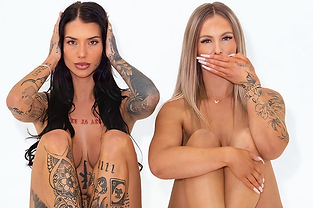
@OnlyFansInsiderMagazine
The podcast you can't live without
Featuring: Krystal Galtry & Tori Lindrea
Co Hosts at The Naked Truth Podcast
https://www.youtube.com/@TheCreatorsCouchPodcast
IG: thenaked.truthpodcast
INTERVIEW
Welcome! You’ve built something really interesting in this space. Start us off by telling our readers what your business is all about and how you fit into the OF world.
1. We’re genuinely excited to be part of this feature, so thank you for having us. Tori and I have both been in the industry for over six years now. Tori started out in dancing and OF — she ditched the corporate world early on when she realised her real passion was in creating, performing and owning her art. She also models and, like me, has fallen in love with travel this year. At first glance she can look sweet and angelic, but don’t be fooled — she’s bubbly, bold, always ready for a night out, and one of the most genuine people you will ever meet.
As for me, I’ve worked almost every corner of the industry — behind the desk in brothels, behind the bar in strip clubs, and I create on OF as well. I’ve helped plenty of women get started in the space, from setting up profiles to navigating the backend and the realities of sex work. I’m a tattooed model for local brands and have been featured on a few magazine covers over the years. I’ve always been a bit of a gypsy — I’ve been travelling solo around the world since I was 18 and I’m very much a “yes” girl. I’ll try anything once… and now I’ve slowly dragged Tori into my mischief too.
We’re both single, we’re both proud Sex Workers, and we feel empowered working alongside each other. We met just over three years ago at a photoshoot and basically never separated after that. Once we started talking, we realised we had stories — the kind you only really understand if you’ve lived this life from the inside. That’s where The Naked Truth Podcast came from: two friends with a lot to say, finally saying it out loud.
After both creating on OF for over five years — doing solo work and collabs — we decided to take filming in a different direction and create a platform where other creators (and us) could actually tell our stories. We don’t do filters, we don’t sugarcoat, and we don’t pretend. We talk about everything from fly-me-outs and three-way dinners to online relationships and the custom content we make. There’s a price for everything in this world — and we’ll happily tell you what ours is.
But underneath the chaos and the laughs, the real purpose of the podcast is to help normalize sex work and the stigma around it. We want people to see that we are real, grounded humans with real lives and real experiences worth listening to. Our industry isn’t something to whisper about — it’s something to understand, respect, and appreciate.
The vision is big. Think Call Her Daddy or Pillow Talk, but with unapologetic Aussie energy and two girls who have actually lived the stories they tell. We’re ready for our shine. 2026 is going to be the year we scale — starting by teaming up with Sxhibition and taking the podcast on the road right across Australia.
What inspired you to dive into the business side of OnlyFans? Was there something missing in the space that you wanted to solve?
The first time Tori and I ever talked about starting a podcast, we were actually on the phone for over two hours. We don’t live close to each other, so we’d be chatting on the phone constantly — planning content days, catching up on life, laughing at the chaos we’d gotten ourselves into. We were giggling non-stop, and it just clicked. An agency we were with at the time had suggested we do street interviews, but that didn’t feel like us — we’re conversation girls. So we ran with the podcast idea instead.
The agency told us to write down a list of potential guests to see if we could make a show out of it. And because we’ve been in the industry for years, our list went on forever. That’s when we knew we had something real. We booked our first recording at a Melbourne studio called Just A Studio — just the two of us, introducing ourselves and sharing stories we thought would land. And they did.
From there, we started inviting guests we knew would keep the energy unfiltered. Our first guest, Zoe Patterson, had us crying with laughter — it felt so natural that we instantly knew this was something we could do long-term. We built momentum fast. We took the podcast to Queensland and filmed with creators like Tilda Search, Kay Manual, and Coco Bae. Those episodes helped us level up and our Instagram started going viral. We hit over 1,000 YouTube subscribers and it felt like everything was taking off.
Then things took a turn. The agency we were signed with got greedy and tried to take ownership of the podcast — while also doing some very questionable things on our OF accounts. We had to take legal action to protect ourselves and our work. We managed to win back our Instagram, but we lost our original YouTube channel — and that one hurt. It felt like heartbreak, and it cost us a lot.
But honestly? Losing everything and starting again was the lesson we needed early. Now we’re independent, in control, and building something even bigger — with opportunities lining up that we’re genuinely excited for...READ MORE
Read the full article on Only Fans Insider Magazine: Click Here