


Platform Loyalty: Why Are Creators So Loyal to Platforms That Don't Want Their Business?
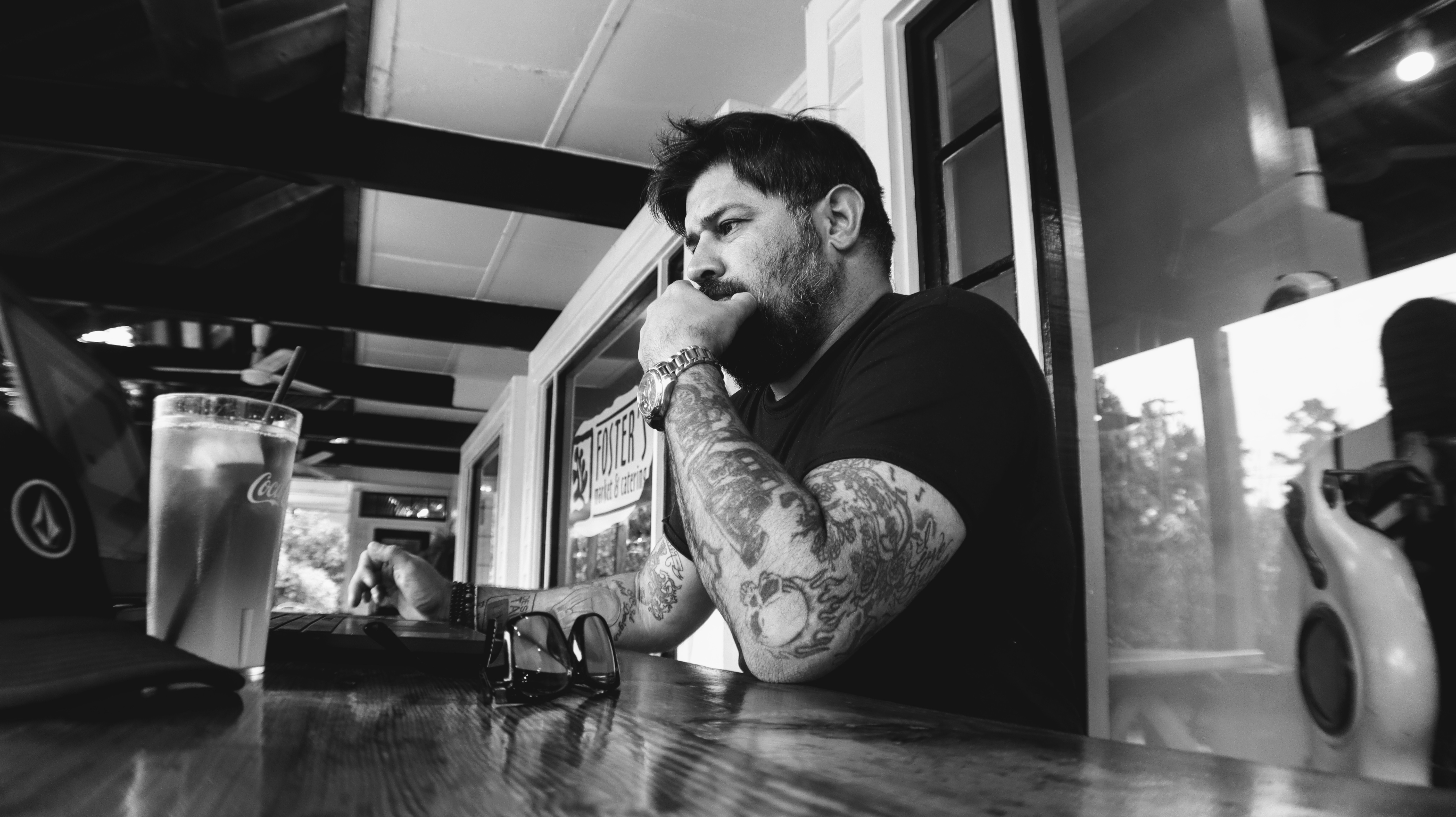
By Joseph Haecker | Founder of Sxgram — Social Media for Adults
"If you operate a legal business, you should be able to market your business." - Joseph Haecker
Plain and simple.
The Conversation That Got Me Thinking
I recently had a conversation with a women's health and wellness influencer who originally came from the sex work industry. She was frustrated because her posts were being flagged by LinkedIn, Facebook, and Instagram, even as she worked to build a legitimate business focused on women's health and wellness. In one of her posts, she expressed a simple wish: that there were somewhere she could openly promote her business and talk about the subjects her audience actually cared about.
Then, just yesterday, 18 content creators reached out to me, sharing their own experiences of being banned from platforms including Facebook, TikTok, Instagram, and LinkedIn. Different creators, different businesses, and different circumstances, but a familiar frustration. They had spent time building audiences on platforms that could suddenly restrict their ability to communicate with those audiences.
These conversations brought me back to the core thesis behind why I built Sxgram.
If you operate a legal business, you should be able to market your business.
Plain and simple.
And what I find particularly interesting is that we're talking about businesses being prevented from conducting business on platforms that are themselves businesses.
Think about that for a moment.
Social Media Platforms Are Businesses, Too
I understand why Mark Zuckerberg built Facebook. The original concept was centered on connecting people, creating communities, and helping friends and family stay in touch. Over time, Facebook evolved into one of the world's largest advertising platforms, but its origins and the expectations surrounding its community still influence how people use it.
I also understand why Reid Hoffman co-founded LinkedIn. LinkedIn was built around professional identity, business relationships, career opportunities, and professional networking. It makes sense that the platform has a different culture and different expectations than a social network designed for personal relationships.
And I understand why Instagram and TikTok have developed their own approaches to content, audience engagement, and community standards. Every platform makes decisions about the audiences it wants to attract, the experiences it wants to create, and the types of content it wants to accommodate. Those decisions are part of running a business.
Which is exactly why I built Sxgram for adults.
Not for children. Not for teenagers. Not for people who want every conversation filtered through the expectations of a family-friendly environment.
For adults who want a place to talk about grown-up things without having to worry about whether the conversation is appropriate for the kids.
It's a pretty simple concept.
And yet, judging by the conversations I'm having with creators, entrepreneurs, educators, and professionals, it's a concept that has been missing from the social media landscape.
The Strange Psychology of Platform Loyalty
Here's the part I find fascinating.
Content creators will openly complain about being censored, shadowbanned, demonetized, or having their accounts suspended. They'll share stories about posts being removed, advertising accounts being restricted, and entire audiences disappearing overnight. They'll talk about how difficult it is to build a business when an algorithm determines whether their customers can even see their content.
And then they'll go right back to the same platform.
Not only that, but many will actively defend the platform, continue investing their time and money into growing their presence there, and resist exploring alternatives that might be better aligned with their business.
Why?
I think the answer has less to do with loyalty and more to do with how social platforms have conditioned us to think about audience ownership.
When someone has spent five years building 50,000 Instagram followers, that number starts to feel like an asset they own. It represents thousands of hours of content creation, audience engagement, networking, and relationship building. Walking away from that feels like abandoning everything they've worked for.
But there's a fundamental problem with that thinking.
You may have built the audience, but you don't own the platform that controls your access to it.
Your followers are not necessarily your customers. Your reach is not guaranteed. Your account is not permanent, and your ability to communicate with your audience is subject to rules that can change without your permission.
What creators often describe as platform loyalty may actually be a combination of familiarity, sunk costs, audience dependence, and fear of starting over.
And those are very different things.

We've Confused Audience Size With Business Security
Somewhere along the way, social media convinced an entire generation of entrepreneurs that accumulating followers was the same thing as building a business.
It isn't.
Followers can create opportunities, but they don't automatically create revenue. Engagement can help with discovery, but it doesn't guarantee customer relationships. And having a large audience on someone else's platform doesn't mean you have control over how, when, or whether you can reach those people.
Consider a creator who has spent years building an audience around sexual health education. She may have thousands of followers who value her expertise, purchase her products, and recommend her services. But if the platform decides that certain words, images, or subjects violate its standards, her ability to reach those customers can change overnight.
The underlying business might still be perfectly legal. Her expertise hasn't disappeared, her customers haven't stopped needing her services, and the conversations she's facilitating haven't suddenly become less important.
Only her access to the audience has changed.
That's an extraordinary amount of business risk to place in the hands of a company whose priorities may have very little to do with your own.
And yet, many entrepreneurs continue treating their preferred social platform as if it were the foundation of their entire business.
A Platform's Audience Isn't Necessarily Your Audience
Here's another way to think about it.
Imagine you're opening a business that specializes in sexual health products, relationship education, or adult wellness services. You probably wouldn't choose to open your storefront inside a children's entertainment center. Not because there's anything wrong with your business, but because the environment wasn't designed for your customers.
You'd look for a place where your target audience already feels comfortable having conversations about the products and services you offer.
The same principle applies to social media.
Facebook doesn't have to become an adult-focused social network. LinkedIn doesn't have to become a destination for intimate conversations. Instagram doesn't have to accommodate every legal business model, and TikTok doesn't have to abandon its own community standards.
Those companies are entitled to define their platforms, subject to applicable laws and their obligations to users.
But creators are also entitled to ask whether those platforms are the right places to build their businesses.
The question isn't whether every platform should accommodate every business. The question is why entrepreneurs keep trying to force their businesses into environments that weren't designed for them.
That's what I find so strange about platform loyalty.
If a platform consistently makes it difficult for you to market your legal products or services, why would you continue treating it as your primary business home?
The Cost of Speaking in Code
One of the most frustrating things I hear from sexual health professionals is how often they feel compelled to change the language they use to discuss perfectly legitimate subjects.
Medical professionals talk about vaginal health, reproductive health, sexual function, and sexually transmitted infections. Relationship educators discuss intimacy, desire, consent, and communication. Wellness entrepreneurs sell products designed to address real adult needs.
These aren't inherently inappropriate subjects. They're ordinary parts of adult life.
Yet creators regularly describe changing their wording, replacing letters with symbols, or avoiding certain terms because they worry about automated moderation and reduced visibility.
Think about what that means from a business perspective.
We're asking people who are supposed to be experts in their fields to make their communications less clear in order to satisfy systems that may not fully understand the context of what they're saying.
That's not just inconvenient. It can undermine the quality of the information people receive.
And when the subject is health, education, or personal well-being, clarity matters.
Of course, platforms need rules against harassment, exploitation, nonconsensual content, fraud, and other harmful behavior. Legal content can still raise legitimate questions about safety, privacy, age appropriateness, and advertising.
But there is a meaningful difference between protecting users from harm and treating ordinary adult terminology as inherently suspicious.
Adults should be able to discuss adult subjects using adult language.
That shouldn't be a controversial idea.
Why Aren't Creators Diversifying Their Social Presence?
If you're running a business, you probably understand the importance of diversification.
You wouldn't want every customer to come from one referral partner. You wouldn't want your entire revenue stream dependent on a single client. And you probably wouldn't build your company around a supplier that could stop doing business with you without warning.
Yet that's effectively what many content creators do with social media.
They build their entire audience on Instagram, depend on TikTok for discovery, or use LinkedIn as their only source of professional visibility. Then, when something changes, they find themselves scrambling to recover access to the relationships they've spent years developing.
I'm not suggesting creators should abandon the platforms where they've already built an audience.
Quite the opposite.
Keep using them where they work. Keep engaging with the communities you've developed. Keep taking advantage of the discovery and marketing opportunities they provide.
But stop confusing convenience with loyalty, and stop confusing platform dependence with business strategy.
You can be active on Instagram without being dependent on Instagram. You can use LinkedIn without making LinkedIn your entire professional identity.
And you can build a presence on emerging platforms before you desperately need an alternative.
Diversification isn't disloyalty.
It's good business.
What If Social Platforms Actually Wanted Your Business?
This is where my thinking about Sxgram goes beyond simply creating another place for adults to post content.
I don't believe the world needs another social network that measures its value exclusively by how many hours people spend scrolling through a feed.
I believe social platforms should create opportunities for the people and businesses participating in them.
If you're a content creator, you should have opportunities to introduce yourself, share your work, build professional relationships, and reach people who might become customers or collaborators.
If you're a business owner, you should have opportunities to showcase your products, explain what makes your business different, and connect with relevant audiences.
If you're a researcher, educator, or advocate, you should have opportunities to discuss your work, share your expertise, and contribute to conversations that matter.
And if you're a professional working in an adult-oriented industry, you shouldn't automatically be treated as less legitimate simply because your business deals with subjects that some people find uncomfortable.
This is the thinking behind Sxgram's broader ecosystem, including our social network, editorial opportunities through SxM Magazine, podcast discovery through SxRADIO, and tools designed to help creators and businesses showcase what they do.
The objective is to create more ways for people to discover one another, share their stories, and develop business opportunities.
That doesn't mean every post will generate a sale or every connection will turn into a customer. No platform can responsibly promise that.
But it does mean designing a platform around the success of the people using it, rather than expecting those people to continually reshape their businesses around the platform.
There's a Difference Between Being Adult-Focused and Being Unsafe
Whenever I describe Sxgram as Social Media for Adults, I occasionally encounter an interesting assumption.
Some people immediately interpret the word adult as meaning that anything goes.
That's not what I'm building.
Being an adult-focused platform doesn't mean abandoning standards around consent, privacy, personal safety, or lawful conduct. In fact, I believe those standards become even more important when a platform is designed to facilitate conversations about sensitive and personal subjects.
The distinction is that adult topics aren't automatically treated as inappropriate simply because they involve sexuality, intimacy, relationships, or other grown-up experiences.
An adult-focused community can maintain meaningful safeguards while recognizing that adults have legitimate reasons to discuss subjects that aren't appropriate for children.
Those two ideas aren't mutually exclusive.
We can protect people from exploitation without stigmatizing lawful businesses. We can promote consent without censoring conversations about intimacy. And we can establish community standards without pretending that adult life stops existing when someone opens a social media app.
The goal isn't to eliminate moderation.
It's to make the platform's purpose, audience, and expectations better aligned.
The Real Question: Who Is Your Platform Working For?
I keep coming back to the conversations I've had with creators who feel trapped by the platforms they use.
They complain about the restrictions. They worry about losing their accounts. They spend time learning how to avoid triggering automated moderation, and they invest enormous effort into building audiences they cannot independently reach.
Yet when someone introduces an alternative, the first question is often, "How many users do you have?"
It's a reasonable business question. Audience size matters, particularly when you're evaluating where to invest your time.
But I think there's another question worth asking.
How many of the users on your current platform can you actually reach?
A platform with millions of users isn't necessarily valuable to your business if its policies consistently prevent you from discussing your products, services, or expertise.
Likewise, a smaller, more focused community may offer opportunities that a larger, less aligned platform cannot.
That doesn't mean every emerging platform is automatically a better choice. It means entrepreneurs should evaluate platforms based on relevance, access, trust, useful features, and actual business outcomes—not simply the size of the audience or the familiarity of the logo.
A million people who aren't interested in your business may be less useful than a much smaller community that genuinely wants to hear what you have to say.
And an audience you can communicate with openly may be more valuable than one you're constantly afraid of losing.
Platform Loyalty Should Be Earned, Not Assumed
I don't expect people to be loyal to Sxgram simply because I built it.
In fact, I don't think they should be.
I believe platform loyalty should be earned through the experience people have, the opportunities they discover, and the value the platform creates for them.
If Sxgram helps someone build professional relationships, introduce their business to new customers, or share important information with an interested audience, then we've created a reason for that person to return.
If we don't create value, they should absolutely explore other options.
That's how a healthy marketplace should work.
The platform should have to earn the creator's participation, not the other way around.
And as a founder, I think that's an important distinction.
My responsibility isn't to convince people that they owe Sxgram their loyalty. My responsibility is to build something worth using.

Stop Asking Permission to Operate a Legitimate Business
I started this article with a simple idea.
If you operate a legal business, you should be able to market your business.
That doesn't mean every private platform must carry every advertisement or every form of content. It doesn't mean businesses are exempt from safety standards, applicable regulations, or reasonable community rules.
It means entrepreneurs should have access to environments designed to accommodate their legitimate business activities, and they should have meaningful choices about where to establish their presence.
I don't want to force Facebook to become Sxgram. I don't want LinkedIn to abandon its professional focus. And I don't expect Instagram or TikTok to change their entire business models to accommodate the industries I care about.
Those platforms were built for their own purposes.
I built Sxgram for a different purpose.
For adults who want to talk about grown-up things.
For creators who want to share their work without being automatically stigmatized by their industry.
For educators and professionals who want to discuss sexuality, health, intimacy, and relationships using language that actually makes sense.
And for entrepreneurs who want another place to market their legal businesses.
Pretty simple concept.
So, to the creators who keep telling me how frustrated they are with the platforms they use, I have one question:
If a platform consistently makes it difficult for you to operate your business, why are you still so loyal to it?
You don't have to leave the platforms you're already using.
But you also don't have to keep giving them exclusive control over your ability to reach an audience.
Your business deserves options.
And your loyalty should be something a platform earns.
An Invitation to Build Something Different
If you're an adult creator, educator, health professional, advocate, influencer, or business owner who believes grown-up conversations deserve a place of their own, I'd love to invite you to explore Sxgram.
We're building Social Media for Adults, and I want the people who have felt overlooked, restricted, or misunderstood by traditional social platforms to have a voice in shaping what comes next.
I'm offering complimentary lifetime Verified Account upgrades to eligible influencers and businesses who want to join us.
Verified Influencer: "INFLUENCERVIP2026"
Verified Business: "BUSINESSVIP2026"
Join us at: https://www.sxgram.com
Upgrade your account at: https://www.sxgram.com/sxgram-verified
You don't have to abandon the communities you've already built.
Just consider building somewhere else, too.
Joseph Haecker
Founder, Sxgram — Social Media for Adults


Comments