


Ray Ray Is Doing Something the Creator Economy Was Supposed to Make Obsolete


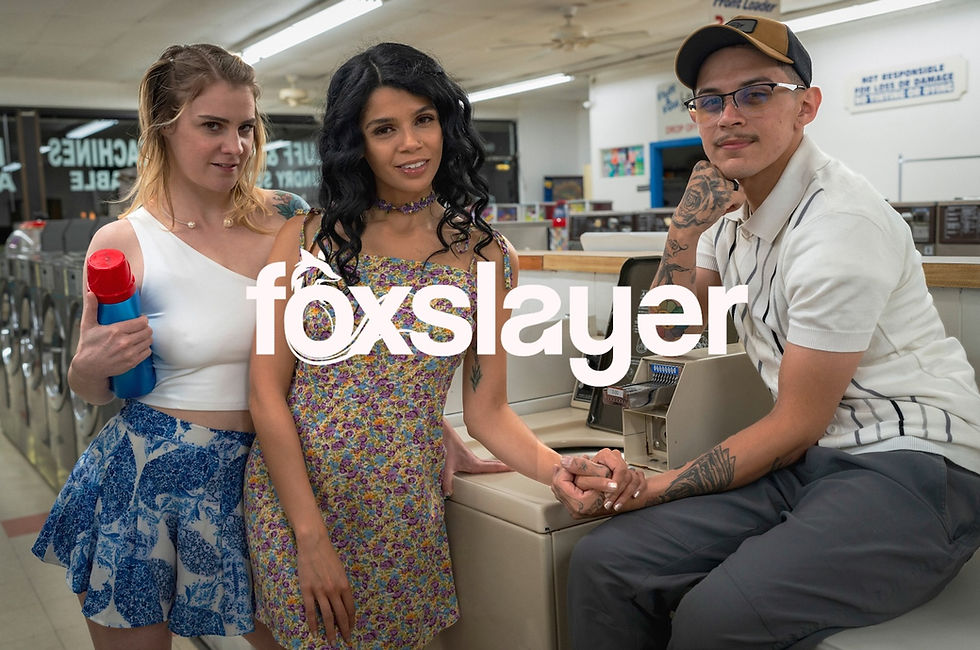
foxslayer Volume 2 is arriving on DVD after beginning as members-only digital content
That sounds backward in 2026. Look closer, and it may actually be a smart lesson in intellectual property, distribution and making one creative project work more than once.
By Ryder Vale, Staff Writer, Only Fans Insider Magazine — for Sxgram
I had to read this press release twice.
Not because the announcement was complicated. Ray Ray's foxslayer series has produced a second DVD through Pulse Distribution after the first volume arrived earlier this summer, taking material that originated inside her own digital ecosystem and putting it into physical retail distribution. The new release features Ray Ray alongside several established performers, while the premise and creative direction originated with Ray herself.
What made me stop was one word.
DVD.
It's September 2026. We're living in an economy of streaming platforms, disappearing Stories, subscription feeds, algorithmic recommendations, AI-generated everything and smartphones that have become the primary entertainment device for an enormous portion of the planet. Somewhere inside that environment, an independent creator is taking digital content and deliberately turning it into a physical product.
At first, that sounds like going backward.
I think it's almost exactly the opposite.
Because the interesting story isn't that Ray Ray released another DVD. The interesting story is that she created something once, proved demand for it inside an audience she controls, and then found another distribution channel capable of introducing the same intellectual property to people outside that original audience.
That's not nostalgia.
That's distribution strategy.
The DVD Isn't Really the Story
Ray Ray's press release says foxslayer began as a series available through her official website. Fans inside that membership ecosystem encountered it first, which meant the creator could develop and test the concept within an audience that already knew her. The release says the series performed strongly enough that it has now expanded into a second physical volume distributed through Pulse Distribution.
The broader relationship between Ray Ray and Pulse isn't new. XBIZ's Pulse Distribution archive shows that the first Foxslayer DVD arrived in June 2026, while reporting from early 2025 documented Ray Ray beginning to distribute her own content on DVD through Pulse. In other words, this isn't a creator randomly experimenting with an obsolete format; it appears to be part of a distribution relationship that has been developing for more than a year.
That's what changes the story for me. The DVD isn't the product strategy by itself; it's another endpoint for a product that already exists. Ray Ray isn't abandoning digital distribution for physical media, she's adding physical distribution to digital distribution.
That distinction matters because creators have been trained to think vertically. Make something, post it, monetize it, move on and start making the next thing. Ray Ray's approach suggests another possibility: make something, monetize it, package it differently, distribute it somewhere else and allow the same creative investment to continue producing value.
That's a very different business model.
Creators Have a Content Problem Disguised as a Productivity Problem
One of the strangest things about the creator economy is how quickly content becomes disposable. A creator can spend hours conceptualizing, producing and editing something only to watch its commercial relevance collapse as soon as the feed decides everyone has seen enough. The response from the industry has generally been to tell creators to make another one.
Then another.
Then another.
We have somehow built an entire economy around incredibly expensive human creativity while simultaneously treating its output as disposable. Creators are told that consistency means constantly producing new material because platforms need an endless supply of fresh inventory to keep users scrolling. The platform benefits tremendously from that arrangement, but I'm not convinced creators always do.
A smarter question is what else the content can become after its first release. Can it become a compilation, collection, book, documentary, podcast episode, article, licensing package, physical product or something else entirely? Can yesterday's creative work become inventory rather than history?
That's the question foxslayer Volume 2 accidentally raises.
Hollywood Never Expected a Movie to Make Money Once
Think about how traditional entertainment handles intellectual property. A film historically moved through multiple commercial windows, from theaters into home entertainment, television licensing, international distribution and eventually streaming. The exact sequence has changed dramatically, but the underlying logic remains remarkably durable: one expensive creative asset should generate value in more than one place.
Music works similarly. An artist can monetize a song through streaming, radio, synchronization licensing, live performance, physical media, merchandise and catalog value. Nobody tells a musician that because a song was released six months ago, its economic life is over.
Books have hardcover editions, paperbacks, ebooks, audiobooks, translations and licensing opportunities. Sports franchises turn games into broadcasts, highlights, documentaries, merchandise, collectibles and experiences. Traditional media businesses have always understood that valuable intellectual property should be given as many commercially sensible lives as possible.
Creators, strangely, were taught something different.
Post.
Monetize.
Forget.
Repeat.
That isn't necessarily a creator economy.
Sometimes it looks more like a content factory.
Ray Ray Built the Project Before She Expanded the Distribution
This is where the sequence becomes interesting.
According to the press release, foxslayer wasn't conceived first as a retail DVD hoping to discover an audience somewhere on a shelf. It existed inside Ray Ray's own membership environment first. That means the initial audience and the creative property were already connected before the physical distribution expansion happened.
That's an important distinction for independent creators. Instead of creating something expensive, throwing it into the world and hoping somebody wants it, a creator with an existing audience can develop ideas inside the community first. Audience response can become information about which concepts might deserve a second life.
That's essentially product validation.
The creator economy talks endlessly about engagement analytics but rarely talks about what creators should actually do with that information. If one recurring concept consistently performs better, produces more conversation or generates stronger audience interest than everything else, perhaps it shouldn't simply become another post next Tuesday.
Maybe it should become intellectual property.
A Series Is Different From Content
That word matters too: series.
A random piece of content exists independently. A series establishes a recognizable container into which future installments can fit. Once an audience understands the premise, the creator doesn't have to completely rebuild the concept every time.
Hollywood understands this extraordinarily well. It's why studios love sequels, franchises, recurring characters and recognizable universes. Familiarity reduces the amount of explanation necessary before an audience can decide whether it cares.
Creators can use the same principle without pretending they're Marvel Studios. A recurring interview format can become a series, a themed photoshoot can become a collection, a podcast segment can become its own property, or an annual project can become something audiences anticipate. The important shift happens when the creator stops thinking exclusively in terms of posts and begins thinking in terms of properties.
Ray Ray gave hers a name.
Now it has a Volume 2.
That's how properties begin.
The Physical Product Changes the Relationship
There's another reason the DVD caught my attention, and it has very little to do with whether DVDs are fashionable.
Digital content is access.
Physical media is possession.
Those two experiences aren't psychologically identical. A digital subscriber can consume something today and lose access tomorrow because a membership expires, a platform disappears, licensing changes or an account is removed. A physical object occupies space in someone's home and can become part of a collection.
That changes what the customer is buying.
They're no longer purchasing only the ability to watch something. They're buying an object connected to the creator, the project and a particular moment in that creator's career.
Music fans understand this perfectly. Vinyl didn't need to defeat Spotify in order to become commercially meaningful again. The physical object serves a different emotional and collectible purpose from frictionless digital access.
Creators should pay attention to that distinction.
Scarcity Has Value in an Infinite Digital World
The internet made content functionally infinite. There is always another photograph, another video, another creator and another feed waiting one swipe away. When supply becomes effectively unlimited, abundance stops feeling particularly special.
Physical products introduce boundaries back into that equation. They have manufacturing costs, inventory, packaging, shipping and shelf space. Those limitations look inefficient compared with digital distribution, but limitations can also create something digital media frequently struggles to produce: a sense that an object actually exists.
That doesn't mean every creator should suddenly start manufacturing DVDs. That would miss the point entirely. The lesson isn't about one format; it's about understanding that digital creators can create products that live outside digital feeds.
A creator could produce a coffee-table book, limited print, apparel collection, collectible, physical magazine, signed photograph, card set or any number of objects that translate an audience relationship into something tangible. The appropriate product depends on the creator and the audience.
The strategic question is the same.
What can your audience own?
The Creator Becomes the Studio
This is where Ray Ray's broader career becomes relevant.
The press release describes her as someone who creates her own content, works with independent studios and maintains her own DVD line through Pulse Distribution. She isn't operating exclusively as talent moving from one production company's project to another. She's also developing material that can move through distribution under her own identity.
That's a subtle but important evolution.
The traditional performer participates in somebody else's intellectual property.
The creator produces content for their own audience.
The creator-entrepreneur begins developing properties.
Those are different stages.
And Ray Ray appears increasingly interested in the third.
She's Already Building Beyond One Medium
The DVD line becomes even more interesting when placed beside the rest of what Ray Ray has been building. In 2024, she launched Deep Thots, an interview-based podcast about the adult industry with Rebel Rhyder and comedian Kevin Phillips. Current podcast listings show the program continuing through 2026 with roughly 50 published episodes and recent releases in September.
XBIZ also reported in August that Ria Bentley appeared on Deep Thots, where the conversation included Bentley's transition into full-time adult work, financial independence and maintaining creative control. That demonstrates that the podcast isn't simply another promotional feed for Ray Ray's content; it has become a platform through which other people in the industry tell their stories.
That's media.
Now consider the portfolio. There's direct-to-consumer content, physical distribution, a named creative series, podcasting, merchandise and a public personality connecting those different businesses.
That's considerably more interesting than simply saying Ray Ray makes content.
She's building a small media company around herself.
The Creator Economy Needs More Small Media Companies
I think this is where the next evolution of the creator economy becomes genuinely interesting.
For the first decade of modern creator culture, we obsessed over individuals. How many followers does she have, how many subscribers, how many views, how many likes and how much does she earn every month? The creator was treated simultaneously as the product, marketing department, customer service representative and production staff.
That model works until it doesn't.
Eventually, the more interesting question becomes what exists around the creator. Does she own intellectual property, have repeatable formats, operate media properties, possess direct audience relationships, sell products, control distribution or have assets capable of generating value without requiring her to reinvent herself every morning?
That's when a creator begins resembling a company.
And companies can scale in ways individuals can't.
The Award Matters for the Same Reason
Ray Ray also has some independent industry validation behind the creator side of the equation. XBIZ's published results from the 2025 AltStar Awards list her as Best Clip Artist of the Year, confirming one of the accomplishments referenced in her promotional materials.
That's relevant because "creator" can sometimes become a vague label applied to anyone with an account. Recognition for clip creation points toward the actual creative work involved in conceptualizing and producing material independently. The person isn't merely appearing in somebody else's production; she's participating in creating the product itself.
Awards don't automatically create a sustainable business. They do, however, become another piece of professional evidence that can travel with the creator into the next opportunity. When combined with ownership, distribution and audience, that evidence becomes more useful.
The pattern is what matters.
From Medic to Media Owner
The biography included with the press release contains another detail that makes Ray Ray's trajectory more interesting. Before entering the adult industry, it says she served as a medic and sergeant in the military. Today, her professional identity includes performer, independent creator, podcast host, product designer and owner of creative properties distributed beyond her own website.
That's a considerable transformation.
And it's exactly the kind of career arc the creator economy needs to document more carefully.
Too often, adult creators are flattened into whatever category initially made them visible. Their previous lives disappear, their business decisions are ignored and their entrepreneurial evolution is treated as secondary to the content itself.
But careers are interesting precisely because people change.
A military medic becoming an independent media entrepreneur is a story.
We should probably talk about that more.
Distribution Is More Important Than Followers
The internet trained an entire generation to believe audience size is the primary measurement of media power. Followers became shorthand for influence because they were visible, easy to compare and conveniently displayed beside everyone's name. But distribution has always mattered more than vanity metrics.
A creator with a million followers who can reach only a fraction of them when an algorithm permits doesn't necessarily control distribution. A creator with a smaller audience, an owned website, a podcast, physical retail relationships, email contacts and multiple direct sales channels may have considerably more control than their follower count suggests.
Ray Ray's Pulse relationship adds another distribution layer.
People who aren't members of her website can now encounter the project through retailers. The same creative property has escaped the boundaries of the environment where it originally appeared.
That's what distribution does.
It introduces your work to people who aren't already following you.
This Is Where Owned Media Becomes Powerful
I've become increasingly convinced that creators should think about their careers through three separate layers: audience, intellectual property and distribution.
Audience is who knows you.
Intellectual property is what you've created that can continue having value.
Distribution is how that creation reaches people.
Social platforms frequently collapse all three into one place. You build the audience there, create content specifically for the platform and depend on the platform to distribute it.
That's convenient.
It's also dependency.
Creators become significantly more resilient when those three layers begin separating. Your audience can follow you across several places, your intellectual property can exist independently of any particular platform, and distribution can come from multiple partners and channels.
That's what turns "my content" into "my media business."
One Shoot Shouldn't Necessarily Have One Life
This may be the biggest lesson here.
The creator economy's obsession with newness has convinced creators that everything needs to be produced once and consumed once. But if a project required meaningful time, money, planning, collaboration and creative energy, why should its commercial life end after its first release?
A project can begin as premium access.
Later it can become a collection.
Then a physical product.
Then parts of its creation can become behind-the-scenes material.
The people involved can discuss the project on a podcast.
A magazine can document the story behind it.
The visual identity can potentially inspire merchandise.
The project can generate press.
Successful elements can become another volume.
Now one creative investment has multiple economic and cultural lives.
That's leverage.
The Audience Doesn't Need Everything Immediately
There's another lesson hidden inside release windows.
The creator economy has trained audiences to expect everything immediately. New content appears constantly because creators fear disappearing from feeds or losing subscriber attention. But traditional entertainment industries have historically used timing itself as part of the product.
Something premieres.
Then it moves.
Then it gets repackaged.
Then it becomes collectible.
Different audiences encounter the same property at different times and in different formats.
That isn't necessarily withholding value.
It's extending the life of value.
Ray Ray's members saw foxslayer first. Physical distribution subsequently gives another audience another way to encounter the property.
One project.
Multiple windows.
That's a concept creators could use far beyond DVDs.
Don't Copy the DVD. Copy the Thinking.
I want to be particularly clear about this because somebody will inevitably misunderstand the point.
I'm not arguing that the future of the creator economy is DVDs.
It isn't.
I'm arguing that the future belongs partly to creators who understand asset utilization.
What have you already created that could become something else?
What recurring idea deserves a name?
What content deserves packaging?
What project could become a series?
What digital experience could become physical?
What audience response is quietly telling you that you've created something more valuable than another post?
Those are media-company questions.
Creators should start asking them.
Your Archive Might Be More Valuable Than You Think
Creators are sitting on enormous archives.
Years of photographs, videos, interviews, stories, collaborations, unused material, behind-the-scenes footage, ideas, artwork, conversations and moments are sitting on hard drives or buried beneath thousands of social posts. Most creators probably think of that material as old content.
A media company might call it a catalog.
That language difference is enormous.
"Old content" sounds disposable.
"Catalog" sounds like an asset.
Music companies spend fortunes acquiring catalogs because they understand that creative work can continue generating value decades after it was produced. Film libraries change hands for billions because yesterday's entertainment can become tomorrow's streaming inventory.
Creators should at least begin thinking in the same direction.
Your archive is not necessarily your past.
It may be inventory.
This Is the Career Ladder We've Been Talking About
Joseph Haecker recently wrote in Only Fans Insider Magazine about how Hollywood developed a career ladder while the creator economy often built a hamster wheel. Creators are encouraged to produce more, post more, communicate more and remain more available as they become successful. The labor frequently increases alongside the revenue rather than decreasing as professional leverage grows.
Intellectual property offers one possible way out of that trap.
If every dollar requires another hour of your time, you own a job.
If something you created yesterday can continue generating opportunities tomorrow, you've started building an asset.
That's not passive-income fantasy. Creative businesses still require work, management, marketing, accounting, distribution and continual development.
But there's a profound difference between working to create another disposable unit and working to build something with a commercial life beyond the moment of creation.
foxslayer Volume 2 is a small example of that principle.
Small examples are often where bigger ideas become visible.
Maybe Physical Media Isn't Dead. Maybe Disposable Media Is the Problem.
We're living through one of the strangest periods in media history.
Human beings have access to more content than any civilization has ever possessed, yet individual pieces of content can feel less valuable than ever. We can summon almost anything instantly, which means almost nothing needs to feel permanent.
Maybe that's why physical objects remain interesting.
They resist disappearance.
They sit on shelves.
They occupy space.
They become collections.
They remind people that somebody made something.
For Ray Ray, a DVD may simply be another format in a much larger creator business. But for the creator economy, the strategy behind it points toward something worth remembering.
You don't always need more content.
Sometimes you need to ask more from the content you've already made.
Ray Ray Isn't Just Selling Content. She's Building a Catalog.
That's what I see when I look at this press release.
Not the provocative premise of foxslayer. Not the names on the cover. Not even the novelty of releasing physical media in 2026.
I see a creator turning an internally successful concept into a named series, extending that series into multiple volumes and using an outside distributor to move it beyond her own membership environment.
I see a creator with a podcast that has continued for roughly two years and dozens of episodes. I see someone whose work has received independent industry recognition and whose business now stretches across direct-to-consumer media, physical products and owned creative concepts.
Most importantly, I see the beginnings of something creators should think about far more often.
A catalog.
Because followers can disappear.
Algorithms can change.
Platforms can close.
Yesterday's viral post can be forgotten tomorrow.
But intellectual property can travel.
It can be repackaged.
It can be redistributed.
It can find new audiences.
And sometimes, apparently, it can even end up on a DVD.
In 2026, that doesn't look old-fashioned to me.
It looks a lot like ownership.
By Ryder Vale, Staff Writer, Only Fans Insider Magazine — for Sxgram
______
ABOUT RAY RAY
Ray Ray is the gorgeous, all-natural, award-winning sweetheart known as the Queen of Gangbangs. She's the rockstar pornstar allstar who creates her own content and works with amateur and independent studios like Blazed, Evolved Fights, TadpoleXXX, and has her own DVD line through Pulse Distribution. Her mission is to show that everyday women can do porn—you don't have to be perfect, and you can forge your own path. In 2024, she launched the Deep Thots podcast with Rebel Ryhder and comedian Kevin Phillips, which is available on many podcast platforms and their YouTube Channel youtube.com/@Deepthots_Podcast.
Before adult, she was a medic and sergeant in the military, which helped her hone her exquisite physique. When Ray Ray isn't filming, you'll find her working out, looking for a recreational gangbang, hanging out with her pets, or drawing or painting. Ray has been featured twice in NightMoves Magazine. She won Best Clip Artist of the Year from the AltStar Awards and has received noms for Mark Stone Award for Outstanding Comedy, Best Indie/Amateur Movie or Series, and Best Star Showcase from the AVN Awards, Rising Clips Star from the XBIZ Cam Awards, Best Clip Artist of the Year from the AltStar Awards, Best Pro Female Am Performer, Miss Gang Bang, Pornstar Next Door, and Best Rising Production for her foxslayer series from the Urban X Awards, Best Comedy for her feature “Please Hold: A XXX Parody” from the XRCO Awards, and Fetish Performer of the Year, Best Smile, Best Butt, and BJ Performer of the Year from the Cammy Awards.
Keep up with everything in Ray Ray’s world by following her on X @ray_ray_xxx and Instagram @rayofsunshine_529. Become a member of her official site rayrayxxx.com and get more Ray than you can handle by also subscribing to her OnlyFans onlyfans.com/rayray_xxx. Buy her double R in star-branded merchandise, personally designed by her, at etsy.com/shop/EatRayLove. Subscribe to her YouTube Channel to watch her livestream The R Train youtube.com/channel/UC_oRyeavjKcveyuhsFYtTRg. Buy her premium content on ManyVids xxxrayrayxxx.manyvids.com and Modelhub modelhub.com/rockpornallstar. Get a sneak peek and “like” her free content on Pornhub pornhub.com/users/rockpornallstar. Find all her links in one place at allmylinks.com/rayray529.
More articles for you

Anastasia Shades Lost Her Job
11/7/25, 8:03 AM

Camille Herron Has Run 117,000 Miles
11/7/25, 8:03 AM

Nicole Aria Returns to Nookies
11/7/25, 8:03 AM

Penny Barber Has Plenty of Awards
11/7/25, 8:03 AM

The U.S. Government Now Recognizes Qualifying Creators as Small Businesses
11/7/25, 8:03 AM

Redefining Pleasure: Our New "Adult Children's Day" Campaign
6/24/26, 1:10 PM

Hentaied PRO Is Building a Cinematic Universe
11/7/25, 8:03 AM
